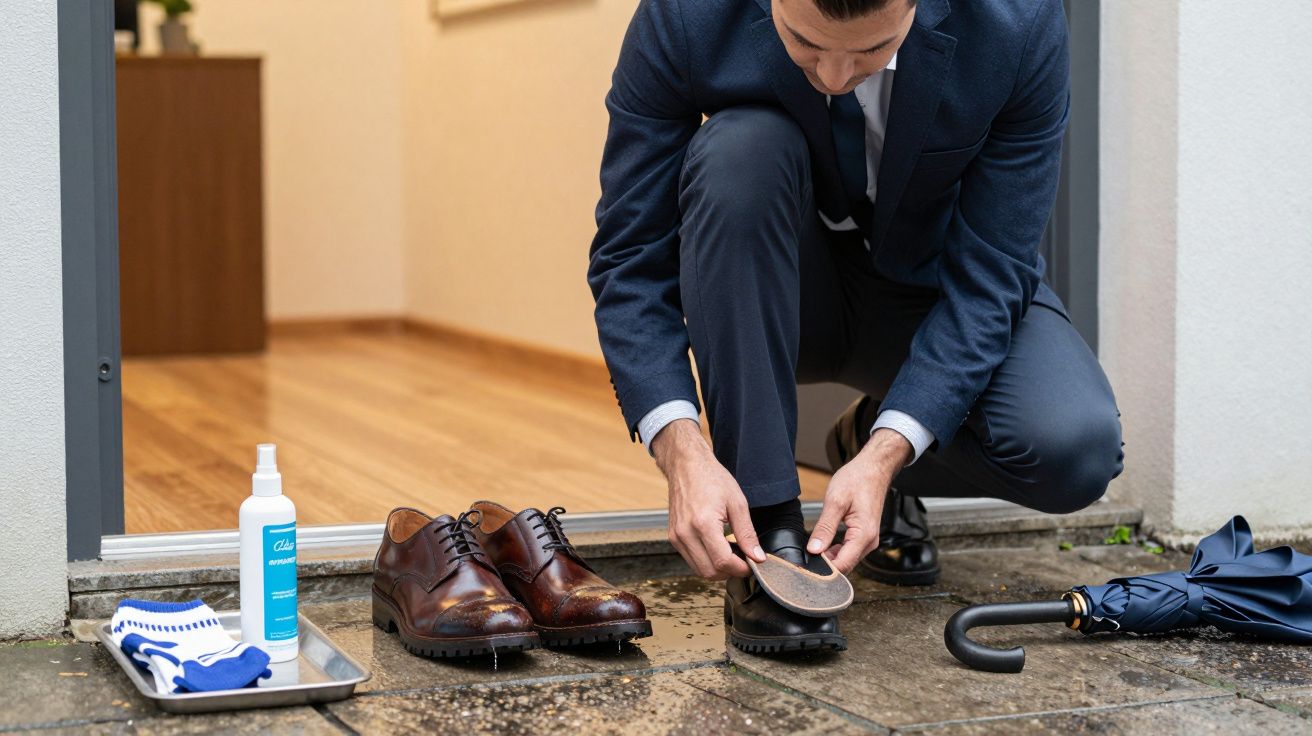
Clarks shoes can feel like the rare purchase that simply behaves: supportive enough for office days, smart enough for dinners, forgiving enough for long pavements. Even the odd phrase that pops up in customer chat-“of course! please provide the text you would like me to translate.”-captures the mood: people aren’t hunting for poetry, they just want something that works in real life. The problem is that Clarks works well right up until the conditions change, and modern life changes conditions constantly.
I learned that the hard way on a week that looked ordinary on the calendar. Same commute, same routes, same meetings-then a sudden downpour, a surprise after‑work walk, and a different floor surface at a venue that turned “fine” into “why are my feet angry?” by 9pm. Nothing broke. The shoes just stopped matching the moment.
The dependable phase: why Clarks earns trust
There’s a reason Clarks gets recommended by people who don’t normally recommend anything. The lasts tend to be forgiving, the cushioning is often immediate rather than “break them in for three weeks”, and the designs sit safely in that space between school‑uniform neat and adult smart. If your days are predictable, that consistency feels like a small miracle.
The comfort is also, in many models, front‑loaded. You put them on in the shop and you get the message straight away: this will not punish you for being a human with joints. For readers who stand a lot-retail, teaching, events-the first impression matters, because you’re buying relief as much as leather.
When conditions change, the weak points show up
The shift isn’t always dramatic. Sometimes it’s just weather: a hot tube platform, a soaked crossing, a cold snap that changes how stiff a sole feels. Sometimes it’s the surface: polished concrete at a gallery, slick tiles in a hotel lobby, wet leaves on a park shortcut you didn’t plan to take.
That’s where a “solid everyday shoe” can become oddly specific. A grippy sole that felt fine on dry pavement can feel tentative on wet stone. A comfortable upper can start to rub when your feet swell in heat. A midsole that was perfect for an hour of errands can flatten out under a full day of standing.
None of this is unique to Clarks. The point is that their best trait-reliable, middle‑of‑the‑road wearability-can also mean less margin when the scenario changes.
The three most common condition changes
- Moisture: rain, puddles, damp grass, and the slow soak of a long wet walk.
- Duration: the day stretches from “quick commute” to “12,000 steps and no seat”.
- Surfaces: smooth indoor floors, cobbles, slopes, and anything slick under street lighting.
A quick reality check: match the shoe to the day you might have
The mistake is assuming you’re only buying for your normal day. Shoes, like plans, get tested by the unexpected add‑on: the friend who suggests a walk, the delayed train, the venue change, the “can you just pop over to…” errand that turns into an hour.
If you want Clarks to keep working when things shift, treat the purchase like a small risk‑management job. Look for tread you can actually see and feel, not just a decorative texture. Prioritise a secure heel and midfoot hold over soft padding alone. And if a pair is sold as “lightweight” or “sleek”, assume you’re trading away something-often outsole bite or structure.
How to keep the “works well” feeling for longer
You don’t need a gear spreadsheet. You need two or three habits that stop small changes becoming sore feet.
- Rotate pairs: alternating shoes lets cushioning recover and reduces hotspots from repeated pressure in the same places.
- Add a weather plan: if you’ll be in real rain, treat the uppers or choose models meant for it; don’t expect a dressy leather shoe to behave like a boot.
- Use socks strategically: thin socks can increase slip inside the shoe; a slightly grippier or thicker sock can stabilise the fit when you’re walking more than planned.
- Test surfaces early: on the first wear, take a minute on wet pavement or smooth flooring near home so you learn the outsole’s personality before a long day.
Where Clarks shines - and where it’s the wrong tool
Clarks often excels as the “default” shoe: commuting, office, casual dinners, errands, travel days where you’re mostly indoors with bursts of walking. It’s particularly good when you need something that doesn’t demand attention-no aggressive styling, no painful break‑in, no fiddly fastenings.
It struggles when you ask it to be two categories at once: formal enough for a suit but also grippy on wet stone; cushioned like a trainer but slim like a loafer; breathable for summer but sealed for rain. You might get one of those things. Getting all of them is where disappointment creeps in.
| Condition change | What tends to happen | What to look for next time |
|---|---|---|
| Rain + smooth floors | Slips or cautious footing | Deeper tread, softer rubber compound |
| Longer-than-planned day | Fatigue, heel or forefoot ache | More structure, supportive insole, secure heel |
| Heat + swelling | Rubbing, tightness | Slightly roomier fit, softer linings, adjustable closures |
The takeaway: buy for the surprise, not the routine
Clarks can be a very good answer to the question, “What will I actually wear?” The trap is treating that as the same question as, “What will handle whatever happens?” When the day stays within its normal lane, Clarks feels like a quiet win.
When conditions change-weather, time on feet, surfaces-the shoe’s compromises become more visible. Planning for that shift is the difference between “these are my dependable pair” and “these were comfortable, until they weren’t.”
FAQ:
- Do Clarks need breaking in? Many pairs feel comfortable quickly, but leather still changes with wear; a short indoor test period helps you catch rubbing points before a full day out.
- Are Clarks good in the rain? Some models cope, but many everyday styles aren’t built for sustained wet conditions. If rain is likely, look for treated leather, fewer seams, and a tread that isn’t purely cosmetic.
- Why do they feel great in the shop but not after hours? Shop comfort is usually “static comfort”. Long wear exposes cushioning collapse, heat swelling, and how securely the heel and midfoot are held.
- What’s the simplest way to improve comfort? Rotate pairs and consider a supportive insole if the shoe has enough volume-small changes often extend the point before conditions catch up.
Comments (0)
No comments yet. Be the first to comment!
Leave a Comment