It’s usually a quiet sound that gets you first: a hiss behind a skirting board, a faint tapping in a boxed-in pipe run, the boiler pressure needle dropping when nobody’s touched a tap. In that moment, burst pipes stop being a distant winter headline and become a decision you have to make now-do you call for emergency plumbing repairs, or can it wait until morning without turning your home into a claim form?
Most plumbing problems reward calm. This one doesn’t always. The trick is knowing which version of “leak” you’re looking at, because the wrong choice costs you twice: once in water damage, and again in the repair bill that follows.
The fault that decides: pressurised water vs a contained drip
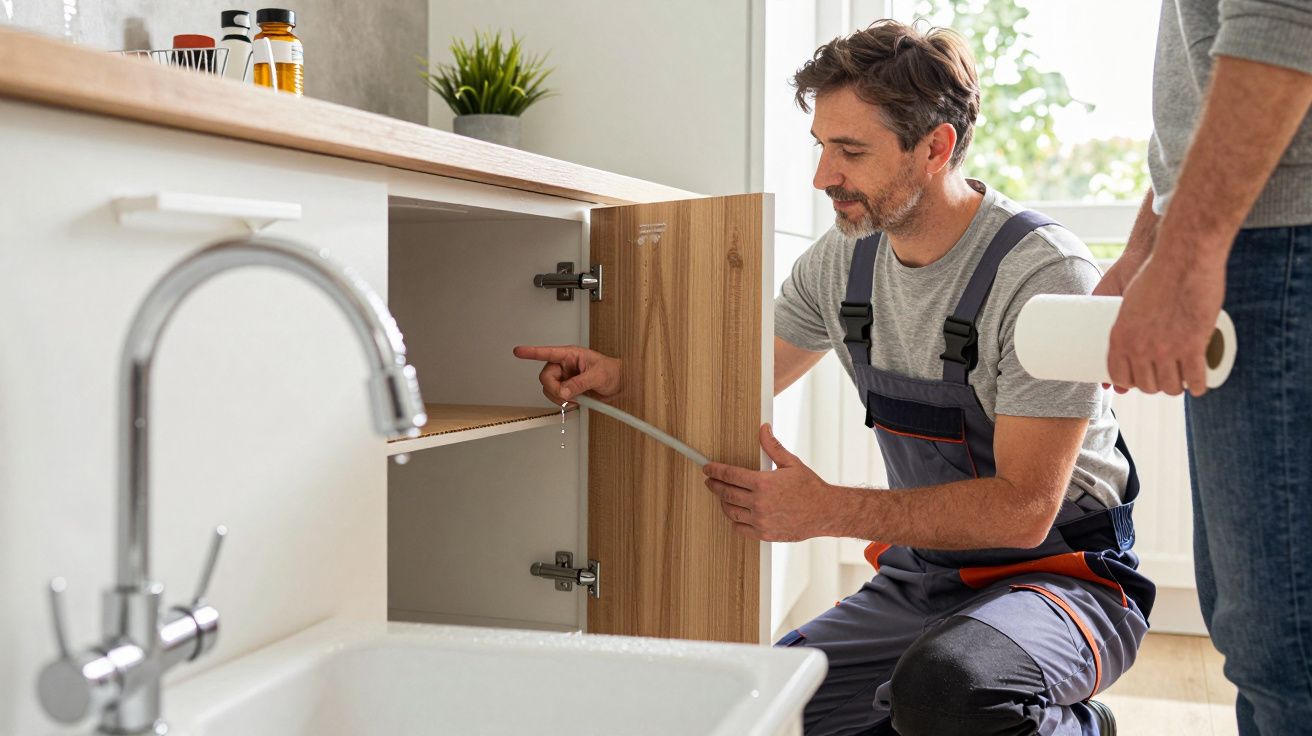
Not all leaks are equal. A contained drip under a sink is annoying, but it usually gives you time to put a bowl down, turn off the isolation valve, and book a visit. A burst on a pressurised pipe is different: it can shift from “small spray” to “kitchen ceiling” in minutes, especially if it’s on a mains cold feed or a pipework run feeding multiple outlets.
A simple test helps. Dry the area, then watch for 30 seconds:
- If water is spreading under pressure (spray, jet, fast bead formation), treat it as urgent.
- If water is seeping slowly (one drop every few seconds) and you can isolate it cleanly, you may have breathing room.
That’s the deciding fault, really: uncontrolled, pressurised flow. It’s less about the size of the hole and more about whether you can stop the supply without disrupting essentials or risking hidden damage.
The two-minute triage that stops small leaks becoming big ones
When people lose the plot, it’s usually because they start mopping before they’ve stopped the source. Water loves cavities: behind units, under flooring, down light fittings. Give it ten minutes and it finds the expensive route.
Do this in order:
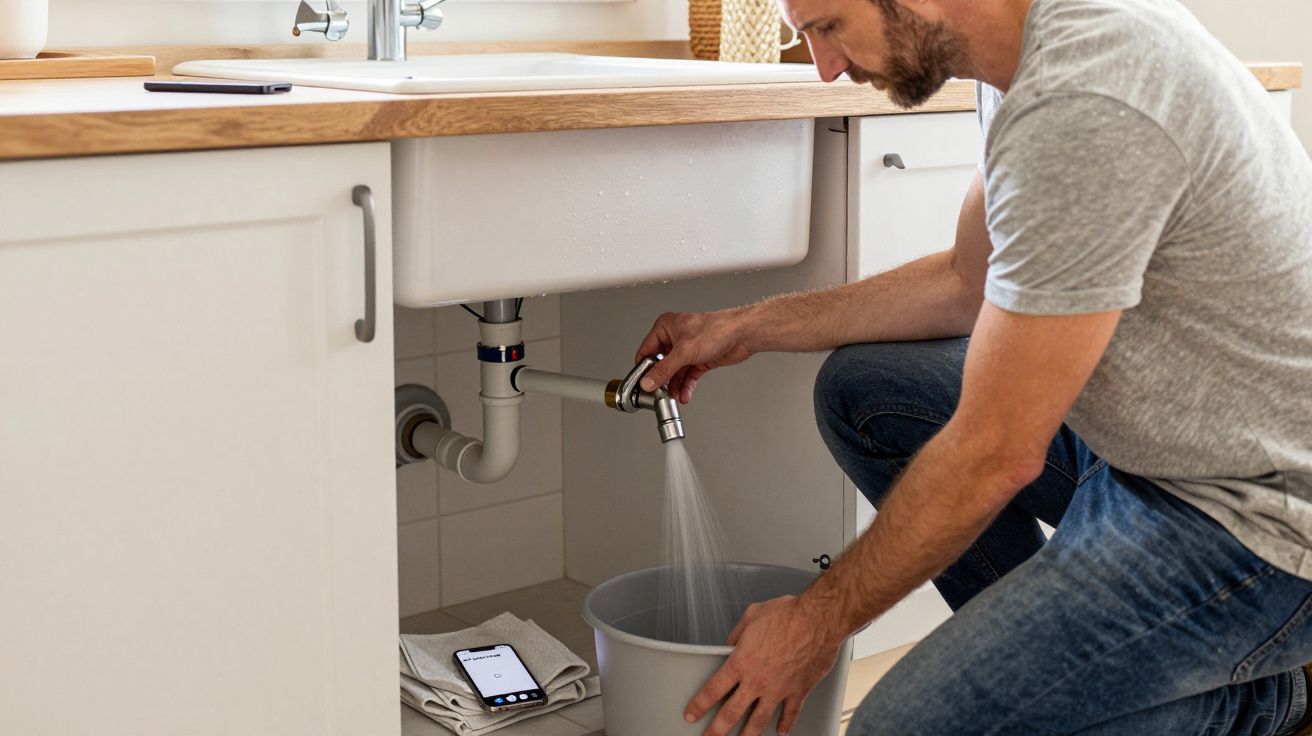
- Shut off the water at the stopcock (usually under the kitchen sink, in a cupboard, or near where the mains enters). Turn clockwise.
- Open the cold tap at the lowest point you can (kitchen tap is fine) to relieve pressure and drain residual water.
- Switch off electrics if needed. If water is near sockets, light fittings, the consumer unit, or you see staining on a ceiling, turn off power at the main switch and keep people out of the area.
- Contain, then document. Towels, a bucket, and photos for insurance-after the supply is off.
If the stopcock won’t turn, turns but doesn’t stop flow, or the leak is on a communal riser/flat supply you can’t isolate, that’s when “wait” stops being sensible and becomes risky.
When it’s an emergency (and you’ll regret waiting)
Emergency plumbing repairs are justified when the situation is still moving-water is travelling, pressure is pushing, or safety is compromised. These are the clear triggers:
- You can’t isolate the leak fully (stopcock fails, no local valve, shared supply).
- Water is affecting electrics (dripping through light fittings, sockets, or near the boiler controls).
- Ceiling bulge or sudden staining appears under a bathroom, loft tank, or upstairs pipework.
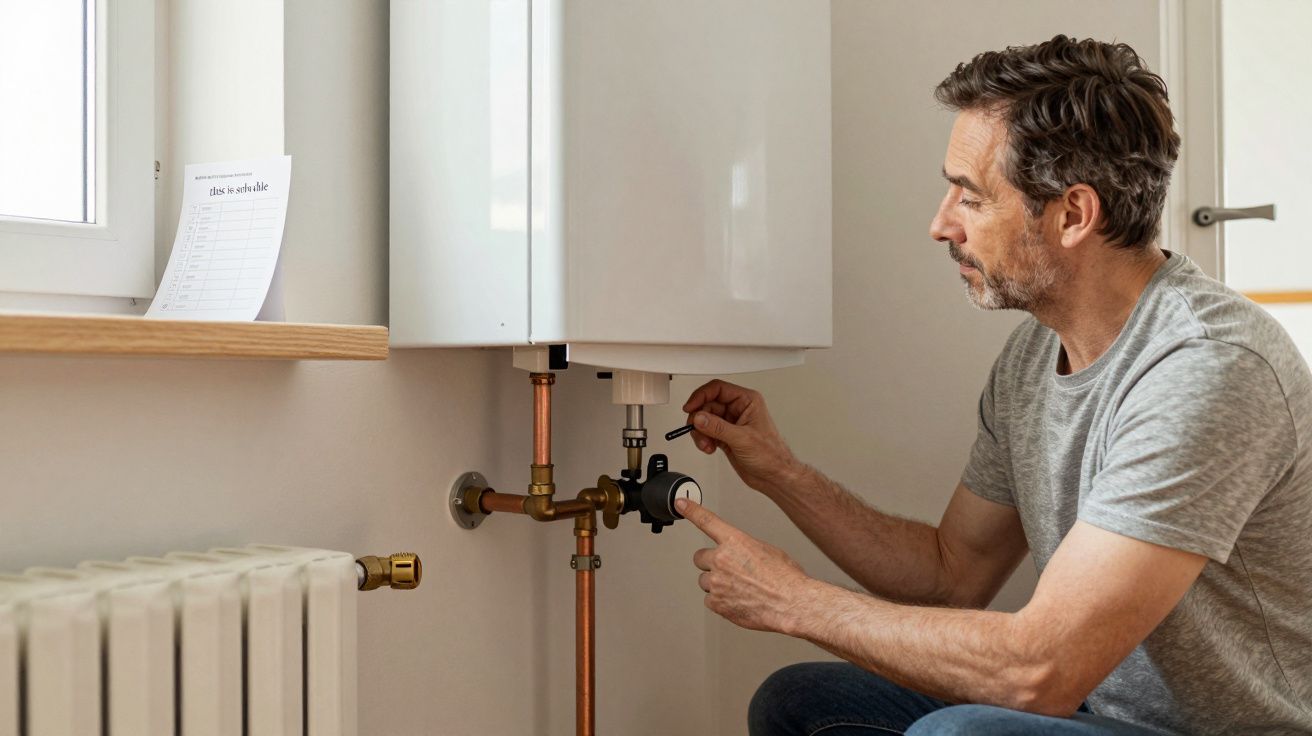
- Boiler pressure drops rapidly (sealed systems can lose water fast; running it low can damage components).
- The leak is from a heating pipe and you can’t shut down that circuit safely (risk of airlocks, pump damage, or continued leakage when the system reheats).
There’s also a timing reality in UK homes: if it’s freezing outside and the burst is on an external wall or in a loft, waiting can mean the next section of pipe goes too. One failure becomes two.
When you can wait (without gambling the house)
There are cases where you can pause, breathe, and book a standard call-out-provided you’ve genuinely stopped the water and you’re confident it won’t restart.
You can usually wait if:
- The leak is after an isolation valve you’ve turned off (e.g., toilet fill valve, washing machine feed, dishwasher valve).
- It’s a trap or waste issue (slow leak on a sink trap, waste pipe weeping) with no pressurised supply involved.
- The leak is visible and stable, not disappearing into walls, floors, or ceilings.
- You can keep the area dry and monitored, with no electrics nearby.
A good rule is: if you can go to bed and the situation will be identical in the morning, you’re probably in “book it” territory. If the situation could change while you sleep, it’s an emergency.
The hidden bit: where burst pipes do their worst
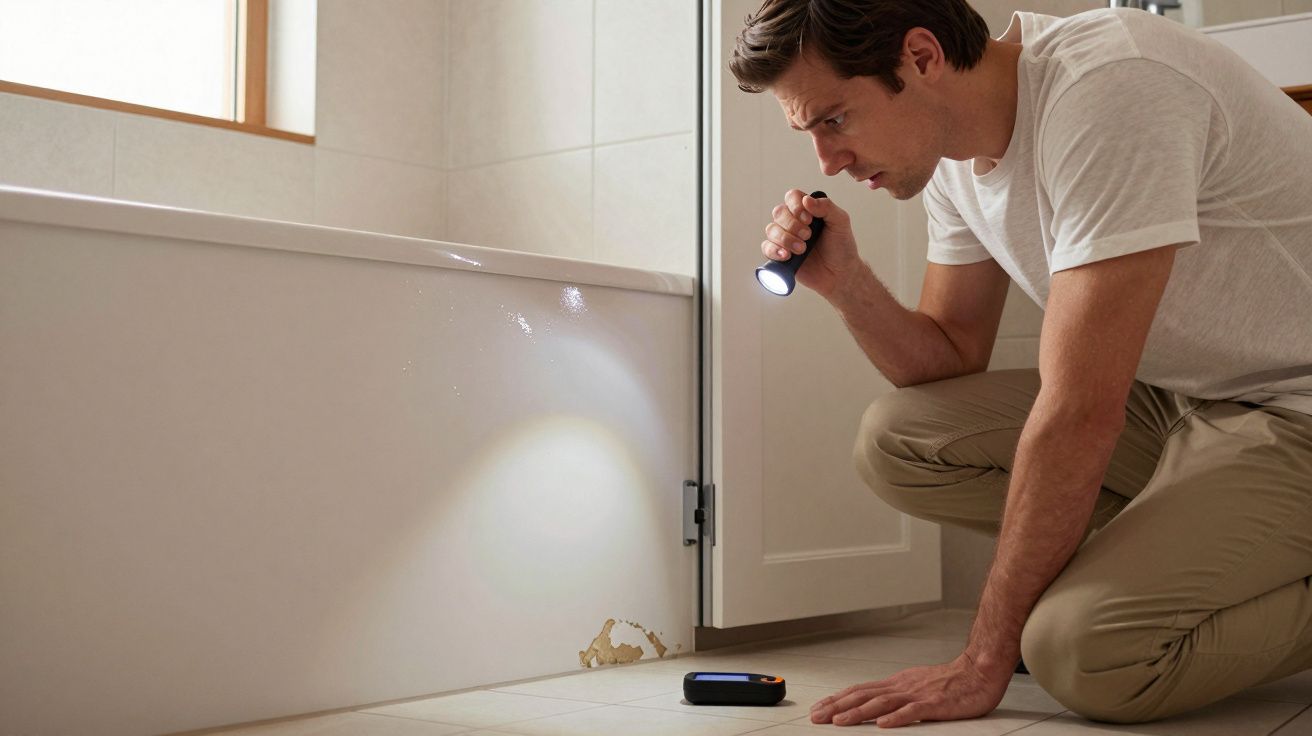
The damage isn’t always where you see the water. A pipe can split under a floorboard and show itself as a damp patch metres away, or it can run along joists and pool above plasterboard until gravity wins.
Keep an eye out for:
- Warm spots on floors (hot pipe leaks can spread under laminate).
- Musty smells that appear fast (water in voids, cupboards, insulation).
- New cracks or sagging in ceilings (water loading plasterboard).
- Water meter movement when all taps are off (a quiet clue, if you have an external meter).
If any of those show up and you don’t have full isolation, you’re not being dramatic by calling. You’re being practical.
What to tell the plumber so the visit is faster (and cheaper)
Call-outs go smoother when you can describe the system, not just the panic. Before you ring, note:
- Where the leak is (kitchen, bathroom, loft, under-floor, outside wall).
- Whether the stopcock works and whether water is fully off.
- If you have a combi boiler or system boiler, and what the pressure is doing.
- Whether it’s cold mains, hot water, or heating pipework.
- Any signs of water near electrics.
If you’re in a flat, also tell them whether you’ve notified the managing agent or downstairs neighbour. Water doesn’t respect tenancy boundaries.
“The best call is the one where the water’s already off,” one emergency plumber told me. “Then we’re fixing a pipe, not rescuing a building.”
A simple decision chart you can keep in your head
| What you see | Can you isolate fully? | What to do |
|---|---|---|
| Spray/jet/fast pooling | No | Call emergency plumbing repairs |
| Drip/weep, visible | Yes | Book standard repair and monitor |
| Ceiling stain/bulge | Unclear | Treat as emergency; switch off electrics if needed |
FAQ:
- Can a tiny leak really count as burst pipes? Yes. A split can start as a fine crack that only shows as misting or a slow bead. If it’s on a pressurised supply and you can’t isolate it, treat it seriously.
- Should I turn off the boiler if there’s a leak? If the leak is on heating pipework or boiler connections, turn the boiler off to prevent it firing with low pressure or pushing water through a fault. If water is near electrics, switch off power at the main switch first.
- What if the stopcock is stuck? Don’t force it to the point it snaps. Try a firm, steady turn; if it won’t move or won’t shut off fully, that’s a valid reason to call an emergency plumber.
- Is it safe to use towels and a wet vac near sockets? Not if water is anywhere near live electrics. Keep clear, switch power off at the consumer unit if there’s any doubt, and don’t touch wet fittings.
- Will a leak stop on its own once the pressure drops? Sometimes it slows, but relying on that is a gamble-especially if someone turns a tap on, a boiler reheats, or the mains pressure fluctuates overnight.


Comments (0)
No comments yet. Be the first to comment!
Leave a Comment