Steam hangs in the air long after a shower, clinging to mirrors and grout like it’s got a claim on the room. of course! please provide the text you would like me to translate. and of course! please provide the text you would like me to translate. are oddly perfect stand-ins for what most of us do next: we assume something else will “sort it”, and we wait. That’s why bathroom mould keeps coming back - not because you’re dirty, but because one small habit quietly invites moisture to stay.
A landlord once told me his “mouldiest” flats were never the ones with messy tenants. They were the ones where people did everything that looked right: they cleaned, they sprayed, they cracked the window for a minute, then closed the door and carried on with their day. The mould didn’t care about intentions. It cared about time, damp air, and a room that never properly dried out.
Experts say the hidden mistake isn’t cleaning - it’s drying too slowly
Most people treat mould like a surface problem. Professionals treat it like a ventilation and temperature problem that shows up on surfaces. The hidden mistake is leaving the bathroom humid for hours after you’ve finished - often because the extractor fan is off, underpowered, or used for too short a time.
Moisture doesn’t vanish when the water stops running. It migrates into paint, silicone, plasterboard, towel fibres, and the cold corners behind the toilet cistern. If the air stays warm and wet, it keeps feeding spores that already exist in every home.
“Mould is less about one steamy shower and more about hundreds of slow-drying days.”
Why a cracked window and a quick wipe often aren’t enough
A quick window crack feels virtuous, but it’s usually too little, too late. In winter, the outside air can be cold and dry, which can help - but only if you actually exchange enough air and keep it moving. A narrow opening for five minutes, with the door shut and no fan, often just chills the room while the moisture sits there anyway.
Wiping tiles helps, but it’s not the main event. The air is the reservoir; the grout is just where the symptoms land. If you wipe the walls but leave the air saturated, the next cold surface (ceiling corners, the back of the door, the underside of a shelf) becomes the new landing pad.
The three conditions mould loves
It’s not complicated, but it is stubborn. Bathrooms supply the perfect trio:
- High humidity (showers, baths, wet towels)
- Cool surfaces (external walls, ceilings, window reveals, metal fixings)
- Low airflow (doors kept shut, weak fans, blocked vents)
Break just one of those consistently, and the problem often shrinks fast.
The “fan timing” rule that actually changes outcomes
Ask building pros what people get wrong, and you’ll hear the same refrain: the fan comes on too late, goes off too early, or never runs at full pull because it’s clogged with dust. The fix isn’t glamorous, but it’s real.
Try this routine for a fortnight and watch what changes:
- Turn the extractor on before you start the shower (or as you walk in).
- Keep it running for 20–30 minutes after you finish.
- Keep the bathroom door closed while showering, then open it afterwards to let the fan draw in drier air from the house (unless your fan vents poorly and you’re just spreading humidity - in which case, prioritise venting outdoors).
If your fan is wired to the light and you hate leaving the light on, a timer switch is often the simplest upgrade you’ll ever feel smug about.
Common fan problems experts see in real homes
- The grille is furry with dust, so airflow drops dramatically.
- The fan vents into a loft rather than outside, dumping moisture where you can’t see it.
- The fan is too small for the room size or duct run (long ducts reduce performance).
- No trickle vent / no make-up air, so the fan struggles to pull anything at all.
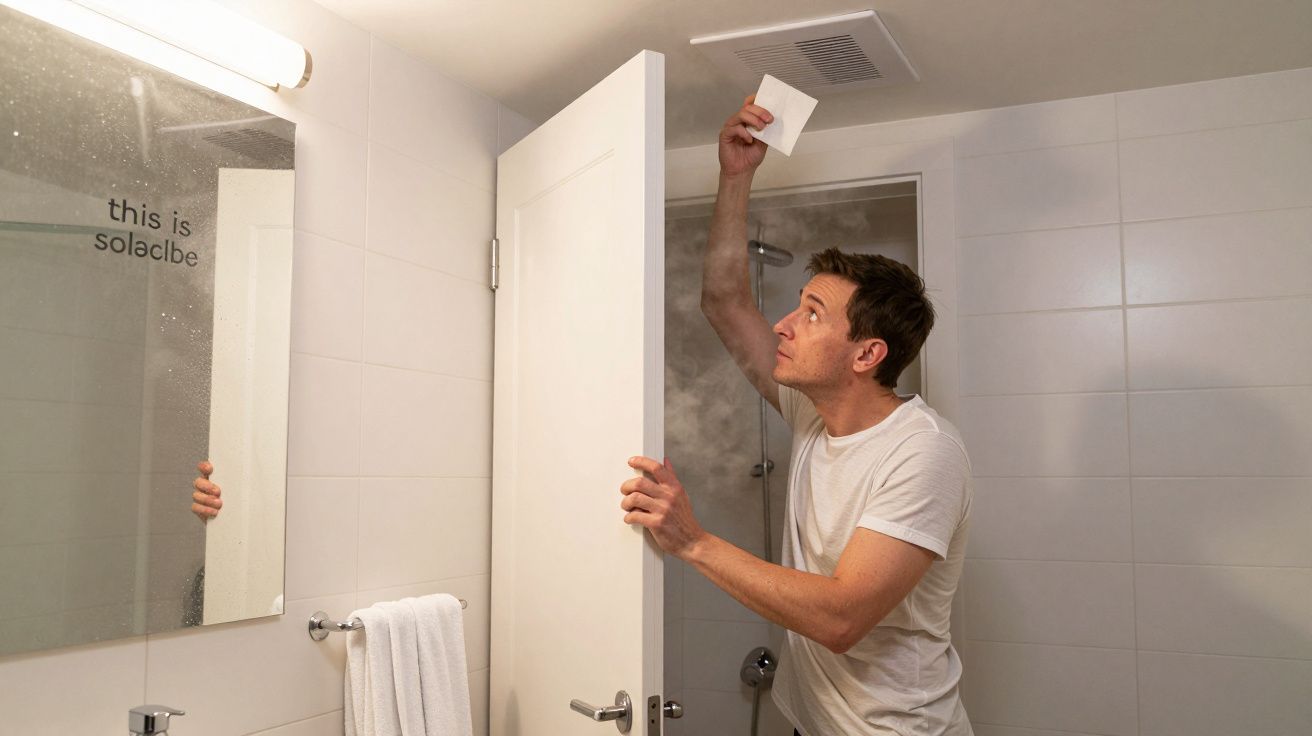
A fan can be “on” and still do almost nothing. The tell is simple: hold a square of toilet paper up to the grille. It should stick firmly. If it flutters off, you’re not extracting much.
The bit people miss: towels, bathmats, and the “wet storage” trap
Even with decent extraction, wet textiles keep re-humidifying the room. A towel on a hook in a bathroom with weak airflow is basically a slow-release moisture device. Bathmats are worse: thick, dense, and often left flat on the floor where air can’t reach.
Small changes that add up:
- Hang towels spread out (not folded over once) and, if possible, dry them outside the bathroom.
- Lift or hang bathmats after use so both sides can dry.
- Don’t dry laundry in the bathroom unless extraction is strong and vented outside.
If you’ve ever walked into a “clean” bathroom that smells faintly sweet or musty, it’s often damp fabric, not dirty tiles.
A practical reset: what to do if mould keeps returning
If mould is already established, you do need to remove it - but treat that as step two, not the whole plan. Otherwise you’re just repainting over a leak in the system.
A sensible reset looks like this:
- Clean existing mould with an appropriate mould remover, following ventilation and safety guidance on the product.
- Replace failing silicone where black spotting has penetrated (often around the bath/shower edge).
- Deep-clean the extractor grille and check the ducting route vents outdoors.
- Run a dehumidifier for a week if drying is slow (especially in windowless bathrooms).
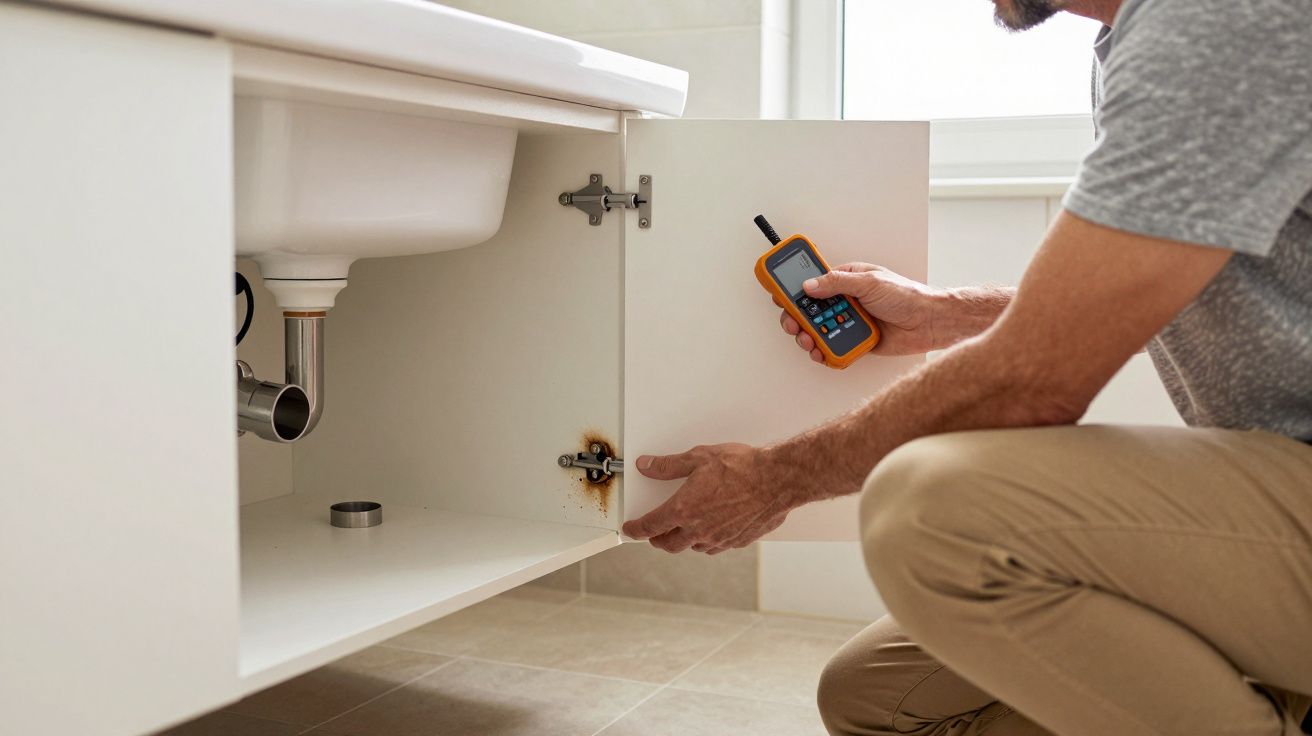
- Track humidity with a cheap hygrometer; aim to get back below ~60% reasonably soon after bathing.
Once you can reliably dry the room, cleaning starts to “stick” instead of feeling like a monthly punishment.
Quick signs you’re dealing with a moisture pattern (not just a dirty patch)
- Mould returns in the same corners within days or weeks.
- Paint bubbles or flakes near the ceiling line.
- A mirror stays fogged long after you’ve left.
- A musty smell appears even after cleaning.
- Black dots cluster on silicone, window reveals, and behind bottles.
None of these are a moral failing. They’re a signal that the bathroom is spending too long in the damp zone.
| Problem you see | Likely cause | First fix to try |
|---|---|---|
| Mould on ceiling corners | Cold surface + lingering humidity | Longer fan run time; warm the room briefly |
| Black silicone spots | Constant damp at the seal | Replace silicone; improve drying after showers |
| Musty towels/bathmat | Textiles drying too slowly | Dry outside bathroom; hang mats up |
FAQ:
- What’s the biggest “hidden” mistake behind bathroom mould? Letting the room stay humid for hours - usually by running the extractor fan for too short a time, or relying on a brief window crack.
- How long should I leave the extractor fan on after a shower? Often 20–30 minutes, depending on room size, fan strength, and how steamy the shower is. The goal is a room that actually dries, not just one that “aired” for a moment.
- If I open the window, do I still need the fan? In many bathrooms, yes. The fan provides consistent airflow and helps pull moist air out from corners and ceilings where it lingers.
- Why does mould come back so fast after I clean it? Because cleaning removes the visible growth, but if humidity and slow drying remain, spores simply regrow in the same conditions.
- When is mould a sign of something more serious? If there’s persistent damp, staining that spreads, soft or crumbling plaster, or a suspected leak, address the underlying building issue rather than treating it as a cleaning problem.


Comments (0)
No comments yet. Be the first to comment!
Leave a Comment