Most people blame “tight hips” or “bad ankles” when their movement feels sticky, but experts see a quieter culprit: of course! please provide the text you would like me to translate. showing up in how we train, warm up, and stretch. It often travels with of course! please provide the text you would like me to translate., a habit that makes mobility work feel productive while your joints stay stubbornly unchanged.
The hidden mistake isn’t that you’re doing nothing. It’s that you’re chasing range without teaching your body to own it, so the joint borrows movement from somewhere else and calls it “flexibility”.
The hidden mistake experts keep spotting
Joint mobility is not just “how far you can go”. It’s how well you can control a joint through its range with strength, coordination, and good positioning. When that control is missing, the body finds the path of least resistance.
That usually looks like one of these patterns:
- You stretch a lot, but you still feel stiff when you stand up or squat.
- You get a “good stretch” sensation, yet the movement doesn’t translate to daily life or sport.
- One area improves briefly, then tightness returns within hours or the next day.
Mobility that doesn’t stick is often flexibility without control - range borrowed from somewhere else.
What “borrowed range” looks like in real life
The body is brilliant at compensation. If one joint can’t move well, the next joint in line will try to help.
Common examples clinicians and coaches see:
- Hips that feel tight, but the lower back is doing the work. You hinge, squat, or lunge and the lumbar spine extends or twists to fake hip range.
- “Open” shoulders, but ribs flare. Overhead reach comes from arching the back, not true shoulder flexion.
- Ankles that won’t bend, so knees cave or feet turn out. You get depth, but alignment drifts and loading becomes messy.
In the moment it can feel fine. Over weeks, that borrowed range tends to show up as niggles, tendon irritation, or the sense that one side is always “off”.
Why stretching alone often fails (even if you’re consistent)
Long holds and passive stretching can reduce the feeling of tightness. That’s useful, but it’s only part of the picture.
Experts often frame it like this: your nervous system protects joints by limiting range it doesn’t trust. If you repeatedly push into end range without building strength and control there, your body may keep reapplying the brakes.
Three common reasons it doesn’t transfer:
- You stretch cold. The tissue and nervous system resist, so you compensate sooner.
- You never load the new range. The brain doesn’t learn it’s safe under real demand.
- You always stretch the same way. The joint needs varied angles, not one favourite position.
The fix: “earn the range, then use it”
Good mobility work usually follows a simple order: prepare, explore, then reinforce. You can keep it short and still make it stick.
1) Prepare the area (2–4 minutes)
Aim for heat and gentle motion, not exhaustion. A brisk walk around the house, cycling, or dynamic movements work well.
Try:
- Hip circles and leg swings (controlled, not flung)
- Cat-cow and thoracic rotations
- Ankle rocks against a wall
2) Explore range with control (4–6 minutes)
This is where many people go wrong. Instead of collapsing into a stretch, move slowly and stay organised.
Options that tend to translate well:
- Controlled Articular Rotations (CARs): slow circles at the joint, keeping the rest of the body still
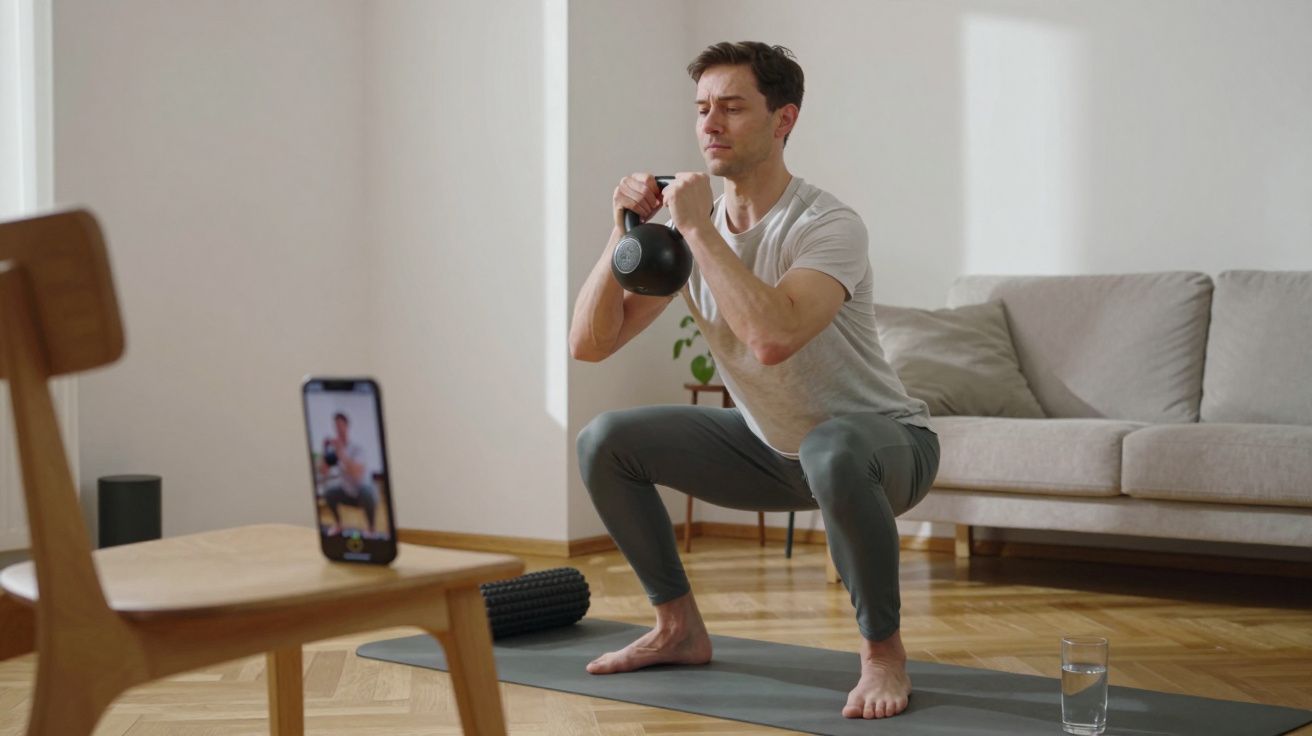
- Tempo reps: e.g., slow goblet squats to a comfortable depth, 3–5 seconds down
- Isometrics at end range: hold where you usually feel shaky, breathe, and keep alignment
3) Reinforce with light strength (3–6 minutes)
To “own” the range, load it gently. Think steady and clean, not heavy.
Examples:
- Split squats with a pause at the bottom
- Hip bridges with a 2–3 second squeeze at the top
- Overhead carries with ribs down and a long neck
- Calf raises through a full, controlled range
The goal is not to stretch farther today. It’s to make tomorrow’s movement feel easier without thinking.
Small form cues that prevent compensation
Most mobility gains are lost through tiny cheats. A few cues can keep the work honest.
- Breathe low and slow. If you’re holding your breath, you’re usually bracing around the problem.
- Lock the ribcage over the pelvis. Flaring ribs is the classic way to fake shoulder and hip range.
- Move one joint at a time. If your spine or knees are dancing, the target joint isn’t doing its share.
- Stop two reps before sloppy. Quality beats volume here.
If you’re unsure what’s moving, film one set from the side. It’s often more revealing than how it feels.
A simple “mobility that sticks” mini-routine
This fits into 10–12 minutes and works well 3–4 times per week.
- 60–90 seconds brisk walk or marching on the spot
- 6 slow hip CARs each side
- 8 tempo goblet squats (3 seconds down, 1 second pause)
- 20–30 second split squat hold each side (comfortable depth)
- 8–10 calf raises with a 2-second pause at the top
- 6–8 slow overhead reaches against a wall, ribs down
Keep notes on what feels smoother after. Patterns show up fast when you track them.
When to get help (and what to watch for)
Mobility work should feel challenging, not sharp or alarming. If pain is pinchy, shooting, or worsening over sessions, stop and get it checked.
Consider professional input if:
- One joint loses range suddenly
- You have swelling, heat, or instability
- A specific movement reliably triggers pain
- You’re returning from injury and feel stuck in fear or guarding
A physiotherapist or qualified coach can help you spot the exact compensation that’s hiding the issue.
The bottom line experts want you to remember
The biggest mistake behind stubborn joint mobility is treating range like a party trick instead of a skill. Stretching can help, but range that lasts is range you can control.
Aim for a smaller improvement that stays with you all day. That’s the kind that builds resilient joints, cleaner movement, and fewer repeat flare-ups.





Comments (0)
No comments yet. Be the first to comment!
Leave a Comment