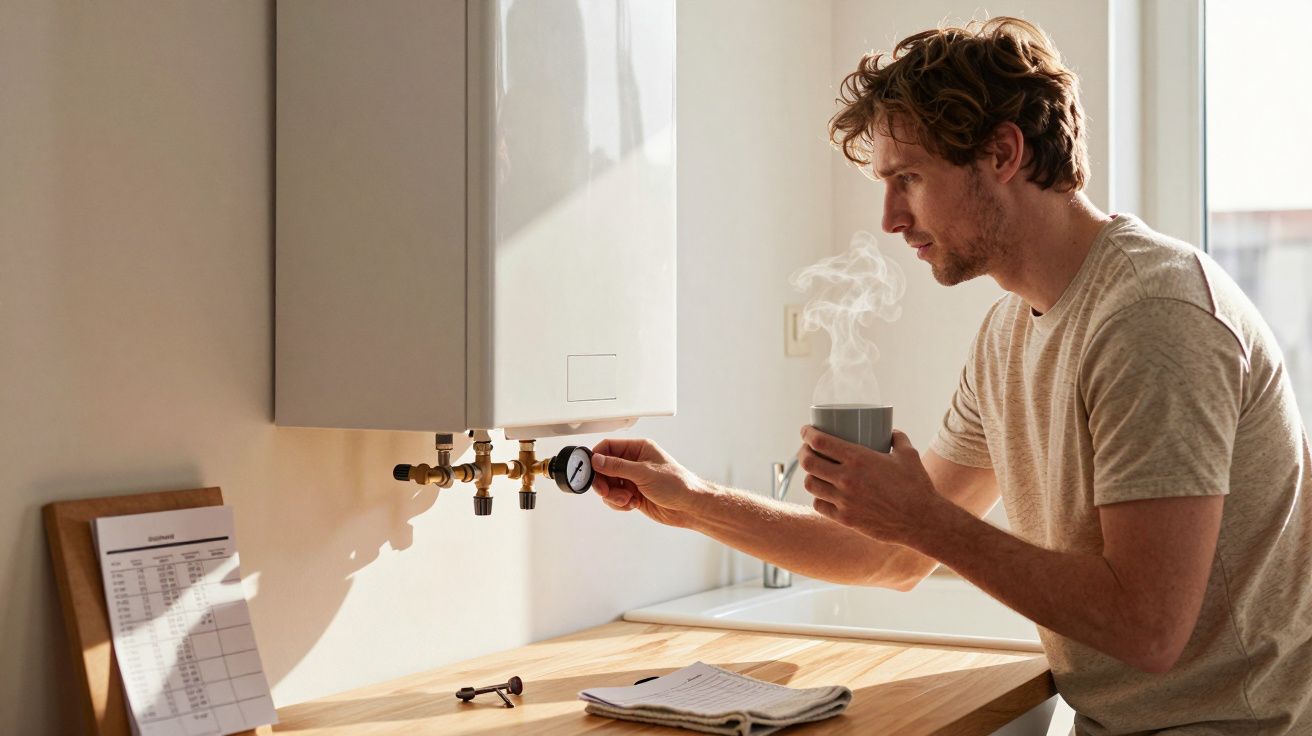
You notice it first on a cold morning: the house warms faster than it used to, and the shower seems to get hot in record time. Faster heat-up times can feel like a win, but they sometimes arrive alongside system stress-your heating or hot water setup working harder, cycling differently, or compensating for a fault. Catching the difference matters, because a “snappier” response can be the first clue that parts are wearing, controls are misreading, or pressures are building where they shouldn’t.
A healthy system can be quick. The problem is when quick becomes erratic, noisy, or expensive-especially if it coincides with new smells, banging pipes, or a boiler that won’t settle into a steady rhythm.
When “fast” is normal-and when it’s a red flag
Some changes genuinely improve warm-up. A serviced boiler, a new programmer, better insulation, or bleeding radiators can all shorten the wait without any downside. You’ll usually notice smoother operation: fewer on/off bursts, more even temperatures, and quieter pipework.
A red-flag kind of fast feels different. Heat arrives abruptly, overshoots, then drops. The boiler fires hard and often, or the hot water swings from tepid to scalding with small tap adjustments. That pattern can mean sensors are confused, flow is restricted, or the system is building heat in the wrong place.
Fast comfort is fine. Fast, jumpy comfort often points to something pushing back inside the system.
What drives sudden faster heat-up times in homes
Central heating and hot water systems are feedback loops. They read temperatures, push heat into water, move it through pipes, and stop when targets are reached. When one link in that loop changes, the whole system can behave as if it has “more punch”-even if it’s actually under strain.
Common culprits include:
- Restricted circulation: sludge, limescale, a sticking valve, or a tired pump can reduce flow so water heats very quickly at the boiler, then struggles to distribute heat evenly.
- Sensor or control drift: a faulty thermistor, mispositioned thermostat, or wiring issue can make the boiler overfire or stop too late.
- Air in the system: pockets of air reduce effective water volume in parts of the circuit, leading to faster local heating and noisier operation.
- Pressure and expansion issues: an undercharged expansion vessel can cause sharp pressure swings as water heats, changing cycling behaviour.
- Heat exchanger scaling (combi boilers): scale can reduce transfer efficiency and narrow waterways, sometimes creating “flash heating” and unstable tap temperatures.
None of these mean “panic today”, but they do mean “don’t ignore the pattern”. Left alone, they can turn into breakdowns, leaks, or repeated lockouts at the worst time.
The hidden stress of short cycling
One of the clearest signs of system stress is short cycling: the boiler fires, stops, then fires again minutes later. That can still produce fast warmth, but it wears components faster and often increases bills.
Watch for:
- Boiler firing for short bursts, repeatedly, even in mild weather
- Radiators getting hot near the boiler but staying lukewarm elsewhere
- Clicking relays, frequent fan spin-ups, or ignition attempts you can hear from across the room
A boiler that can’t “settle” is often protecting itself from something it can’t resolve-flow, sensing, or pressure.
Quick checks you can do without tools
You’re not trying to diagnose like an engineer. You’re trying to spot whether this is a harmless improvement or a trend worth acting on.
Start with a simple five-minute sweep:
- Look at boiler pressure (sealed systems): if it rises sharply when heating is on, or drops frequently, note the numbers cold vs warm.
- Listen to the pipes and radiators: gurgling, ticking, or banging suggests air, expansion noise, or flow problems.
- Feel radiator patterns (carefully): cold patches at the bottom or one end often point to sludge or poor circulation.
- Check hot water stability (combi): if the temperature hunts up and down, scale or sensing issues may be involved.
- Compare rooms: if one area heats very fast while others lag, balancing or circulation is likely off.
If anything looks unsafe-gas smell, scorch marks, water near electrics, carbon monoxide alarm sounding-stop and get professional help immediately.
What to do next: small actions that reduce strain
A few low-risk steps can ease load and reveal whether the change is a one-off or a developing fault.
- Bleed radiators if you hear gurgling or have cold tops (then recheck pressure if you have a combi/sealed system).
- Set a sensible flow temperature: running overly hot flow can create quicker warm-up but harsher cycling. Many condensing boilers do better with lower flow temps and longer runs.
- Check programmer schedules: multiple short “on” periods can mimic short cycling and increase wear.
- Clear around the boiler: good ventilation and easy access help with safe operation and future servicing.
If the system is older or you’ve never had a powerflush or magnetic filter fitted, ask an engineer to assess water quality. Sludge is one of the most common reasons a system becomes noisy, uneven, and oddly “fast” in the wrong places.
Signs it’s time to book an engineer
Make the call sooner rather than later if you notice any of the following alongside faster heat-up times:
- Pressure repeatedly dropping, or rising dramatically when heating runs
- Boiler lockouts, error codes, or ignition failures
- New kettling sounds (a rumbling, boiling-kettle noise)
- Hot water temperature swings at the tap
- Radiators that heat unevenly even after bleeding and balancing attempts
- A warm, discoloured plug/socket near heating controls (electrical stress needs attention)
Engineers can test combustion, verify sensors, check pump performance, measure temperature differentials, and inspect the expansion vessel-things you can’t confirm by feel.
A quick “good fast vs stressed fast” guide
| What you notice | More likely “healthy fast” | More likely system stress |
|---|---|---|
| Warm-up pattern | Smooth, steady, predictable | Sudden surges, overshoot, frequent stops/starts |
| Noise | Quieter than before | Gurgling, banging, kettling, frequent clicking |
| Comfort & bills | Even rooms, stable bills | Hot/cold spots, rising costs, unstable tap temps |
Keep the win, lose the risk
If the home feels warmer faster and everything else is calm-quiet boiler, stable pressure, even radiators-you may simply be seeing the benefit of a tweak or seasonal conditions. But if speed comes with instability, it’s often the system telling you it’s working around a restriction, a bad reading, or a pressure problem.
Treat faster heat-up times as useful information, not just a pleasant surprise. A small check now can prevent a bigger repair later, and it keeps that “great” feeling from turning into an emergency call on the coldest weekend of the year.



Comments (0)
No comments yet. Be the first to comment!
Leave a Comment