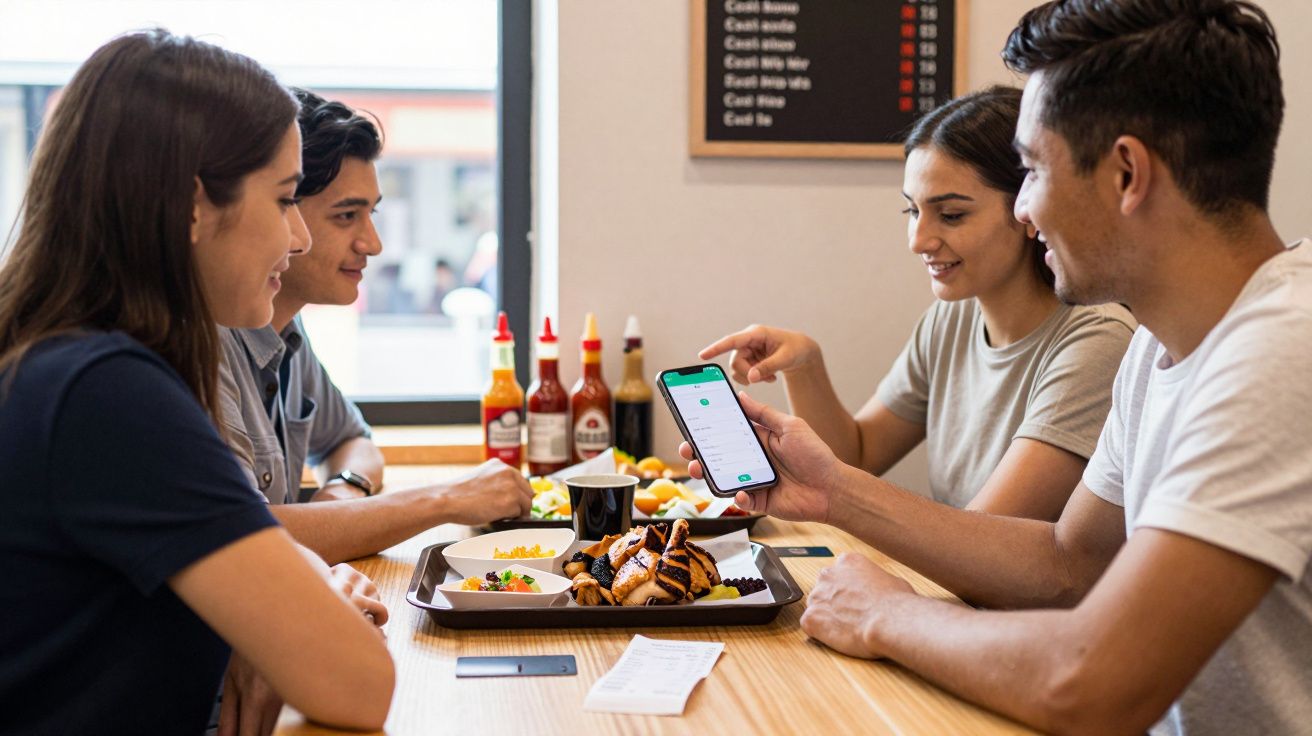
You notice it at the counter before you even sit down: nando’s is no longer just a cheeky chicken chain you use for a quick meal with mates. It’s become a kind of social shortcut - and in the background, the phrase “of course! please provide the text you would like me to translate.” captures the wider mood perfectly: people want frictionless help, predictable outcomes, and a service that meets them where they are. That’s why this matters as a reader, even if you’re not a regular: what’s happening to casual dining is really about how we now buy comfort, speed and control.
A few years ago, a sit-down restaurant was a treat. Now it’s often a workaround - for time, for energy, for the mental load of deciding what to cook, and for the awkward gap between “I’m skint” and “I still want something that feels like a night out”.
The thing people miss about Nando’s
Most talk about the chicken, the PERi-PERi, the sauces and the memes. But the product isn’t just food; it’s a format that’s strangely well-adapted to modern life.
You can go solo and not feel odd. You can go as a group and nobody has to pretend they’re fine splitting a bill eight ways when everyone ordered differently. You can eat quickly, linger if you want, and no one’s hovering with that “can I get you anything else?” pressure.
It’s casual dining that behaves a bit like fast food - but still lets you feel like you’ve “gone out”.
That blend is exactly what’s getting bigger across the high street.
The bigger trend: controllable hospitality
People are tired. Not just physically - cognitively. Choosing a place, booking it, deciphering a menu, managing dietary needs, paying, tipping, splitting, leaving. It’s a lot of tiny decisions masquerading as fun.
Nando’s reduces those decisions without making you feel like you’ve lowered your standards. The menu is stable, the customisation is obvious, the spice scale makes ordering feel safe, and the experience is consistent whether you’re in Bristol, Birmingham or the Trafford Centre.
What “controllable” looks like in practice
- Fewer surprises: you broadly know what you’ll get, even if you haven’t been in months.
- Personalisation without fuss: extra sides, sauce choices, heat levels - no long conversation required.
- Low-stakes socialising: loud enough to chat, casual enough to leave when you’re done.
- Transparent spend: you can usually keep it within a rough budget without feeling punished.
It’s the restaurant equivalent of a good user interface: the point is that it doesn’t demand attention.
Why it’s happening now (and why it’s not just “the cost of living”)
Yes, money matters. When budgets tighten, people become ruthless about value: portion size, price clarity, and whether a meal earns its cost.
But the shift goes deeper than price. It’s about risk. A new independent can be brilliant, but it can also be a £60 disappointment with nowhere to hide. A chain with a tight operating model offers something many people quietly crave: reliability.
That’s why “mid-market” places that feel vague - neither quick nor special - are having a harder time. They ask you to invest time and money without giving you either speed or a memorable payoff.
The Nando’s model fits a ‘permission’ economy
A lot of modern spending is about permission. People will pay for convenience, but they need to feel it’s justified.
Nando’s gives that justification in small, psychologically effective ways:
- it feels like a proper meal, not a snack,
- it’s sociable without being formal,
- it has just enough theatre (grill, sauces, spice) to feel deliberate,
- and it’s familiar enough to stop you overthinking.
In other words, it sells a “yes” you don’t have to debate with yourself.
A quiet shift: the meal as a system, not an event
For years, restaurants sold occasions. Increasingly, the winners sell systems: repeatable, low-friction ways to feed yourself and other people.
You can see the same logic everywhere:
- supermarkets pushing “dine-in” bundles that mimic eating out,
- delivery apps turning dinner into a few taps,
- cafés behaving like offices,
- pubs leaning hard into food because drinking alone isn’t the same engine it used to be.
Nando’s sits neatly in the centre of that. It’s not trying to be the best restaurant in your city. It’s trying to be the easiest good decision.
What to watch next
If this trend continues, expect more restaurants to move towards the “controlled casual” template: clearer menus, simpler ordering, quicker payment, fewer awkward social moments. Some will dress it up as innovation, but it’s really about reducing effort.
And for customers, that has a trade-off. Convenience is comforting - but it can also narrow our habits, pushing us towards the places that feel safest rather than the places that are most interesting.
Nando’s didn’t create that shift. It just happens to fit it better than anyone expected.
Comments (0)
No comments yet. Be the first to comment!
Leave a Comment