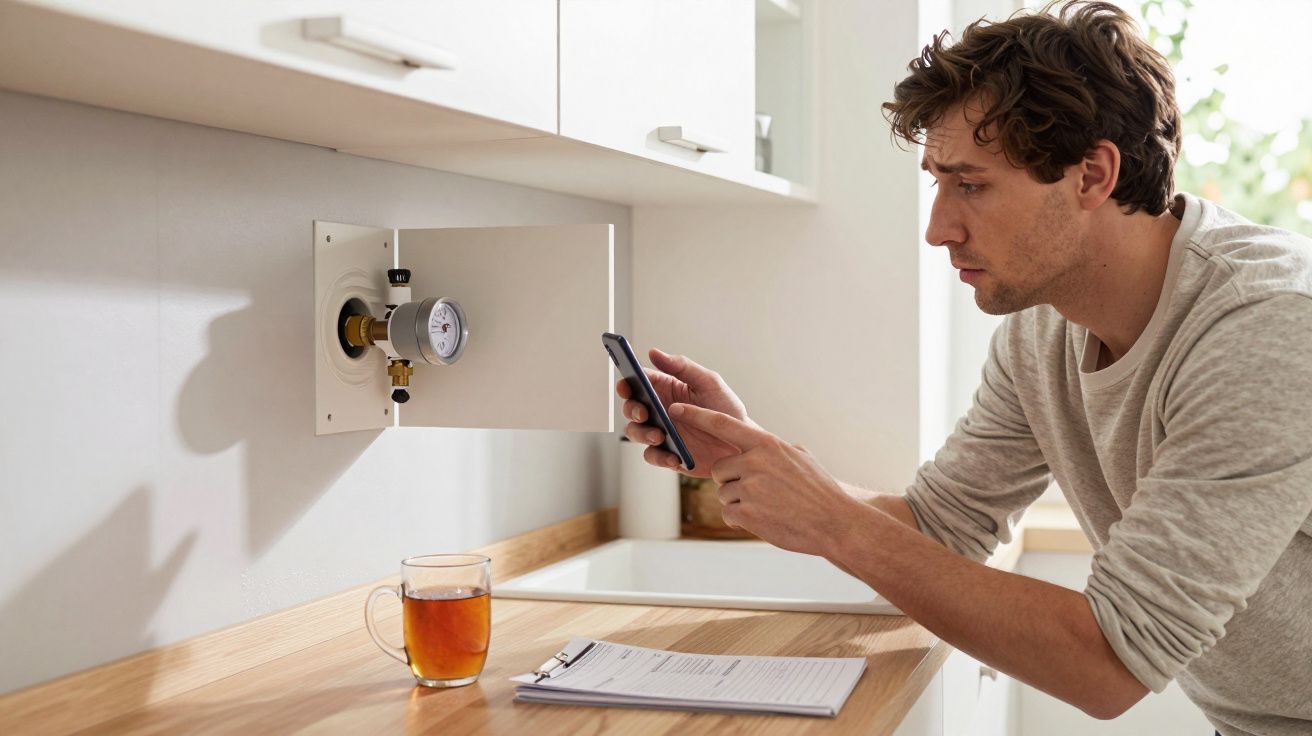
The mug goes cold on the side, the boiler kicks in, and your phone pings with a bill that looks slightly… wrong. Hidden water leaks do that: they sit behind tiles, under floors, inside walls, quietly turning everyday use into long-term costs you only notice once the numbers and the plaster start misbehaving.
Most of us picture a leak as a drip you can hear. The problem is the ones you can’t - the slow feed into a void, the hairline crack that only opens under pressure, the pipe that sweats just enough to keep a wall damp. They don’t announce themselves. They just reshape your home, one unnoticed week at a time.
The quiet ways a leak shows itself (before it becomes a scene)
Water is patient. It will find the easiest route, and it will keep taking it. That’s why the early signs often feel like “house stuff” rather than an obvious fault.
You might spot it as a soft change in texture: paint that looks slightly blistered, skirting boards that begin to ripple, a patch of wall that never quite dries. Or it arrives through smell - that faint, earthy dampness that air freshener can’t outmuscle.
Bills are another clue, but they’re slippery. A leak doesn’t always spike usage overnight; it can create a gentle lift that looks like “winter” or “more showers” until it’s been there for months.
Here are the signals people dismiss most:
- A boiler losing pressure repeatedly, with no clear reason
- A cold spot or warm spot on flooring that feels “odd” underfoot
- Mould returning in the same corner after cleaning
- The sound of water movement when everything is off (especially at night)
- A stop tap area that feels damp, or a meter box that smells musty
None of these prove a leak on their own. Together, they’re your house trying to whisper before it has to shout.
What actually causes hidden water leaks in ordinary homes
It’s rarely one dramatic failure. More often it’s small stress, repeated, in places you never look.
1) Age, joints, and tiny movements
Homes move. Timber expands and contracts, older pipework shifts a millimetre at a time, and joints are where movement collects. Compression fittings can loosen. Old solder can fatigue. Washers flatten and stop sealing properly.
If your property is older, you can also get mismatched materials from past repairs - a modern bit of pipe connected to older runs - and those transitions can become weak points over time.
2) Pressure that’s slightly too high (or fluctuates)
Water pressure is meant to be stable. When it isn’t, it batters the system. A pipe can cope for years, then develop a pinhole that behaves like a slow puncture: fine at low demand, worse when several taps run.
You see this pattern when leaks “mysteriously” show up after:
- a new combi boiler installation
- a mains repair in the street
- a change to a shower pump or unvented cylinder
Pressure isn’t just a comfort setting. It’s wear and tear.
3) Bad seals in the wet rooms we trust most
Bathrooms and kitchens are leak factories when the details aren’t right. It’s not always a pipe; it’s the boundary between wet and not-wet.
Common culprits:
- cracked grout letting water sit behind tiles
- failed silicone around baths, showers, and sinks
- loose wastes under basins
- shower trays that flex slightly, breaking seals over time
This is how you get the maddening leak that appears downstairs, while upstairs “looks fine”.
4) Freezing, condensation, and slow corrosion
In unheated voids - lofts, garages, external walls - pipes can freeze and split. But condensation can be just as sneaky: a cold pipe in a warm, humid space can “sweat” enough to dampen plaster and timber without any pipe failure at all.
Corrosion is the long game. Water chemistry, oxygen, and time can create pinholes in copper; older galvanised pipework can degrade internally until it finally gives up.
How leaks reshape walls, floors, and air
Water doesn’t just stain. It changes materials.
Plaster becomes soft and friable, then salts migrate to the surface as that chalky white bloom. Timber swells, bows, then dries into a new warped shape. Adhesives fail. Tiles loosen. And because damp lingers in dark cavities, mould becomes a secondary problem, not a separate one.
A particularly frustrating feature of hidden leaks is that damage often appears away from the source. Water follows joists, pipes, and gravity. The ceiling mark is sometimes just where the water decided to exit, not where it started.
The long-term costs people don’t price in (until they have to)
The cost isn’t only the water you’ve paid for. It’s the knock-on spending that comes from letting moisture live where it shouldn’t.
Long-term costs tend to land in four buckets:
- Higher utility bills: a constant, silent draw that compounds over months
- Decor and finishes: repeated repainting, re-tiling, replacing swollen skirting
- Repairs and access: lifting floors, opening walls, making good afterwards
- Secondary issues: mould remediation, damaged electrics, weakened timber
There’s also the slow cost of uncertainty. Once you suspect a leak, you start running mental audits: “Did we leave the tap on?” “Is the boiler going again?” That low-level stress is real, and it’s why finding the source matters as much as fixing it.
A simple “two-check” routine to catch a leak early
You don’t need to become a plumber. You just need a repeatable way to test reality when something feels off.
Check 1: The meter test (10 minutes).
Turn off all water use: taps, appliances, toilets (don’t flush), and wait. Take a photo of your water meter reading, then check again after 10 minutes. If the numbers move, water is going somewhere.
Check 2: The toilet dye test (5 minutes).
Add a few drops of food colouring to the cistern, don’t flush, and wait 15–20 minutes. If colour appears in the bowl, the flush valve is leaking - a classic hidden waster that can look like “nothing”.
If either check suggests movement, don’t panic-redecorate. Confirm, isolate, and then decide whether it’s a DIY seal job or time for a leak detection specialist.
“The expensive part wasn’t the pipe. It was the months we spent painting over the same patch,” a homeowner in Leeds told me. “We kept treating the symptom because we didn’t want the mess.”
What to do when you suspect one (without ripping your house apart)
Start with the least destructive steps. The goal is to narrow the search before anyone starts cutting access holes.
- Track patterns: when does the damp worsen - after showers, overnight, only when heating is on?
- Check obvious points: under sinks, around the washing machine, boiler pressure drops, radiator valves
- Dry the area and watch: a fully dry surface that re-wets tells you more than a permanently damp one
- Use your senses carefully: musty smell, warmer patches, or the sound of water can be clues
- Know when to escalate: recurring boiler pressure loss, ceiling staining, or a moving meter reading usually justifies professional help
Leak detection (acoustic listening, thermal imaging, tracer gas) can feel like overkill until you compare it to repairing a ceiling you didn’t need to open.
| Point clé | Détail | Intérêt pour le lecteur |
|---|---|---|
| Early signs | Musty smells, recurring mould, odd patches, boiler pressure drops | Catch it before walls and bills take the hit |
| Root causes | Ageing joints, pressure changes, failed seals, condensation/corrosion | Stops you treating symptoms as “damp” |
| Two-check routine | Meter test + toilet dye test | Quick, low-mess confirmation at home |
FAQ:
- What’s the most common hidden leak in a typical UK home? Toilets running silently and failed bathroom seals are up there, along with small leaks under kitchen sinks and around appliance feeds.
- Does a higher bill always mean a leak? No, but a steady rise without a lifestyle change is a strong prompt to do the meter test and rule it out.
- Can condensation look like a leak? Yes. Cold pipes or poor ventilation can create repeated damp that mimics a slow leak. The fix is different, so diagnosis matters.
- Should I claim on insurance? It depends on your policy and the cause. Many cover “escape of water” but may not cover gradual deterioration. Document readings, photos, and timelines early.
- When is it urgent? If you have ceiling bulging, active dripping, electrics affected, or the meter is spinning when everything is off, treat it as urgent and isolate water at the stop tap if needed.




Comments (0)
No comments yet. Be the first to comment!
Leave a Comment