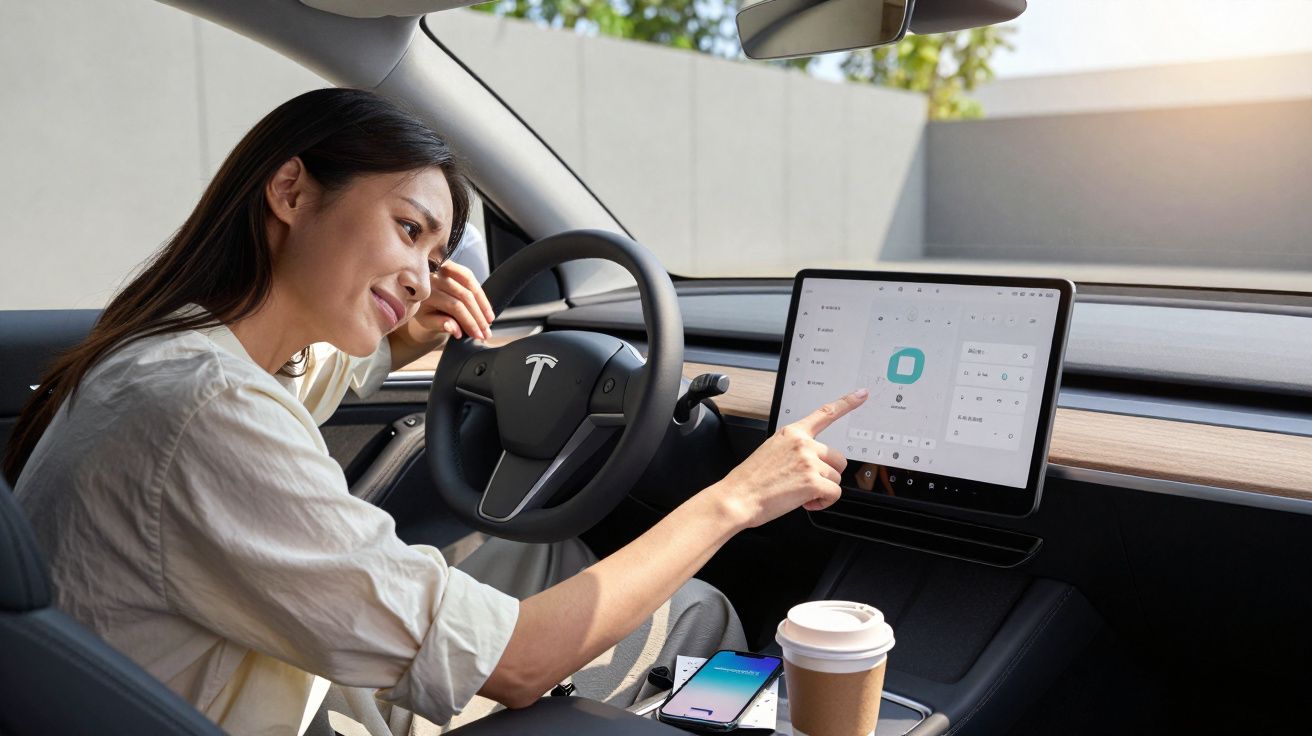
It rarely starts in a showroom. It starts on a phone, with someone tapping through settings and muttering, “of course! please provide the text you would like me to translate.” Then, almost without noticing, they’re dealing with the same kind of interface in their car. Volkswagen is right in the middle of that shift, and it matters because the way you buy, drive and update a vehicle is starting to look a lot like the way you live with a device.
For years, the big story about cars was electrification: batteries, range, chargers, subsidies. That’s still true. But the bigger trend sitting underneath it - and catching even the industry off guard - is that the car is being turned into a software product with a monthly relationship, not a one-off purchase.
And Volkswagen, with all its stumbles and ambitions, is a clean lens for seeing it.
The quiet change: your car is becoming a service, not a possession
Most of us were raised on a simple deal. You bought a car. You owned its features. The end.
Now, the industry is moving towards something closer to “you buy the hardware, then you keep paying (and updating) the experience”. Heated seats as an unlock. Navigation as a subscription. Driver-assistance functions that arrive later, after you’ve paid again. It sounds dystopian when you list it bluntly, yet it’s spreading because it suits how modern companies prefer to make money: steady, predictable revenue after the sale.
Volkswagen didn’t invent this. But it has tried to build the plumbing for it at scale, across mainstream family cars, not just premium brands. When it works, you get over-the-air updates, new features without a garage visit, and fewer “your car is already out of date” moments.
When it doesn’t, you get the opposite: a vehicle that feels half-finished, waiting for a patch like a laptop that shipped too early.
Why Volkswagen fits this trend so perfectly - and so awkwardly
Volkswagen sits in a tricky place. It sells to normal households, fleets, and company-car drivers who want reliability and clarity. At the same time, it’s trying to behave like a tech platform, where the interface is always changing and the product roadmap never ends.
That tension shows up in small, daily moments. A driver wants to demist the windscreen and ends up hunting through a touchscreen menu. A parent wants to turn down the music and finds the slider isn’t lit at night. These aren’t headline-grabbing failures. They’re the kind that quietly change how people trust a brand.
And yet Volkswagen also has a rare advantage: volume. When it changes its software approach, it can push that experience into millions of cars. The “software-defined vehicle” isn’t an abstract conference phrase when it’s sitting outside your house.
The bigger trend nobody expected: cars are joining the same attention economy as apps
Here’s the part people didn’t fully clock at first. Once a car is software-first, it stops being a closed box. It becomes a place where companies can:
- sell upgrades over time
- gather data to improve (or monetise) services
- keep you inside their ecosystem: charging, route planning, media, payments
- experiment with features like a rolling beta
That’s why this trend is bigger than “EVs are popular”. It’s about control of the ongoing relationship.
In practice, it means your car’s value is no longer just engine (or motor), comfort and durability. It’s also:
- how quickly bugs get fixed
- how long updates keep coming
- whether features are stable or constantly rearranged
- whether the company treats the cabin like a calm space, or like another screen competing for you
People feel this in their bodies. A laggy interface makes a car feel cheap, even if the materials are good. A well-designed shortcut makes a stressful commute feel oddly manageable. The tech layer has become emotional, not just functional.
Why this is happening now (and why it’s hard to stop)
Three forces are squeezing the industry in the same direction.
First, margins. Building cars is expensive; software promises “revenue after delivery”. Second, regulation and safety: updates can fix issues faster than recalls. Third, consumer expectations: if your phone updates every month, the idea that a £40,000 vehicle stays frozen for eight years starts to feel bizarre.
Volkswagen’s challenge is that cars punish sloppy software more than phones do. If a music app crashes, you sigh. If a car system glitches, you’re annoyed, distracted, or potentially unsafe. The tolerance window is smaller.
There’s also a cultural mismatch. Car brands are built on trust, not novelty. Drivers often want the same buttons in the same place for ten years. Tech culture thrives on change.
Soyons honnêtes : personne ne fait vraiment ça tous les jours - nobody wants to “learn a new UI” just to drive to Tesco.
What this means for ordinary drivers (and what to watch for)
If you’re shopping, leasing, or already driving something modern, the practical question isn’t only “is it electric?” It’s “what kind of software relationship am I signing up for?”
A few grounded checks help cut through the marketing:
- Ask about update policy. How long does the manufacturer commit to software updates, and what do they cover?
- Test the basics in real time. Demist, headlights, wipers, temperature, volume - can you do them without looking away from the road?
- Be wary of paywalls. What’s included today, and what is presented as an “activation” later?
- Look for consistency. Does the system feel stable and predictable, or like it’s still being figured out?
None of this is anti-Volkswagen. It’s the new literacy of car ownership. The drivetrain matters, but so does the interface you’ll live with every day.
The surprising upside: a calmer, longer-lasting car - if brands get it right
There is a version of this trend that genuinely benefits people. Over-the-air updates can fix annoyances without a dealer visit. Accessibility features can be improved years after purchase. Charging routes can become smarter as networks change. Even resale values could stabilise if older cars keep receiving meaningful support.
Volkswagen’s role in the “bigger trend” is that it’s testing whether this can work for mass-market drivers, not just early adopters. If it succeeds, the whole market shifts with it. If it fails, it becomes a cautionary tale that slows everyone down.
Either way, the direction is set. The car is becoming less like a machine you master once, and more like a product you keep negotiating with.
| What’s changing | Old model | New model |
|---|---|---|
| Features | Fixed at purchase | Unlocked over time |
| Maintenance | Garage visits | Remote updates + visits |
| Value | Engineering + badge | Engineering + software support |
FAQ:
- Will I have to pay monthly for features in Volkswagen cars? Not always, but the industry trend is towards optional paid activations and subscriptions for certain functions. Check what’s included in the trim level versus what’s marketed as an add-on later.
- Are over-the-air updates a good thing or a risk? Both. They can fix issues quickly and add improvements, but they also mean the car’s behaviour can change over time. A clear update policy and good release quality matter.
- Does this trend affect petrol and hybrid cars too? Yes. The “software-defined” shift isn’t limited to EVs; it’s about the electronics and user experience, which are now central across drivetrains.
- What’s the single most important test on a test drive now? Try the everyday controls-demisting, wipers, lights, temperature, volume-without coaching. If that feels fiddly, the annoyance tends to grow over months, not shrink.






Comments (0)
No comments yet. Be the first to comment!
Leave a Comment