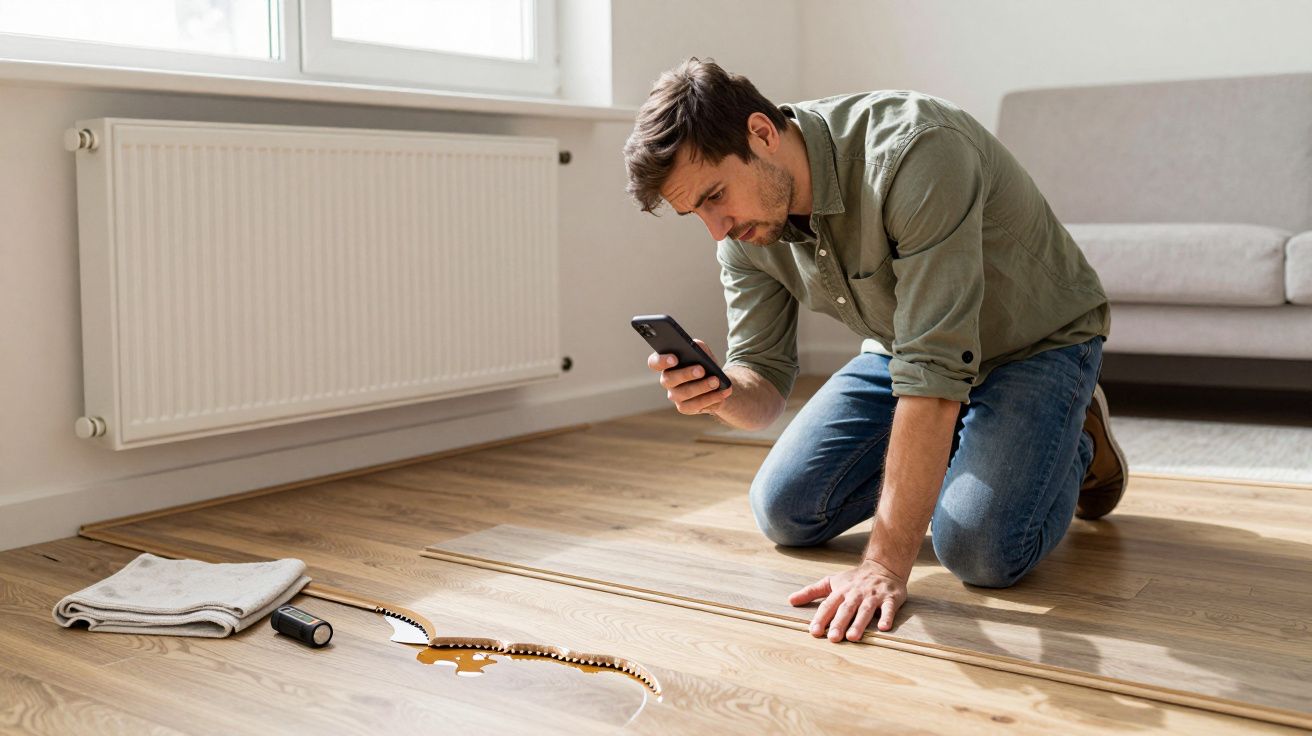
The first sign wasn’t dramatic. Hidden water leaks often start like that: a faint musty smell, a skirting board that looks slightly tired, a patch of floor that feels a touch cooler underfoot. The trouble is that property damage doesn’t wait for a big moment - it builds quietly, then arrives all at once, usually on a day when you’re already rushing.
In this case, it was a downstairs room that “always dried eventually”. A harmless-looking mark near the radiator. A towel on the floor now and then. Nothing urgent, until the laminate began to bow as if the house had exhaled and the boards couldn’t keep up.
When “a small damp patch” stops being small
Most people don’t ignore leaks because they’re careless. They ignore them because the evidence is soft. Water doesn’t announce itself with sparks or smoke; it whispers. It moves behind plaster, under tiles, along joists, following the logic of gravity and whatever gaps your building gives it.
So you do what sensible people do: you monitor it. You take a photo. You tell yourself you’ll mention it next time the plumber is round for the boiler service. You crack a window and hope it’s just condensation.
Then one morning, you step into the room and the floor feels wrong. Not wet exactly - swollen. The boards lift at the edges, the surface turns slightly spongy, and the “small patch” has migrated two metres from where you first noticed it. Water doesn’t always spread in the direction you expect; it spreads in the direction it can.
What hidden water leaks are really doing behind the scenes
A hidden leak is rarely just “water on a surface”. It’s water interacting with structure, adhesives, insulation, and whatever your home is made of. That’s why the visible mark is often the late part of the story.
Common sources include:
- A pinhole leak in a central-heating pipe under the floor.
- A failed seal around a shower tray or bath edge.
- A slow drip from a washing machine valve or dishwasher feed.
- A hairline crack in a waste pipe that only leaks when water is flowing.
- A roof or gutter issue that presents like an internal plumbing problem after wind-driven rain.
What makes these leaks expensive is time. A slow leak can saturate chipboard, creep into plaster, and soften timber long before you see a puddle. By the time the floor “soaks”, it’s often been marinating for weeks.
The moment the floor gives you the truth
The turning point is usually physical: flooring that buckles, tiles that loosen, grout that darkens permanently, or a carpet underlay that suddenly smells like a forgotten towel. People describe it as the house changing texture.
If it’s laminate or engineered wood, the swelling can look like a wave. If it’s carpet, it’s the heavy, cold feel underfoot and the way the room holds a damp smell even after heating is on. If it’s vinyl, you may see bubbles or lifting at the edges - a polite way of saying the adhesive has surrendered.
At that point, “drying it out” isn’t a plan. It’s a pause button. The leak is still feeding the problem.
What to do in the first hour (before you start tearing things up)
You don’t need to be dramatic, but you do need to be deliberate. The goal is to stop the water, protect electrics, and preserve evidence for any insurance claim.
- Stop the source if you can. Turn off the stopcock for mains water if it’s likely a supply leak. If it’s heating, isolate the boiler and top-up loop.
- Don’t ignore electrics. If water may be near sockets, appliances, or underfloor wiring, switch off the relevant circuit at the consumer unit and avoid standing water.
- Document properly. Wide shots, close-ups, and a short video showing the extent, including any ceilings below if you’re in a flat or maisonette.
- Move what you can. Furniture off the wet area; lift rugs so dye doesn’t bleed and trap moisture.
- Call the right help. “Plumber” is good; “leak detection specialist” is better when the source is unclear and you’re trying to avoid unnecessary damage.
A lot of property damage happens during panic repairs: ripping out boards in the wrong place, drilling exploratory holes, turning the heating up to “blast it dry” and creating the perfect warm incubator for mould.
Finding the leak without demolishing the room
The most frustrating part is that water rarely appears directly under the problem. It can travel along pipes, beams, and even screws, then present as a stain somewhere else entirely.
Modern leak detection often uses a mix of:
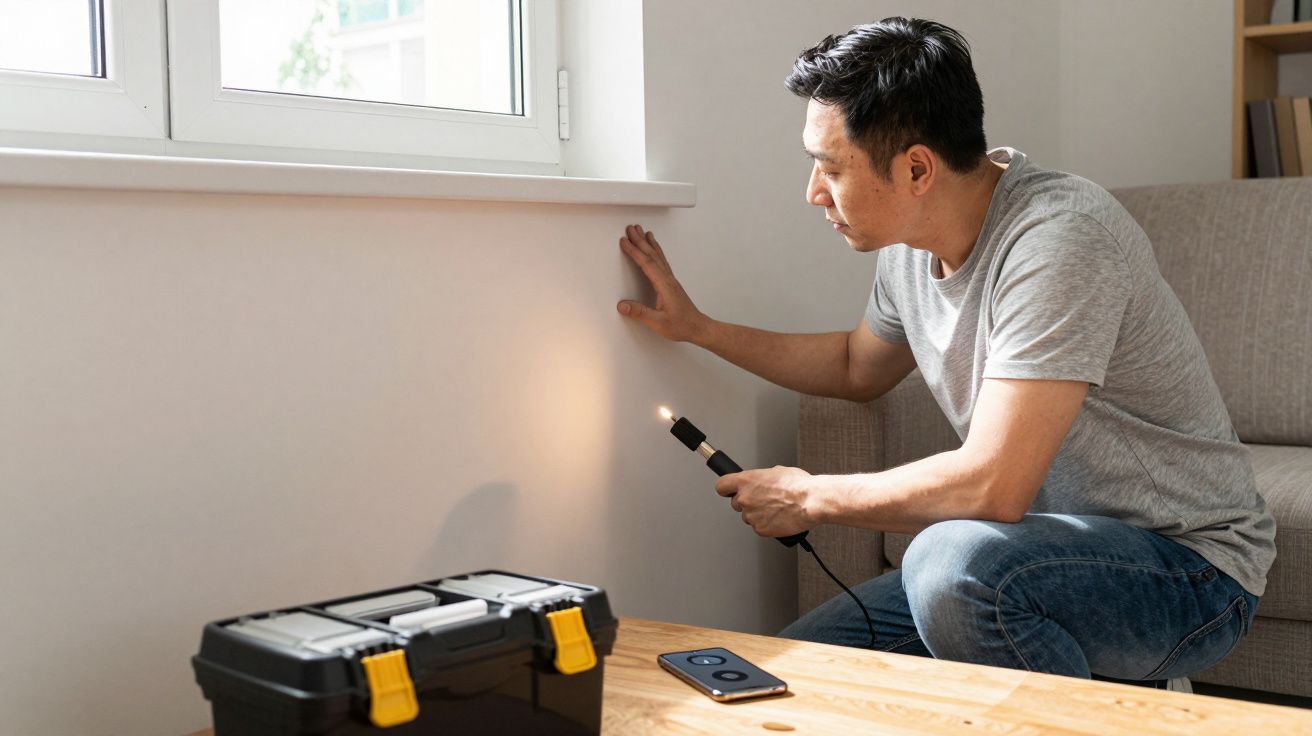
- Thermal imaging to spot temperature differences from damp areas.
- Acoustic detection to “listen” for pressurised leaks.
- Tracer gas for tiny, hard-to-find pipe failures.
- Moisture mapping to identify the wettest point and the likely path.
The aim isn’t just to find a wet area. It’s to find the point where water is being introduced, so you can stop it with the least collateral mess. Every extra square metre you open up is extra drying time, extra replacement, extra cost.
The repair you can’t see: drying, mould risk, and why timelines matter
Stopping the leak is step one. Drying is the part that decides whether your home returns to normal or stays subtly “off” for months.
If water has soaked into subflooring, joists, plaster, or insulation, expect:
- Dehumidifiers and air movers running for days (sometimes longer).
- Moisture readings taken to confirm dryness before refitting.
- Skirting boards removed to allow airflow behind walls.
- A decision about whether materials are salvageable or must be replaced.
Mould isn’t a moral failing; it’s biology. Give damp materials time, warmth, and trapped air, and they’ll respond exactly as nature designed them to. The smell people call “damp” is often the early warning that spores have found a foothold.
How to tell if you’re sitting on a leak before it soaks the floor
Most homes offer clues, but they’re the kind you can explain away if you’re busy.
Watch for:
- A water meter that moves when everything is off.
- A boiler pressure drop that keeps returning after topping up.
- New cracks in paint near skirting boards or around a shower.
- Warping in laminate edges or lifting vinyl seams.
- A persistent musty smell that outlives ventilation and cleaning.
- One cold patch on a wall that never seems to warm up.
If you live in a block, add another layer: leaks can travel between flats and show up far from where they start. Your ceiling stain might be someone else’s loose waste pipe.
What this kind of leak teaches you (whether you wanted the lesson or not)
People like to believe serious home problems arrive with clear alarms. In reality, the house offers tiny signals and waits to see if you’ll take them seriously. Hidden water leaks exploit that human tendency to postpone anything that isn’t yet catastrophic.
The uncomfortable truth is that a “harmless” damp patch is often your cheapest version of the problem. The soaked floor is just the moment the bill becomes visible.
| Signal | What it can mean | Best next step |
|---|---|---|
| Swollen or lifting floor | Prolonged moisture under surface | Isolate water, get leak located |
| Musty smell that returns | Moisture trapped in structure | Moisture check, start drying plan |
| Meter movement at rest | Pressurised leak on supply | Plumber + detection if unclear |
FAQ:
- How can I confirm a hidden leak without ripping up the floor? Check the water meter with all taps and appliances off; if it still moves, you likely have a supply leak. For precise location, a leak detection specialist can use thermal imaging or acoustic tools to narrow it down with minimal disruption.
- Will my flooring be salvageable after it’s soaked? Sometimes, but not always. Laminate and chipboard usually swell and warp permanently, while some tiles and solid timber may survive if lifted early and dried correctly.
- Is it safe to stay in the property during drying? Often yes, but it depends on electrics, the extent of water spread, and any mould growth. If water has reached sockets, the consumer unit, or ceiling fittings, get an electrician’s advice before using that area.
- Does home insurance cover this kind of property damage? Many policies cover “escape of water”, but exclusions and limits vary, especially for gradual leaks. Document everything, stop the source quickly, and report promptly to avoid disputes about timing.




Comments (0)
No comments yet. Be the first to comment!
Leave a Comment