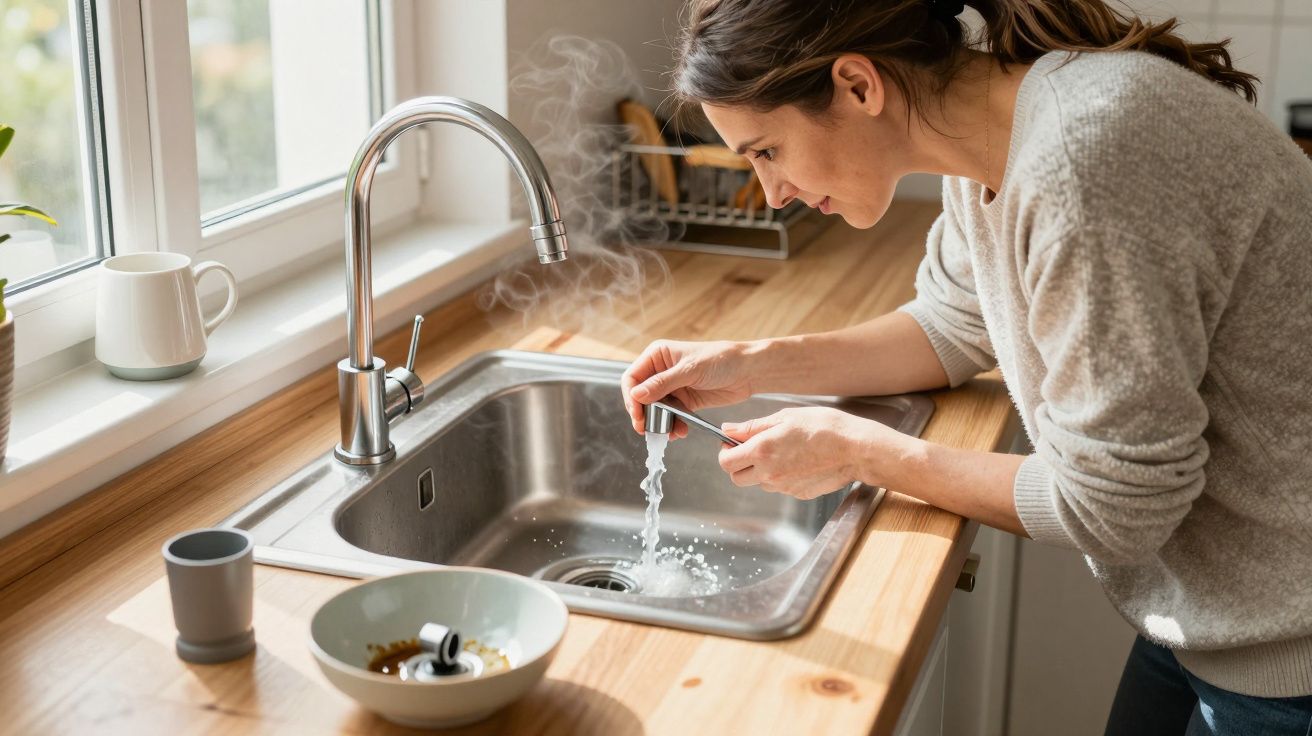
A spotless sink doesn’t mean your plumbing is fine. Drainage systems can look clean at the surface while hidden blockages build up out of sight, quietly slowing flow, holding smells, and setting you up for a bigger problem later. The frustrating part is how normal it can all seem-until the day it isn’t.
I’m thinking of that familiar moment: you rinse a mug, the water swirls, and it eventually goes down. You shrug, wipe the worktop, and move on. But “eventually” is often the first clue.
The tidy-drain illusion (and why it catches people out)
A drain can be visually perfect and still be performing badly. Most of what causes trouble isn’t the dramatic stuff you’d notice straight away, but the soft, accumulating layer: grease that cools and clings, soap scum that grips hair, coffee grounds that settle, and “flushable” wipes that aren’t.
Because the top looks fine, you treat it like a one-off. Then you start making small allowances without realising: you run the tap longer, you plunge it harder, you accept the faint smell after the dishwasher’s been on. That’s the pattern.
Hidden blockages are so common because they form where you don’t routinely look: bends, junctions, long horizontal runs, and the point where the pipe meets the main drain. It’s not just inconvenience-slow drainage can encourage bacteria build-up, attract pests, and push dirty water back up when you least expect it.
The signs your drain is “working”, but not well
You don’t need standing water to have a problem. The early warnings are subtler and, annoyingly, easy to normalise.
Look for these repeat offenders:
- Water drains with a sluggish “pause” before it picks up speed.
- Gurgling noises after you empty a sink or flush a loo.
- A smell that comes and goes, especially after hot water has run.
- One fixture affects another (flush the toilet, the shower burps).
- You’re plunging “sometimes” and telling yourself it’s fine.
If two or more are happening, it’s rarely bad luck. It’s usually build-up.
“If it’s slower than it used to be, something has changed in the pipe - even if the grate looks spotless.”
Where the muck actually sits (the bit you can’t see)
Most people picture a single clog like a plug in a bottle. In real homes it’s more like plaque in an artery: a coating that narrows the pipe, catches more debris, then slowly turns a 10-minute annoyance into a Saturday-killing mess.
Typical culprits by location:
- Kitchen: fats, oils, grease, starchy water, coffee grounds, food scraps.
- Bathroom: hair, soap residue, toothpaste solids, limescale.
- Outside runs: silt, wet leaves, roots finding tiny gaps, collapsed or misaligned pipe sections.
And because drainage systems are designed to move waste away, anything that slows flow gives that waste more time to cling, harden, and spread.
A quick at-home check that’s actually useful
You’re not trying to become a plumber. You’re trying to work out whether you’re dealing with surface mess or something deeper.
- Run hot water for 30 seconds, then turn it off and listen. A clear pipe goes quiet fast; a restricted one often gurgles and “sucks”.
- Fill the basin or sink halfway, then release the plug. Watch the speed and whether it forms a clean vortex. A weak whirlpool can point to narrowing.
- Check the overflow (bath/sink). If it smells strongly, the build-up may be sitting higher than you think.
- Note cross-effects: if the washing machine drains and the kitchen sink bubbles, that’s a clue the restriction is further along the line.
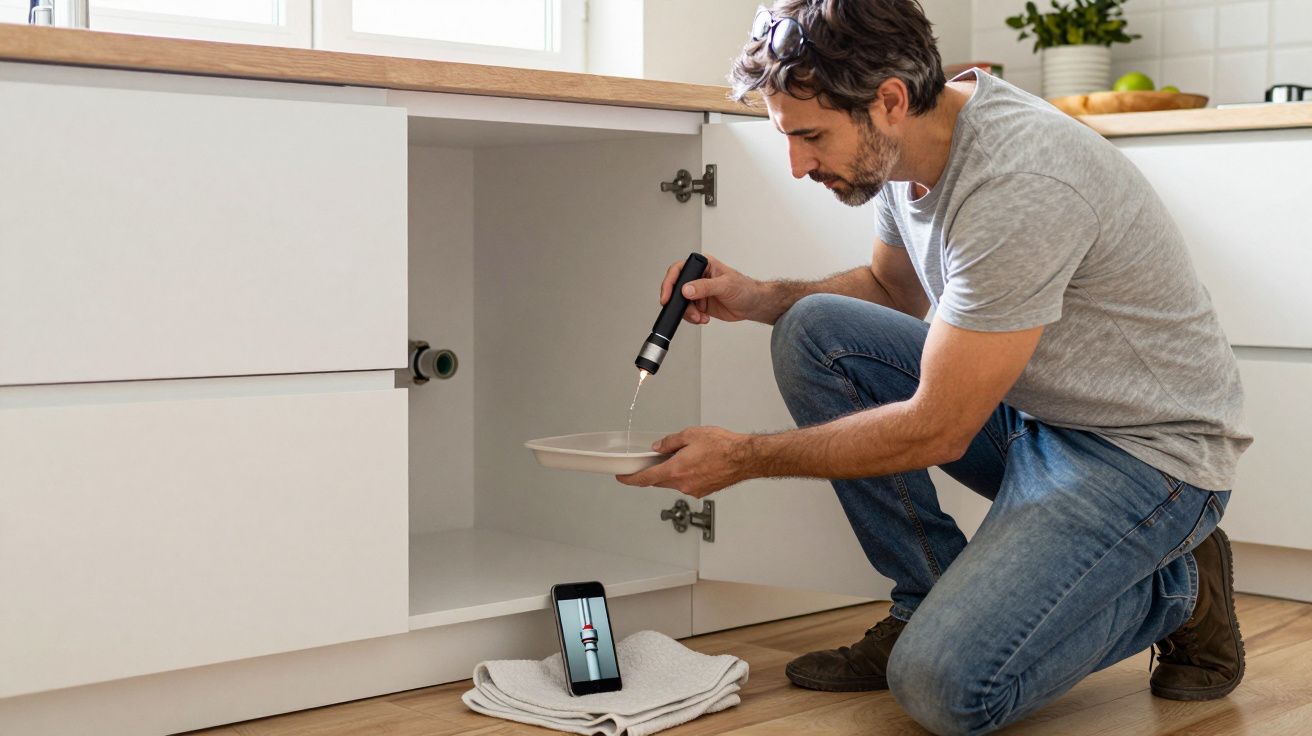
If you can safely remove a trap under a sink and see thick sludge, that’s data-not a moral failing. It simply means the pipe is catching more than it’s carrying.
The fixes people love (and the ones that bite later)
When a drain misbehaves, most of us reach for the quickest win. Some are fine. Some make the long-term situation worse.
Worth doing early: - Physical removal at the top: hair catchers, cleaning the plughole, clearing the trap. - A kettle of hot water after you’ve removed solids (especially in kitchens). - Enzyme-based drain cleaners for ongoing maintenance (slower, gentler, less dramatic).
Be cautious with: - Caustic chemical cleaners as a habit. They can harden certain blockages, damage older pipework, and create a nasty hazard if you later need to dismantle a trap. - Over-plunging. It can shift a partial blockage deeper, where it’s harder to reach. - “Flushable” wipes. They’re the polite beginning of an impolite bill.
The best rule is boring: remove what you can reach, then focus on preventing re-accumulation. If the problem returns quickly, you’re not failing-you’re just dealing with a hidden blockage further along.
When it’s time to stop guessing and get help
If you’ve cleared the top, cleaned the trap, and the symptoms keep coming back, you’re likely beyond the easy zone. This is where a proper investigation (often a camera inspection) saves money by avoiding random attempts.
Call a professional sooner if: - Water backs up into a sink, shower, or bath. - Multiple drains are slow at the same time. - There’s a persistent sewage smell indoors or near an outside drain. - You live in an older property with unknown pipe condition. - You’ve used chemicals and now the drain is still blocked (don’t dismantle it without telling them).
A blockage that’s “not that bad” can still be putting pressure on joints, encouraging leaks, and making foul air more likely to enter the house. The clean surface is not the story.
| Quick clue | What it often means | What to do next |
|---|---|---|
| Slow drain + occasional smell | Build-up coating the pipe | Clean trap, use a catcher, consider enzyme treatment |
| Gurgling / bubbling | Air trapped by restriction | Check for cross-effects; likely further along the run |
| Multiple fixtures affected | Main line or shared section issue | Get it assessed before it backs up |
FAQ:
- Is slow drainage always a blockage? Usually it’s some form of restriction-build-up, scale, or something catching debris. Less commonly it can be poor pipe fall or a venting issue.
- Do boiling water and bicarbonate fix it? Hot water can help soften grease if the pipe isn’t already heavily restricted. It’s better as a maintenance habit than a cure for recurring slow drains.
- Are chemical drain cleaners safe? Occasional use might be fine in modern pipework, but frequent use can damage seals and makes later hands-on work hazardous. If you’ve used chemicals and it’s still blocked, tell whoever attends.
- How do I prevent it without thinking about it daily? Use a hair catcher, scrape plates before washing, don’t pour fats down the sink, and do a weekly hot-water flush on kitchen drains.
- When are “hidden blockages” most likely? After long periods of normal use (grease/soap build-up), in houses with older pipework, or where multiple fixtures share a long horizontal run.

Comments (0)
No comments yet. Be the first to comment!
Leave a Comment