The first time the pressure drops after a pipe repair, it rarely feels dramatic. It’s more like a quiet betrayal: the radiators that were fine yesterday are lukewarm again, the boiler short-cycles, the upstairs tap turns spiteful. Often, what’s really showing up isn’t “a bad fix” so much as a system imbalance that the repair accidentally revealed.
Installers learn to treat that dip in pressure as a clue, not a verdict. Because a sealed joint can still sit inside a system that’s pulling in air, over-pressurising on heat-up, or slowly dumping water somewhere you can’t see.
Why “looks fixed” is a dangerous moment
Pressure drops are symptoms, not the diagnosis
After a repair, the system can look perfect for hours or even days. Then the gauge slides down, and everyone assumes the same joint has failed again.
The reality is that central heating and domestic pipework behave like a network. Fixing one weak point can change flows, temperatures, and pressures elsewhere - enough to make an existing flaw start showing itself. If the system was already stressed, your neat repair can be the first time it’s asked to run properly in months.
The most useful question isn’t “where did it leak?” It’s “what changed when it stopped leaking?”
The two common stories behind the second drop
In homes, the repeat drop usually falls into one of two patterns:
- A genuine loss of water: a slow leak, a weeping valve, a pinhole that only opens when hot.
- A reading that’s lying to you: trapped air moving around, a faulty pressure gauge, or an expansion vessel issue that makes pressure swing wildly.
Both feel identical to a homeowner watching the needle. They are very different jobs to diagnose.
What installers check immediately (before they touch the repair)
1) “Is it actually losing water?”
Installers start by verifying the basics, because plenty of “pressure loss” complaints are air migration and bleeding after a drain-down.
A quick, practical sequence often looks like this:
- Check the boiler pressure cold, then again at full temperature.
- Look for fresh water marks rather than old staining.
- Check likely culprits: pressure relief discharge pipe, filling loop, auto air vent, and radiator valves.
- Ask one boring but crucial question: Has anyone been bleeding radiators since the work?
If radiators were bled, the system can drop and simply need topping up once or twice. If it keeps dropping after that, the “it’s just air” theory stops being comforting.
2) The PRV discharge: the leak you don’t see inside
One of the fastest checks is outside. If the boiler’s pressure relief valve (PRV) is lifting, water can dump through the discharge pipe and vanish down a drain without leaving a puddle in the house.
Signs installers look for:
- A discharge pipe that’s wet when the boiler has been running
- White staining or green marks around the termination point
- Pressure that rises high when hot and then returns low after cooling
That pattern screams expansion control rather than a failed pipe repair.
3) Expansion vessel and pressure swings (the classic “fine cold, angry hot”)
If the expansion vessel has lost its air charge, pressure can rocket when heating up and then drop when it cools. Homeowners experience it as “we topped it up and it still fell”.
Installers will usually:
- Note the hot running pressure vs cold pressure
- Check for rapid climbs when the heating fires
- Test the vessel charge (where appropriate) and look for water at the Schrader valve, which suggests a failed diaphragm
This is where system imbalance becomes very real: the system isn’t stable across temperature changes, so it constantly over-corrects.
The less obvious culprits that mimic a failed repair
Micro-leaks that only appear when hot
Some leaks don’t show at cold pressure. A joint can be bone-dry until pipework expands, a floorboard shifts, or a pump changes the differential pressure across a section.
Installers tend to follow a heat-and-listen routine:
- Run heating to temperature
- Inspect joints with a torch and tissue
- Listen for hissing at valves and vents
- Check hidden routes: under baths, behind toilets, at cylinder cupboards
A pipe repair in a visible place can make everyone ignore the invisible pipework that was always the real risk.
Filling loop not fully shut (and the “mystery rises”)
A partially open filling loop can mask losses by topping up slowly - or it can overfill and trigger the PRV. Either way, you get pressure behaviour that feels random.
An installer will check that the loop is: - Fully closed at both ends (where applicable) - Not passing internally (some valves fail and seep)
When pressure rises overnight without heating, that’s a clue. When it drops only after heating cycles, that’s another.
How installers decide whether it’s the repair or the system
The timeline test
Good diagnostics often comes down to timing. Installers will ask when the drop happens and how fast.
- Drops within minutes: likely a significant leak or PRV lift.
- Drops after bleeding: likely air removal or a small leak exposed by fresh circulation.
- Drops over days: often a slow weep, corrosion pinhole, or a hidden valve issue.
They’ll also compare the pressure behaviour to the system layout: number of radiators, height of the property, whether it’s open vented or sealed, and any recent changes (new radiator, TRVs fitted, powerflush, boiler swap).
A quick “first response” checklist
Before re-doing the pipe repair, many installers run this mental list:
- Is the pressure stable when the boiler is off?
- Does pressure rise above 2.5–3 bar when hot?
- Is the PRV discharge dry?
- Has the system been bled recently?
- Any signs of fresh water at valves, tails, or under floors?
- Any evidence of air noise (gurgling, pump cavitation) suggesting imbalance?
Re-making a good joint without checking these can feel productive, but it’s often just resetting the clock.
What you can do as a homeowner before the call-out (and what not to do)
If you’re seeing a repeat drop, you can help speed up the diagnosis without turning it into a DIY experiment.
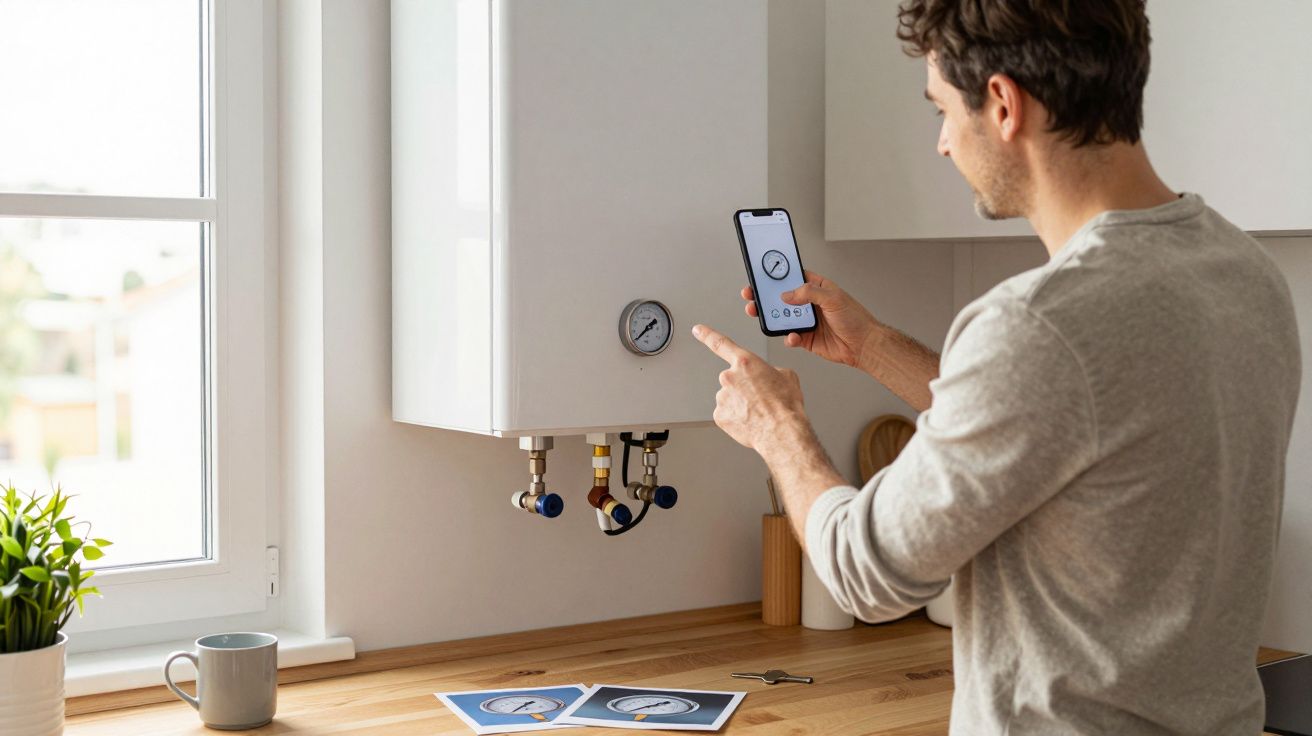
- Take a photo of the gauge cold (first thing in the morning).
- Take a photo after an hour of heating.
- Check the PRV discharge outside for dampness.
- Note if you’ve bled radiators or topped up since the repair.
What not to do: keep topping up daily without investigation. Constant refilling introduces fresh oxygenated water, which accelerates internal corrosion and can worsen the very system imbalance that’s causing instability.
The takeaway: stability is the real “fixed”
A pipe repair can be perfect and still sit inside a system that can’t hold steady pressure. When pressure drops again, installers aren’t just looking for a wet joint - they’re looking for what the pressure behaviour reveals about the whole network.
Once you treat the drop as information, the job gets quicker. And “fixed” stops meaning “dry today”, and starts meaning “stable next week too.”




Comments (0)
No comments yet. Be the first to comment!
Leave a Comment