You don’t notice a drain until it stops doing its one job. Then blocked drains turn a normal morning into a small crisis: the shower tray rising like a tide, the kitchen sink gurgling back yesterday’s washing‑up, the faint sour smell that says something is sitting where it shouldn’t. What nobody really spells out is why recurring issues happen even after you’ve “cleared it”, and why the same pipe can feel like it’s got a grudge.
You pour in a bottle, you plunge until your arms ache, you get one glorious whoosh - and two weeks later the water slows again. It’s not bad luck. It’s mechanics, habits, and a few quiet enemies that build up in layers.
The truth about “it’s cleared” - and why it isn’t
Most household blockages don’t arrive as one dramatic plug. They grow. A thin film of grease turns into a sticky lining, hair knots into a net, and little bits of food or limescale find somewhere to cling. When you finally notice, the pipe has already narrowed, so any extra load tips it over.
Quick fixes often punch a temporary hole through the middle of the mess. The water drains, you breathe out, but the stuff on the sides stays put - like clearing a footpath by making a single boot‑wide track through snow. Next time, it catches faster. That’s the loop people feel as “it keeps happening”.
There’s also the unhelpful myth that the problem lives right under the plughole. Sometimes it does. Often, it’s further along - the bend you can’t see, the long run to the outside gully, or the join where older pipework has a slight lip inside.
What actually causes most blocked drains (and how it turns into a pattern)
Think in categories. Each one has its own “signature” and its own reason for coming back.
1) Grease and fat: the quiet pipe‑liner
Warm oil looks harmless as it slides away. Then it cools, clings, and traps everything that follows. Detergent helps a bit, hot water helps for about five minutes, but neither changes the basic physics: fat solidifies and sticks.
If you’ve ever had a sink that drains fine until you run a full bowl and then it slows, that’s often grease narrowing the pipe. The first flush gets through; the second meets resistance.
2) Hair and soap scum: the bathroom’s felt blanket
Hair doesn’t block pipes by itself - it blocks pipes by grabbing onto roughness and holding on while soap residue builds around it. In hard‑water areas, limescale joins the party and turns a soft clog into something more like plaster.
The reason it’s a recurring issue is simple: if you remove the surface wad but the “rope” remains anchored deeper in the trap or the run, it regrows quickly.
3) “Flushable” wipes and sanitary items: the blockage with a handle
Toilets are built for human waste and toilet paper. Wipes, even the ones that say they break down, behave differently in real drains - especially older ones. They twist, snag, and form a mat that catches everything else.
If the loo is slow, then fine, then slow again, it’s often because a partial obstruction is acting like a sieve. It doesn’t need to be a full blockage to cause trouble.
4) Outside drains: leaves, silt, and the bit nobody checks
Kitchen and bathroom problems can start outside. A gully half‑filled with silt reduces flow; a broken cover lets leaves in; a fat layer congeals in the cooler section of pipe beyond the house.
And then there are roots, which don’t “hunt” pipes like horror stories suggest, but do exploit moisture from tiny cracks and joints. Once they’re in, they catch debris and the blockage becomes a repeat visitor.
The part people miss: flow, not just “stuff”
Drains rely on a boring, brilliant thing: enough water moving fast enough to carry solids away. Change the flow, and you change the outcome.
Low‑flow showers and eco settings are great, but they can mean less flush-through in long runs. A kitchen sink with a slight back‑fall (pipe sloping the wrong way by a hair) can work fine for months and then suddenly start holding grease. Even a minor sag in pipework creates a slow pool where debris settles.
If you’re dealing with recurring issues, you’re not only fighting what goes down the drain. You’re fighting the conditions that let it stay there.
A practical reset: how to stop the same blockage returning
You don’t need to turn your home into a lab. You do need to stop relying on “one big clear” and start thinking: remove, rinse, prevent.
Here’s the order that actually holds up in real kitchens and bathrooms:
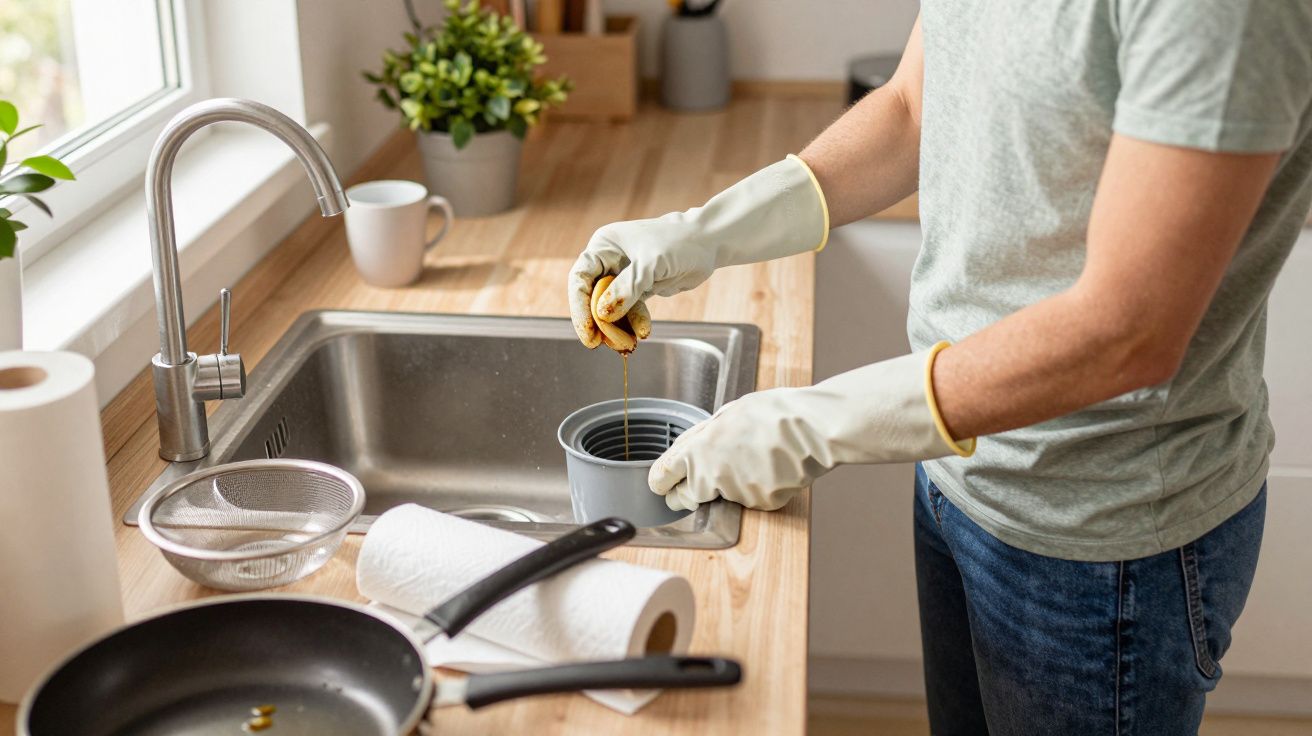
- Physically remove what you can reach. Pull the hair from the plughole, clean the trap if it’s accessible, empty the outside gully. Gloves, a zip‑tool, a bucket - unglamorous, effective.
- Use hot water as a rinse, not a miracle. A full kettle followed by a hot tap run helps after you’ve removed the main muck, not before.
- Be cautious with chemical cleaners. They can damage older pipework, they don’t fix wipes, and they often burn a channel through grease without removing the lining. If you use them, follow the instructions and never mix products.
- Add small barriers. A sink strainer and a shower hair catcher look minor, but they prevent the exact “starter material” blockages need.
- Change one habit that feeds the clog. Wipe pans with kitchen roll before washing. Bin wipes. Don’t treat the toilet like a general chute.
Let’s be honest: nobody does all of that perfectly. But one or two changes can break the cycle.
When it’s not a DIY problem anymore
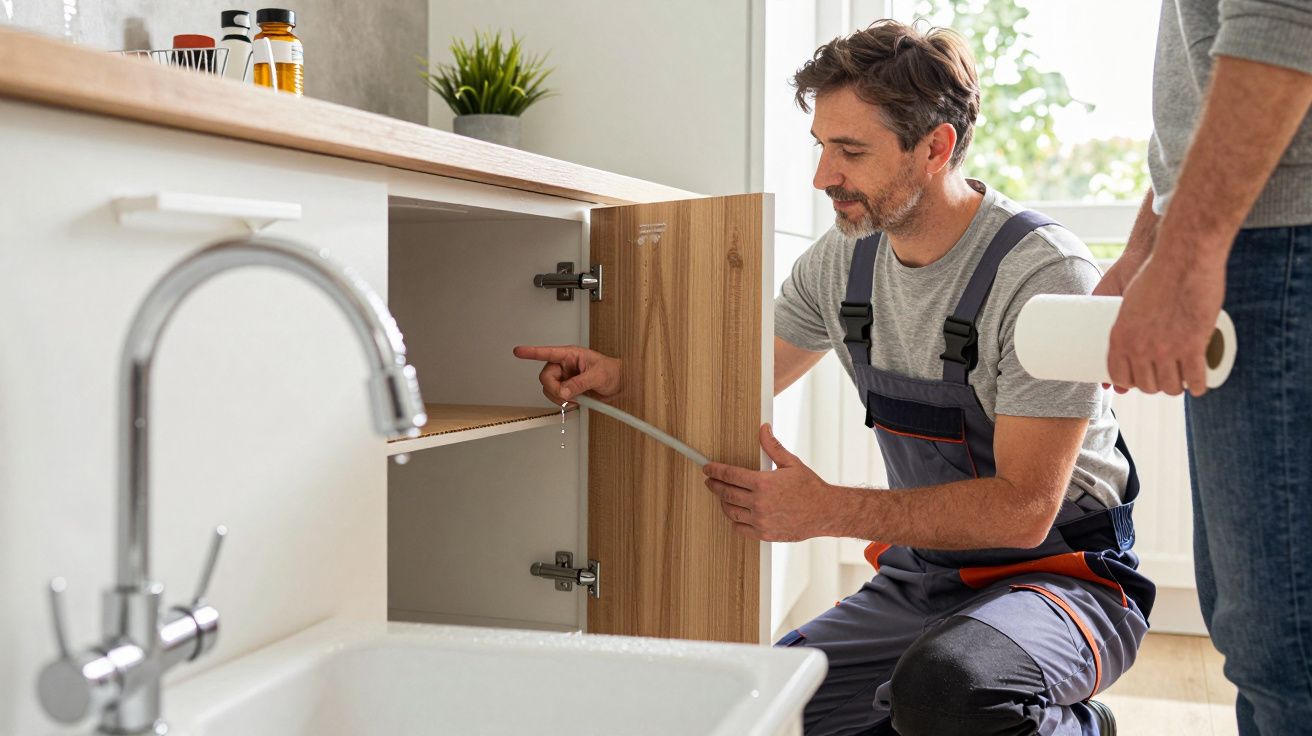
A repeating blockage can be a symptom of something structural: a collapsed section, root ingress, a belly in the line, or a shared drain issue. If you clear it and it returns quickly, especially with multiple fixtures affected, it’s worth escalating.
Call a professional when:
- More than one drain is backing up (e.g., shower and toilet together).
- The outside gully is overflowing or bubbling when you run a tap.
- You’ve had three blockages in a short period, despite cleaning traps and changing habits.
- There’s a sewage smell that comes and goes, especially after rain.
- Plunging makes it worse (a clue the obstruction is further along).
A proper drain survey (often with a camera) isn’t theatre; it shows whether you’re fighting a temporary build‑up or a physical defect that guarantees recurring issues.
What to remember next time the sink starts talking back
Blocked drains feel random because you only see the last moment, not the slow build. But the pattern is usually consistent: a little narrowing, a catch point, not enough flow, and the same materials feeding the same spot.
If you take one thing away, make it this: clearing a blockage is not the same as removing the cause. Once you spot which “category” yours falls into - grease, hair, wipes, or outside debris - the fix stops being guesswork and starts being routine.
| Point clé | What’s happening | What helps most |
|---|---|---|
| “Cleared” but returns | A channel opens, residue stays on pipe walls | Physical removal + hot rinse |
| Slow draining in bathroom | Hair + soap scum + limescale forming a mat | Hair catcher + trap clean |
| Sudden repeat toilet issues | Wipes/snags acting like a sieve | Stop flushing wipes + professional if persistent |
FAQ:
- Why do my drains block again after I’ve used a plunger? A plunger can shift a blockage without removing the lining on the pipe walls. Water flows for a while, then the remaining residue catches debris again.
- Do chemical drain cleaners prevent recurring issues? Not reliably. They may open a small channel but often leave material behind, and they can be risky for older pipework. Physical cleaning and prevention are usually more effective.
- Is boiling water safe to pour down the sink? Generally yes for metal pipes, but be cautious with some plastics and fittings. Use hot (not necessarily boiling) water as a flush after removing debris, not as the only solution.
- What’s the biggest cause of repeat toilet blockages? Wipes and sanitary items. They don’t break down like toilet paper and can snag further along the line, creating a partial obstruction that keeps catching waste.
- How do I know if the blockage is outside? Check the outside gully (if you have one). If it’s high, overflowing, or bubbling when you run taps, the restriction is likely downstream and may need professional attention.


Comments (0)
No comments yet. Be the first to comment!
Leave a Comment