Peppers end up in more of our meals than we realise: sliced into fajitas, roasted under a chicken, blitzed into pasta sauce, or left raw to do the hard work in a lunchbox. And lately, they’re back in focus - not because of some new diet trend, but because of a strange, familiar line that keeps popping up in our cooking lives: “of course! please provide the text you would like me to translate.” It sounds like a tech glitch, yet it points to something real: we’re surrounded by advice, but still not quite sure what to do with the bag of peppers going soft in the fridge.
The actual story isn’t about chasing perfect nutrition or mastering “Mediterranean” anything. It’s about getting more flavour, less waste, and a calmer dinner routine from one of the cheapest, most adaptable vegetables in the shop.
The pepper problem isn’t taste - it’s timing
Most people don’t dislike peppers. What they dislike is the moment peppers become a chore: the sticky chopping board, the seeds everywhere, the limp texture by day four, the half-used pack that turns into guilt.
Peppers sit right on the fault line between “fresh and crisp” and “sad and watery”. One day they’re bright, sweet and worth the slicing. A couple of days later, they’re taking up space while you pretend you don’t see them.
That’s why peppers are suddenly having their quiet comeback. Not as a hero ingredient, but as a strategy ingredient: the thing you can cook once and turn into three different dinners without feeling like you’re eating the same meal on repeat.
The overlooked move that makes peppers feel new again
Here’s the unsexy truth: peppers are better when you stop treating them like a raw garnish and start treating them like a base.
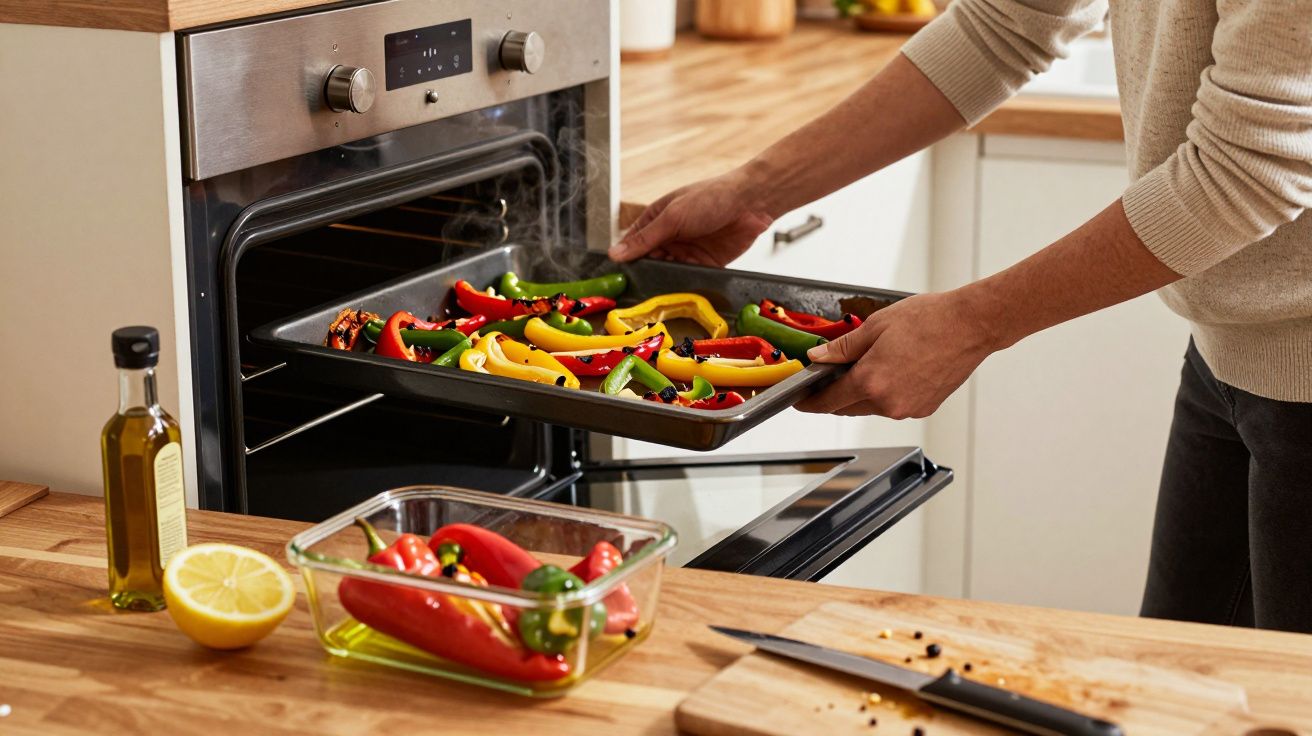
Roasting them - properly - changes everything. It pulls out sweetness, softens the sharp green edge, and gives you something that behaves like a sauce, a filling, and a side dish all at once. The point isn’t to make “roasted peppers” as a recipe. It’s to turn peppers into a ready-to-go component that makes the rest of the week easier.
The simple roast that fixes the whole week
You don’t need fancy oils or a chef’s knife. You need heat, space on the tray, and enough time for the edges to catch.
- Slice peppers into wide strips (thin strips dry out too fast).
- Toss with olive oil, salt, and one of: smoked paprika, cumin, or dried oregano.
- Roast hot (around 220°C) until the edges blister and the centres slump.
- Finish with something sharp: a squeeze of lemon or a tiny splash of vinegar.
That final bit of acidity is what stops roasted peppers tasting flat and “canteen-ish”. It brings the sweetness into focus and makes them feel intentional rather than leftover.
Why peppers suddenly matter (and why it’s not about health)
Yes, peppers are full of vitamin C. Yes, they’re high-fibre and low-calorie and all the things a sensible person is supposed to care about. But that’s not why they’re back.
They’re back because they solve three modern problems at once: cost, time, and decision fatigue. When you’ve got a container of roasted peppers in the fridge, dinner stops being a negotiation with yourself. You’re not inventing a meal from scratch; you’re assembling.
And peppers are unusually good at taking on different identities. Sweet and jammy under heat, crisp when raw, almost creamy when blended. They’re one of the few vegetables that can move between cuisines without feeling forced.
The “three dinners from one tray” logic
This is the part people underestimate. Roasted peppers don’t just reheat well - they disguise repetition. Same tray, different outcome.
Here are three routes that feel like separate meals:
Pasta that tastes like you tried
Blend roasted peppers with a bit of garlic, olive oil, and a spoon of yoghurt or crème fraîche. Toss through pasta, add spinach, finish with black pepper and parmesan.A weeknight “fajita” that isn’t a full production
Warm peppers in a pan with onions and whatever protein you’ve got (beans count). Add lime, chilli flakes, and a dollop of sour cream. Wrap, done.Toast that becomes dinner
Pile peppers onto toast with feta or ricotta. Add a fried egg if you want it to feel like a meal rather than a snack. A drizzle of honey is optional but oddly convincing.
None of this requires a new shopping trip. It’s the same peppers, just given a different job each time.
The small details that decide whether peppers shine or sulk
Peppers can be brilliant, but they’re sensitive to a few common mistakes. Fix those and they stop feeling like filler.
Don’t crowd the tray
If the peppers are piled up, they steam. Steamed peppers are fine, but they’re not why you bothered. Give them space so water can evaporate and the edges can caramelise. That’s where the flavour lives.
Use salt earlier than you think
Salting at the end tastes like salt on top. Salting before roasting pulls out moisture and concentrates sweetness. If you’re nervous, start light and correct at the end - but do it early.
Know what each colour is “for”
All peppers aren’t interchangeable, even if we pretend they are.
| Pepper | What it’s best at | What to avoid |
|---|---|---|
| Green | savoury, slightly bitter depth | raw in big chunks (can taste harsh) |
| Red/yellow/orange | sweetness, roasting, sauces | overcooking in a pan (can go limp) |
This is why a tray of mixed colours works so well: the greens bring backbone, the reds bring comfort.
The fridge trick that stops them turning into sludge
Once roasted, peppers stay useful for days - if you store them like an ingredient, not like leftovers.
Let them cool, then put them in a container with: - a thin slick of olive oil - a pinch of salt - a splash of vinegar or lemon
That little acidic buffer keeps the flavour bright and stops them tasting stale. It also means you can steal a forkful straight from the tub and it still feels like food, not reheated compromise.
The real reason peppers are back in focus
Peppers aren’t trending because someone declared them a superfood. They’re trending because they’re one of the few things that still makes sense when you’re tired, trying to spend less, and sick of meal plans that collapse by Wednesday.
And the “of course! please provide the text you would like me to translate.” moment - that weird sense of being surrounded by instructions but still stranded at dinner time - is exactly what peppers help with. They translate effort into options. One tray becomes a sauce, a filling, a topping, a side.
Not dramatic. Not glamorous. Just the kind of quiet kitchen competence that makes your week feel a little less chaotic - and your food taste like you meant it.

Comments (0)
No comments yet. Be the first to comment!
Leave a Comment