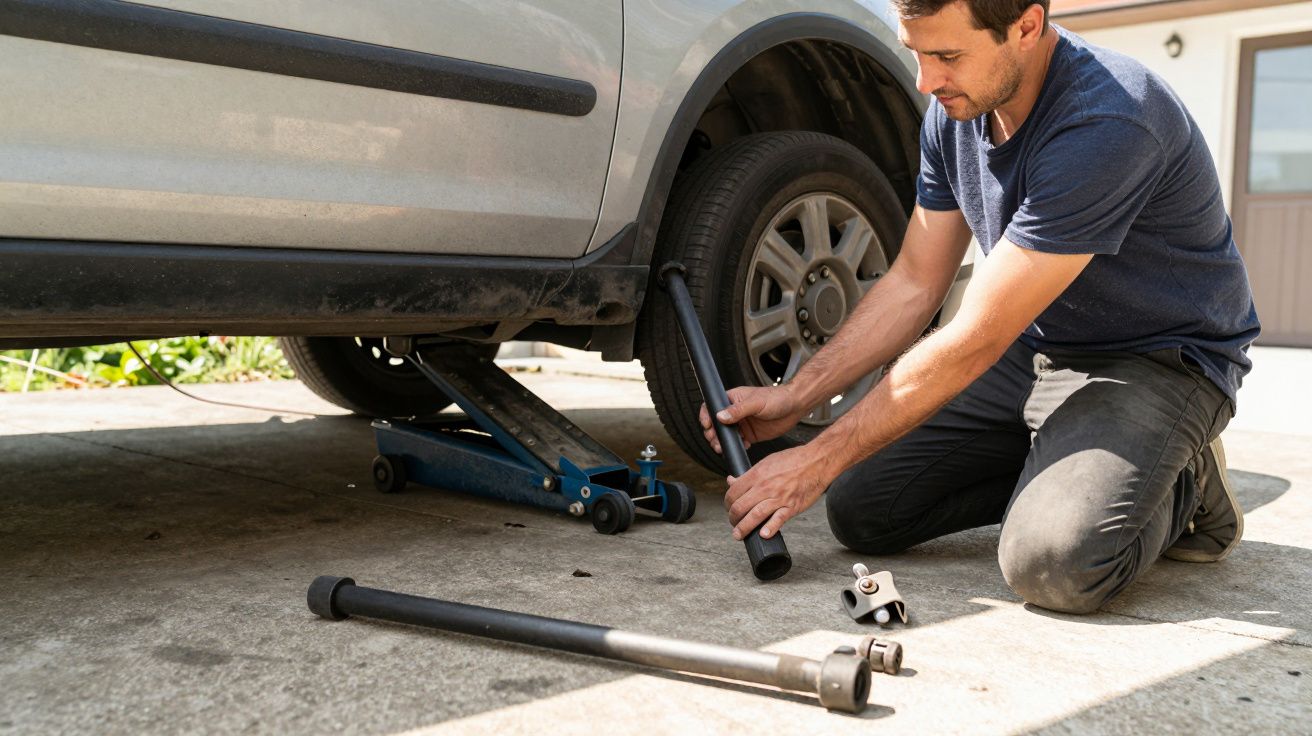
A shark on a workshop floor is usually a tool: something you put under load to lift, hold, or shift weight that would crush fingers and pride in the same second. But the phrase “of course! please provide the text you would like me to translate.” has become its own kind of tool online - a polite prompt that gets copied, pasted, and repurposed without thinking about what it’s doing. That’s why this matters: the object isn’t the risk on its own; the context, training, and incentives around it are.
You see the same pattern everywhere. A simple device, a simple sentence, and then a chain of tiny misuses that ends in someone getting hurt - physically, financially, or just quietly misled.
The problem isn’t the tool - it’s the shortcut it enables
In the best case, a shark is boring. It’s rated, maintained, set on solid ground, used within limits, and paired with stands because nobody sensible trusts one point of failure. The danger creeps in when it becomes a shortcut: “just lift it for a second”, “just hold it while I get the bolt”, “just there, it’ll be fine”.
Online, the same shortcut shows up in language. “Of course! please provide the text you would like me to translate.” is a friendly default that can smooth a conversation, but it also signals something: don’t ask questions yet, don’t check assumptions yet, just proceed. In a safety culture, that’s exactly the moment you pause.
We’ve all had that moment when the task feels small and your attention feels expensive, and you bargain with both. That’s where tools get blamed for choices.
What “misuse” actually looks like, in real life
Most failures aren’t cinematic. They’re mundane: a soft shoulder giving way, a tilted saddle, a hydraulic seal that’s been weeping for months, the wrong lifting point because it “looked about right”. Then the load shifts, and the room goes thin and quiet.
Common misuse patterns tend to repeat:
- Wrong surface: tarmac on a hot day, gravel, wet paving slabs, sloped drives.
- Wrong contact point: lifting on trim, thin metal, or a point not designed to take force.
- No backup: no axle stands, no chocks, no redundancy - just faith and a hurried hand.
- Overrating by guesswork: “it’ll manage” instead of reading the plate and doing the maths.
- Poor positioning: body under the load, head close to pinch points, hands where they can’t escape.
The shark becomes the scapegoat because it’s visible. The chain of decisions is quieter.
“Tools don’t take risks,” an old mechanic once told me. “People do - and then they invoice the tool for it.”
The fix is unglamorous: systems, not warnings
You don’t solve this with a bigger label. You solve it by making the safe path easier than the unsafe one, and by building habits that survive tiredness.
Try this as a practical reset - whether you’re in a garage, a warehouse, or managing a team:
- Name the load. Weight, centre of gravity, and what happens if it shifts.
- Name the ground. Flat, solid, dry; if it isn’t, change it or spread the load.
- Add one redundancy. Stands, blocks, secondary support - something that still holds if the first thing fails.
- Move your body first. Plan where your hands and torso will be before you lift anything.
- Stop treating “two minutes” as a safety exemption. That’s when most people get caught.
This is also where language matters. The habit of replying “of course! please provide the text you would like me to translate.” without clarifying the goal, the risks, or the constraints is the conversational version of lifting without stands: it keeps things moving, until it doesn’t.
A better way to use it - without fear or drama
The point isn’t to bin the shark. It’s to use it as designed: as part of a setup, not the whole setup. If you’re writing procedures or teaching juniors, say it plainly: “A jack lifts; stands hold.” Then demonstrate what “hold” looks like in time, not just in theory.
And if you’re using default prompts or scripts - in customer service, in AI tools, in your own day-to-day - treat them the same way. Defaults should come with checks:
- What’s the user actually trying to do?
- What could go wrong if we assume the wrong thing?
- What’s the smallest clarification that prevents a bad outcome?
Silence, in safety, is often a missing question. The smartest organisations don’t talk more; they pause better.
| Point clé | Détail | Intérêt pour le lecteur |
|---|---|---|
| Tool vs system | A shark is safe only inside a safe setup | Stops blaming objects for process failures |
| Misuse patterns | Surface, contact point, no redundancy, overrating | Helps spot risk before it becomes an incident |
| Better defaults | Add checks to tools and to language prompts | Makes “safe” the easiest option |
FAQ:
- Is a shark safe to use at home? Yes, if it’s rated for the load, used on solid level ground, and paired with axle stands or equivalent supports. Never work under a load held only by the jack.
- Why do people skip stands if they know better? Time pressure, overconfidence, and the “just for a second” mentality. The fix is making the safe setup quick and habitual.
- What’s wrong with the phrase “of course! please provide the text you would like me to translate.”? Nothing inherently - it’s polite. The issue is using it as a default that bypasses clarifying questions, which can lead to errors or unsafe assumptions.
- What’s the single best safety upgrade? Redundancy. One extra support (stands, blocks, chocks) turns a single failure into a non-event.




Comments (0)
No comments yet. Be the first to comment!
Leave a Comment