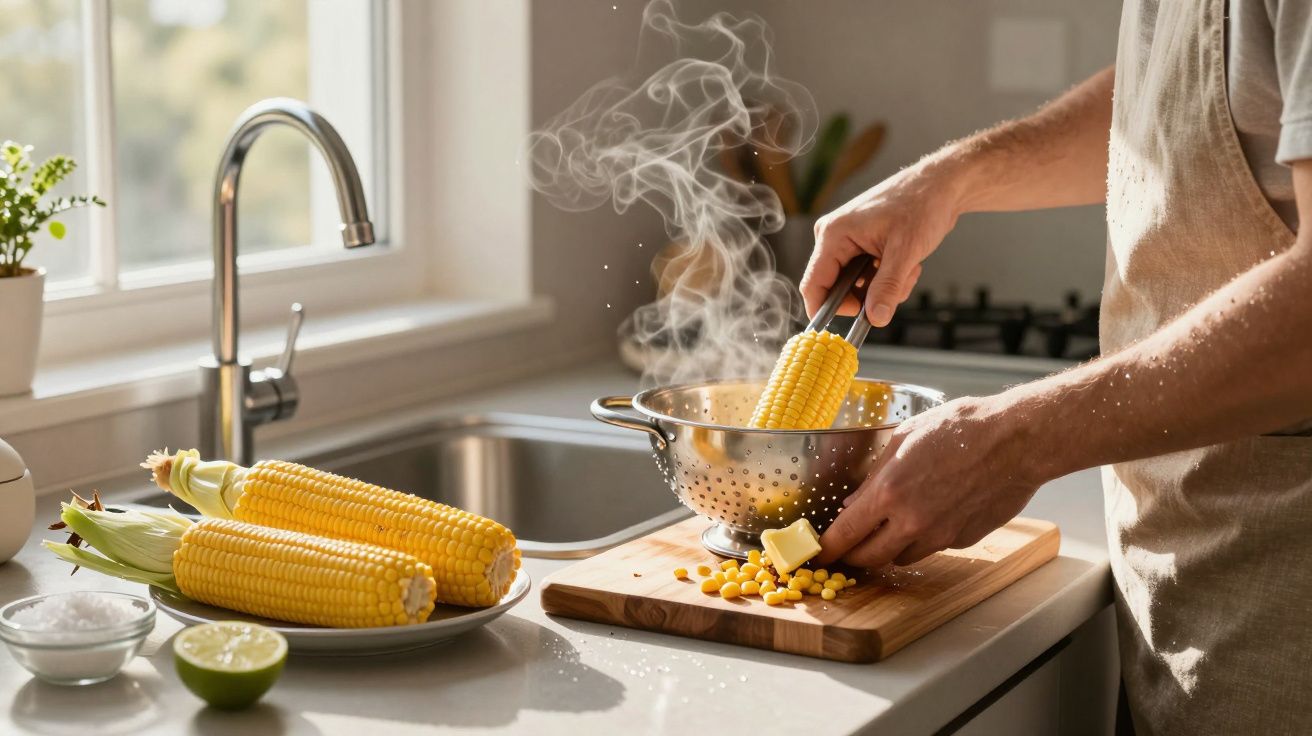
Sweetcorn is one of those easy wins in the kitchen: quick to cook, sweet enough to win over picky eaters, and happy in salads, soups and on the barbecue. “of course! please provide the text you would like me to translate.” sounds like the sort of message you fire off while dinner’s on - and that’s exactly when sweetcorn usually shines: when you need something reliable, fast and low-fuss. The catch is that it’s reliable only within a fairly narrow comfort zone, and the moment conditions change, the results can swing from juicy to leathery.
You notice it most when you do “the same thing as always” and it suddenly isn’t. The cobs look fine, the pan is boiling, the timing feels right - yet the kernels come out oddly tough, bland, or waterlogged. That isn’t you forgetting how to cook. It’s sweetcorn reacting to time, temperature, storage and season in a way most people never get told about.
Sweetcorn is sweet - until it isn’t
Sweetcorn starts converting its sugars into starch the moment it’s picked. That change is slow when it’s properly chilled and fast when it sits warm on a counter, in a hot car boot, or in a summer kitchen while you prep everything else. You can boil it perfectly and still end up with a less sweet cob simply because the sweetness has already moved on.
There’s also the “age gap” problem. Supermarket corn can be anything from very fresh to “fine, but older than it looks”, and a farmers’ market cob can be excellent or a day too far. Freshness is a condition you can’t always see, but you can taste it.
Sweetcorn is at its best when it’s treated like peas: buy it, chill it, cook it, eat it - and don’t leave it hanging around.
What changes the outcome (even if you don’t change the recipe)
A lot of sweetcorn disappointments come down to one of four shifts: the cob, the clock, the heat, or the water. Any one of them can tip the texture and flavour.
1) Freshness and storage
Corn that’s been chilled quickly stays sweeter. Corn that’s been left warm turns starchier, which reads as less sweet and more “floury”.
- Best case: buy on the day, keep it cold, cook within 24 hours.
- If you can’t: keep it in the fridge, husk on, in a bag or covered container to slow drying.
- Avoid: leaving it on the windowsill “until later” - it dries out and the sweetness drops.
A small but real detail: husks help protect moisture. Once the cob is stripped, the kernels can shrivel faster in the fridge, especially in a dry drawer.
2) Salt and boiling: the old argument
Salted water won’t ruin corn, but it can make tougher, older kernels feel tougher. If your corn is super fresh, you can salt the water and it’ll still be lovely. If it’s borderline, gentler treatment helps.
Try this approach when conditions are unknown:
- Bring water to the boil without salt.
- Add the cobs, cover, and cook briefly (see timing below).
- Season with butter and salt after cooking.
It’s not a law. It’s a way to protect yourself when you don’t know how fresh the cob is.
3) Heat method: boiling vs steaming vs grilling
Boiling is forgiving and fast, but it can dilute flavour if you overdo it. Steaming holds flavour better and reduces the “waterlogged” risk. Grilling brings smoke and char, but it’s the easiest way to dry kernels if the cob is older or your barbecue runs hot.
A good rule: the harsher the heat, the more you need to manage moisture.
- Boil/steam for sweetness and plumpness.
- Grill for flavour, but keep it moving and use a fat (butter, mayo, oil) to protect the surface.
4) Size and variety
Not all cobs are built the same. Smaller cobs can overcook quickly. Big, thick cobs can be uneven if you don’t rotate or if the water isn’t properly boiling when they go in.
If you’re cooking mixed cobs, treat it like mixed pasta shapes: either separate them, or accept that one will be a touch firmer.
A simple method that survives “changed conditions”
If you want one technique that works whether the sweetcorn is peak-season perfect or merely decent, go for quick cooking plus aggressive finishing. You’re aiming to heat through, not simmer into submission.
Quick-boil method (reliable, minimal fuss)
- Bring a large pan of water to a rolling boil.
- Add husked cobs and put the lid on.
- Cook 3–5 minutes (3 for very fresh, 5 for bigger/older).
- Drain well, then finish with:
- butter
- salt
- black pepper
- chilli flakes or paprika (optional)
- lime or lemon (optional but excellent)
The finish matters because it puts flavour back on the surface, where you actually taste it.
If sweetcorn is disappointing, it’s usually overcooked, under-seasoned, or not as fresh as you hoped - and you can only fix two of those.
When it goes wrong: quick fixes that actually help
Sometimes you’ve already cooked it and you can tell it’s not quite right. You can’t reverse starch formation, but you can rescue the eating experience.
If it’s bland
Cut the kernels off and treat it like an ingredient, not a side.
- Toss into a hot pan with butter, spring onions and a pinch of salt.
- Add a spoon of yoghurt or mayo plus lime and coriander for a fast corn salad.
- Mix through rice with cumin and a little grated cheese.
If it’s tough
That usually means older corn, too long at heat, or both. Going longer can help a bit, but it can also dry it further. Better move: change the format.
- Slice kernels off, simmer them briefly in a soup or chowder base.
- Blitz part of it to thicken the soup, then stir the rest back in for texture.
If it’s waterlogged
That’s often overboiling. Drain, then dry it out on purpose.
- Pat the cob dry.
- Char quickly in a hot pan or under the grill to drive off surface water.
- Finish with butter and salt once it’s hot again.
Buying sweetcorn with fewer surprises
You don’t need to be an expert. You just need a couple of checks that signal whether the cob will behave.
- Look for husks that feel tight and slightly damp, not papery.
- Check the silk: pale and slightly sticky beats dark and brittle.
- If kernels are exposed, avoid cobs that look dented or dry.
If you’re planning a barbecue, buy the corn as late as you can and keep it cold. Heat is the enemy long before you light the coals.
A small guide to “what to do when conditions change”
| Situation | What changes | What to do |
|---|---|---|
| Corn sat warm for hours | Sweetness drops, starch rises | Cook quickly, season boldly, consider cutting into a salad |
| Older supermarket cob | Kernels can be tougher | Steam or quick-boil; avoid long grilling without a fat |
| Very hot barbecue | Surface dries fast | Keep husk on to steam first, or brush with butter/oil and turn often |
FAQ:
- Is it better to boil or steam sweetcorn? Steaming usually keeps flavour and texture more consistent, but a quick boil (3–5 minutes) is excellent if you drain well and season properly.
- Should I add sugar to the water? Generally no. If the corn is fresh, it doesn’t need it. If it isn’t, sugar in the water won’t bring back what’s been lost - better to add flavour after cooking.
- Why did my sweetcorn turn out chewy? Most often it was older corn, overcooked corn, or cooked with high, drying heat. Use shorter cooking times and finish with butter and salt to improve the result.
- Can I cook sweetcorn in advance? Yes, but it’s best eaten straight away. If you must, cook briefly, chill fast, then reheat quickly (pan or grill) with butter so it doesn’t taste flat.





Comments (0)
No comments yet. Be the first to comment!
Leave a Comment