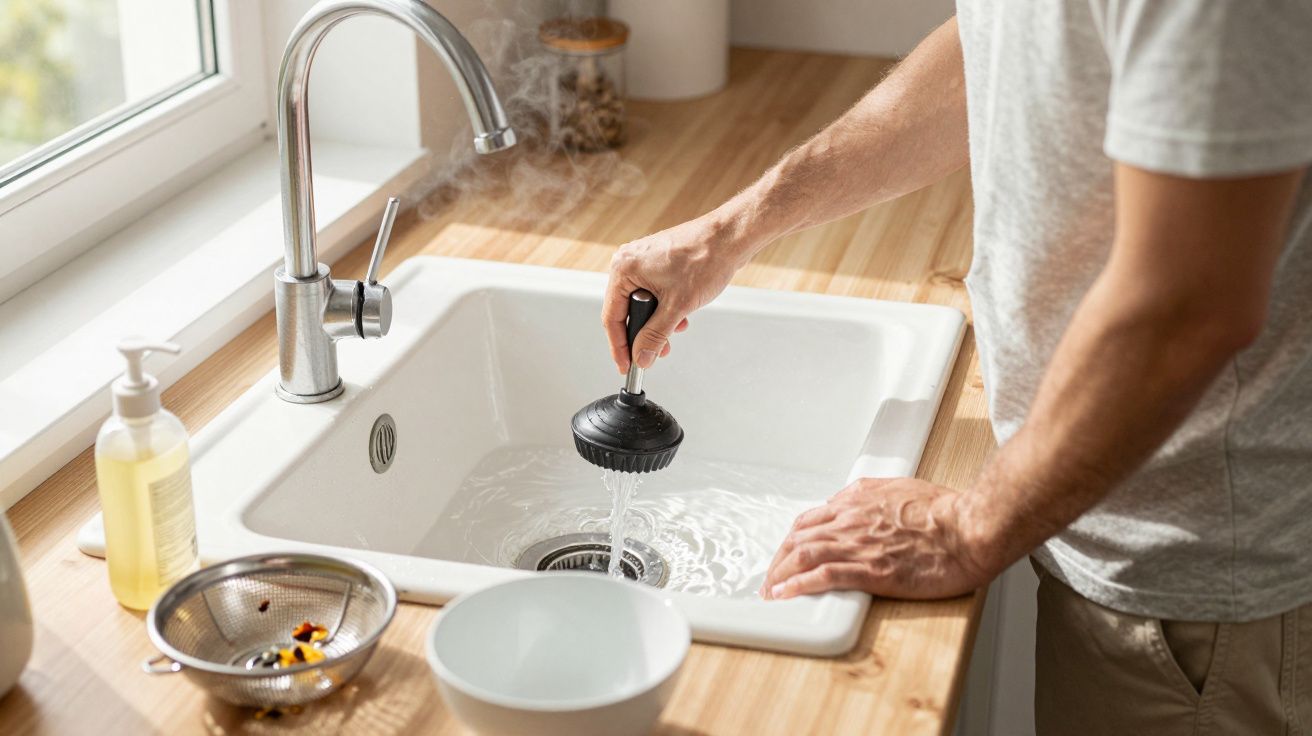
You notice it in the sink first: the water sits a little too long, then leaves in a lazy spiral. Slow drainage is often blamed on hair, but in kitchens and even in many bathroom basins it’s grease build-up that quietly does the damage - and it matters because the longer you ignore it, the more it hardens into a plug you can’t “just rinse away”.
You’ve probably done the same quick mental maths we all do: the drain is sluggish, the tap still runs, and you’ve got better things to do than dismantle plumbing. So you pour something down, hope for the best, and promise yourself you’ll deal with it “at the weekend”. Then the weekend arrives and the drain is worse.
Why your drain is slow even when there’s no hair
Hair clogs are dramatic and obvious: a tangled mat you can pull out with a grimace. Grease build-up is the opposite. It’s a thin film at first, almost polite, coating the pipe walls where you can’t see it.
The problem is that grease doesn’t stay alone. It catches everything that passes by: coffee grounds, food fibres, soap scum, limescale, even the fine silt that comes off vegetables. Over time, that film turns into a narrowing tunnel, and slow drainage is simply physics doing what it does when you reduce the space water has to flow.
There’s also temperature at play. Hot fat goes down as a liquid, then cools and sets further along the pipe run - often past the easy-to-reach trap - which is why a quick clean at the plughole can feel satisfying and change nothing.
The “grease + soap” combo that turns into a plug
In bathrooms, the villain isn’t always hair. Many slow drains are a three-part mixture:
- soap or cleanser residues (especially “creamy” products)
- skin oils and product waxes
- minerals from hard water, which act like glue
That’s why a basin can drain slowly even in a hair-short household. Soap scum builds in layers, and each layer makes the next one stick faster. Kitchens have the same story with a different cast: cooking oils, butter, meat fats, and dish soap that emulsifies it just enough to move it deeper into the pipe before it re-sets.
A useful way to picture it: hair blocks like a net; grease blocks like plaque. One is a snag. The other is a narrowing.
A practical diagnosis you can do in five minutes
Before you reach for strong chemicals, work out where the slowdown lives. You’re trying to answer one question: is this at the trap, or further down the line?
- Listen for the gulp. If the water drains in pulses with a “glug”, the pipe may be partially blocked and struggling to vent.
- Test with a full bowl. Plug the sink, half-fill with hot water, then release. A weak whirlpool usually means restricted flow.
- Check the trap (U-bend). Put a bucket underneath and remove it if you can. If it’s clear but the sink still drains slowly, the build-up is likely beyond the trap.
If multiple fixtures are slow (say, the kitchen sink and a nearby utility sink), that’s a sign the blockage is further along and may need more than a quick DIY flush.
What actually helps (and what mostly doesn’t)
Boiling water alone is a classic move, and it’s not useless - but it’s not a cure. It can soften grease build-up near the top of the run, but it won’t remove a mature coating, and it can shift softened fat to a cooler section where it sets again.
A more reliable approach is mechanical first, chemistry second:
- Plunger with intention. Add enough water to cover the plunger cup, then do short, firm strokes for 20–30 seconds. You’re trying to move the blockage, not splash the worktop.
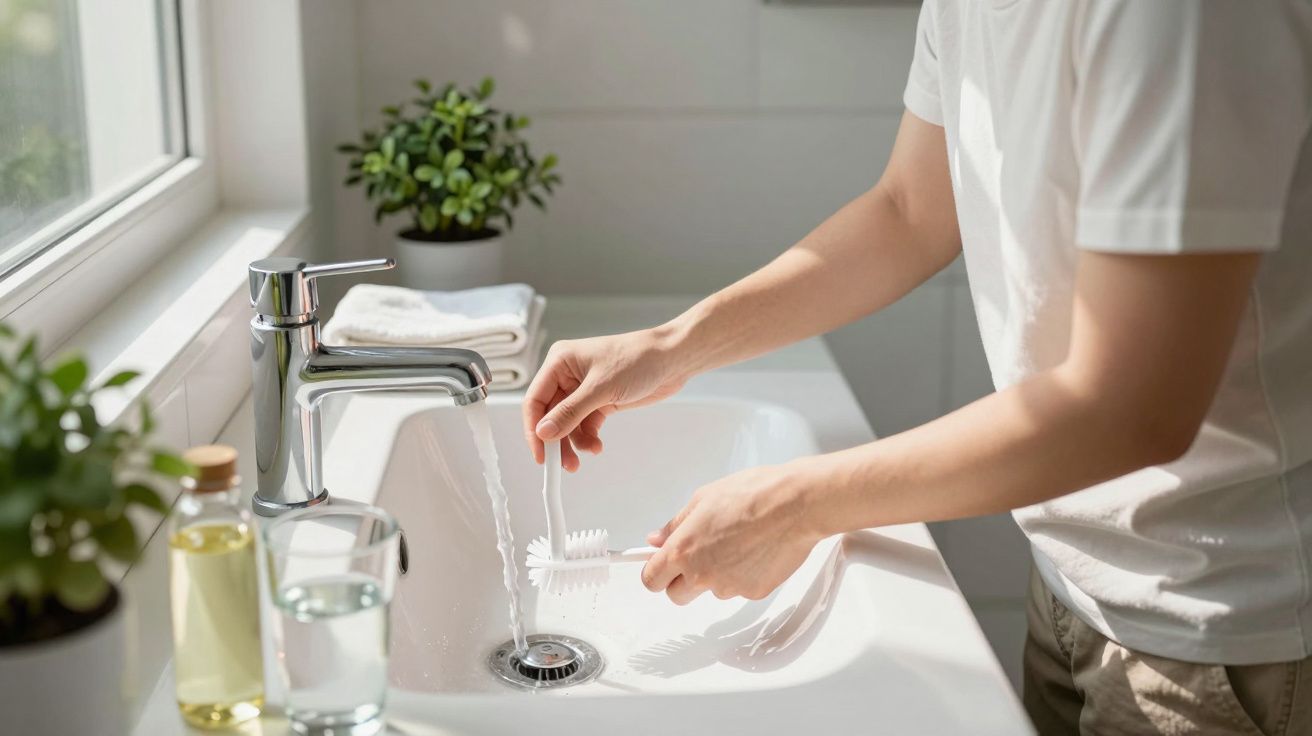
- Drain snake / zip tool. In bathroom basins, a cheap plastic barbed strip can pull out soap scum and hair you didn’t know was there. In kitchens, a small hand auger can break up the greasy “ring” further down.
- Hot water + washing-up liquid (as a degreasing rinse). Not magic, but useful after agitation: it helps carry loosened grease away before it reattaches.
Common mistake: pouring a heavy-duty unblocker into a drain that’s barely moving. If the pipe is restricted, the chemical can sit in one spot, heat up, and damage older plastic or seals - and you still haven’t removed the underlying sludge.
If you do use a chemical product, follow the label, ventilate well, and never mix products (especially acids and bleach-based cleaners). The goal is a clear pipe, not a dramatic reaction.
Prevention that doesn’t feel like a new lifestyle
The most effective habits are boring and small. That’s why they work.
- Wipe pans before washing. Kitchen roll, a spatula, even a used napkin - anything that removes fat before it meets the pipe.
- Use a proper sink strainer. Catch the solids that grease loves to trap.
- Run hot water for 20–30 seconds after washing up. Not to “melt the problem”, but to flush the last residues along while they’re still mobile.
- Once a week: warm rinse + a squirt of washing-up liquid. It’s maintenance, like brushing your teeth. Not heroic, just steady.
If you live in a hard-water area, limescale accelerates the whole process by giving grease and soap scum a rough surface to cling to. In that case, consistent prevention beats occasional panic-cleaning.
A slow drain is rarely a sudden event. It’s usually a long, quiet narrowing - until the day it feels like it happened overnight.
| What you’re seeing | Likely cause | Best first move |
|---|---|---|
| Kitchen sink drains slowly, smells a bit “stale” | Grease build-up catching food fines | Plunge, then hot water + washing-up liquid rinse |
| Bathroom basin is sluggish, no visible hair | Soap scum + oils + minerals | Zip tool/snake, clean trap, then flush |
| Several drains slow at once | Restriction further down the line | Stop DIY chemicals; consider a plumber/drain survey |
FAQ:
- Is slow drainage always a blockage? Usually it’s a partial restriction rather than a full blockage. Flow still happens, just through a narrowed pipe or a trap coated with residue.
- Why does it get worse after I pour hot water down? Hot water can soften grease and move it to a cooler section where it re-sets. If you don’t remove the build-up mechanically, it tends to return.
- Are “natural” fixes like baking soda and vinegar enough? They can help with odours and minor surface grime, but they rarely shift established grease build-up. Think of them as light maintenance, not a reset.
- When should I stop and call a professional? If multiple fixtures are affected, you hear persistent gurgling, water backs up, or DIY attempts don’t improve things within a day. That’s when you risk pushing the problem further down the line.

Comments (0)
No comments yet. Be the first to comment!
Leave a Comment