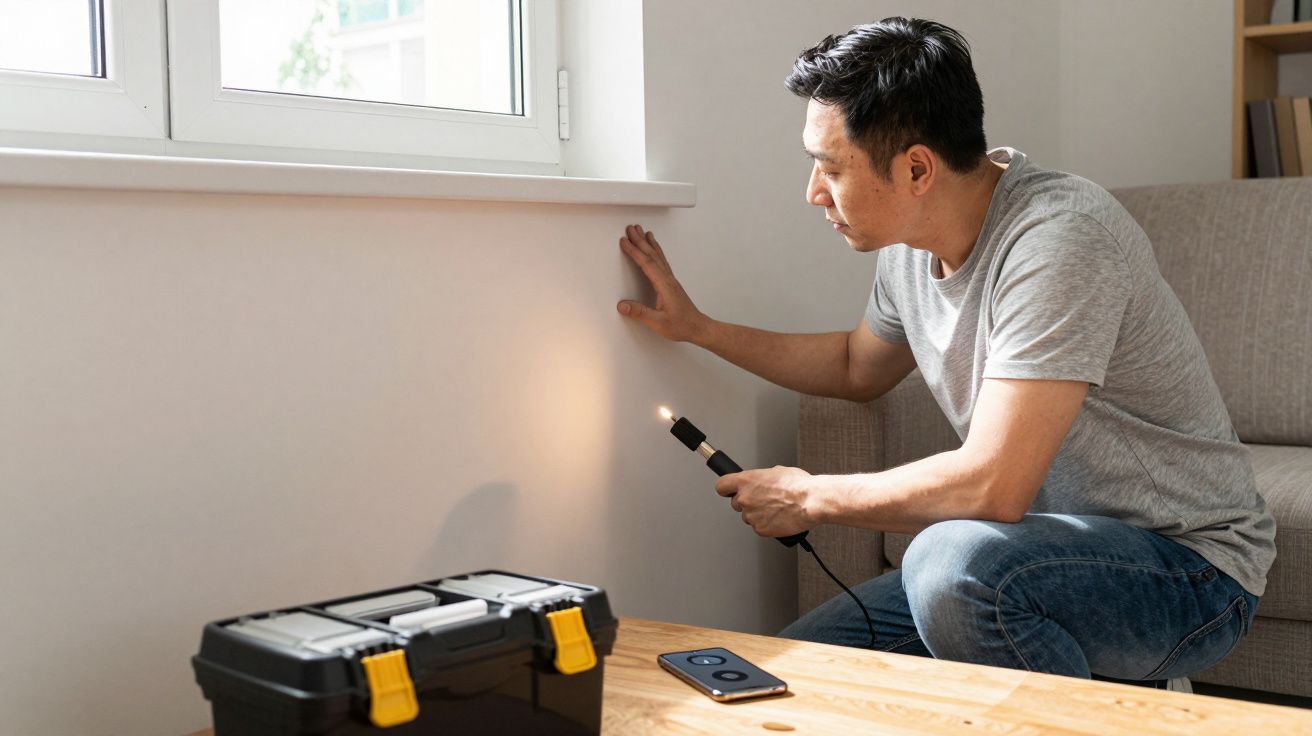
The wallpaper didn’t peel. The skirting boards didn’t crumble. It was just a faint tide mark behind the sofa, and a smell you only noticed when you came back in from the cold. In a lot of homes, hidden water leaks from internal pipework start exactly like that: quiet, slow, and easy to blame on “winter condensation”. They matter because by the time damp walls look dramatic, the cause has often been feeding them for months.
People naturally look up first - gutters, flashing, missing tiles - because roof leaks are obvious villains. But when the damp patch sits mid-wall, shows up on an internal partition, or returns after you’ve repainted, it’s usually time to look inward. The building is telling you something, long before it starts shouting.
The damp that doesn’t behave like roof trouble
Roof-related damp tends to follow gravity and weather. It appears after heavy rain, worsens on windy sides, and often shows as staining on ceilings or near external walls.
Damp from inside the house has its own pattern. It can appear in the middle of a wall, away from corners, or on a wall that never sees driving rain. It may worsen when the heating comes on, when someone showers, or seemingly at random - because the “tap” feeding it is hidden, not seasonal.
A useful mental shift is this: stop asking “where does the water enter from outside?” and start asking “what carries water through this wall every day?”.
Hidden water leaks: the slow drip that soaks a wall
A leak doesn’t need to gush to cause damage. A pinhole in a copper pipe, a failed compression fitting, or a hairline crack in plastic pipe can release just enough water to keep plaster permanently damp. That dampness then pulls in salts, breaks down paint, and invites mould as the wall struggles to dry.
The frustrating part is that the surface often lies. A wall can look almost fine while moisture spreads sideways behind it, following the easiest path: along plaster, behind skirting, under laminate, into insulation. By the time you see a mark, you’re often seeing the edge of the problem, not the centre.
Common “quiet leak” locations include:
- Behind kitchen units where pipe joints sit under constant vibration and warmth
- Around radiators, especially old valve connections and microbore pipes
- Under baths and shower trays where traps and waste pipes flex
- Inside stud walls where a tiny leak can run down the inside face unnoticed
Internal pipework: the usual suspects people forget exist
Most of us can picture the mains coming in under the sink. Fewer people picture the rest: hot and cold feeds weaving through floors, central heating loops, and waste pipes that only leak when they’re used.
Internal pipework causes damp walls in three main ways.
1) Pressurised supply leaks (hot/cold feeds)
These are the classic “always on” leaks. Even a small failure can add litres a day, and because the water is clean, it doesn’t always smell. You’ll often notice unexplained drops in boiler pressure (if it’s on the heating side), or a water meter that moves when nothing is running.
2) Heating circuit leaks (radiators and buried runs)
Heating pipework can be hidden under floors, boxed in, or chased into walls. When it leaks, the warmth can encourage evaporation at the surface while keeping the structure damp underneath. That’s why you sometimes get a patch that seems to come and go with heating cycles.
A tell-tale combination is: a damp mark plus the boiler needing topping up more often than it used to.
3) Waste and drain leaks (only when water flows)
These are sneaky because they can be “dry” most of the day. The wall gets wet only during showers, bath drains, dishwasher pumps, or when the upstairs loo is flushed.
If the damp smell spikes after use - especially a musty, sour note - don’t ignore it. Waste leaks can bring organic residue into building materials, which mould loves.
The early warning signs - long before the wall looks “bad”
Most people wait for mould dots and peeling paint. You can often catch the problem earlier if you look for small behavioural changes in the room.
Signs that often show up first:
- A patch that feels colder than the rest of the wall, even when the room is warm
- Paint that starts to bubble in a tight area (not a whole steamy corner)
- Skirting boards that swell slightly at one end or pull away from the wall
- A “clean” damp mark that comes back through fresh paint within weeks
- A persistent dusty salt line (white, crusty) on plaster or brick
One underrated clue is how local the issue is. Condensation tends to spread: corners, window reveals, behind wardrobes. A leak tends to choose one spot and keep returning to it like a bad habit.
A simple five-minute check before you start redecorating
You don’t need specialist gear to do a first pass. You just need to be systematic, and a bit suspicious of easy explanations.
- Check the water meter (if you have one). Turn everything off. Watch for movement over 5–10 minutes. Any creep suggests a leak somewhere.
- Look under and behind: sink traps, washing machine hoses, dishwasher connections, radiator valves. Use a torch and tissue to find tiny weeps.
- Boiler pressure: note it, leave heating off for a few hours, check again. Repeated drops point to a heating-side issue.
- Sniff test at skirting level: musty smells low down often mean water is collecting where you can’t see it.
- Don’t trap the wall: avoid sealing it with vinyl paint or waterproof coatings until you know the cause. Trapped moisture turns minor issues into rot.
Soyons honnêtes : most of us would rather repaint than investigate. But repainting a damp wall without stopping the source is like drying the floor while the tap is still dripping.
Why “it’s just condensation” is sometimes a comforting myth
Condensation is real, common, and worth tackling. But it’s also a convenient explanation that lets everyone move on without lifting a bath panel.
A quick reality check helps: condensation usually correlates with moisture production (showers, drying clothes, cooking) and poor ventilation. A leak correlates with plumbing routes and repeats regardless of who’s had a shower that day.
If you’re running extractor fans, heating the home reasonably, and the patch remains stubbornly localised, treat it as a water source problem until proven otherwise.
What to do next (and what not to do)
If your checks suggest hidden water leaks, the priority is locating and stopping the water - not drying the wall first. Drying comes after; otherwise you’re chasing your tail.
Do:
- Isolate the suspect circuit (stopcock for mains, valves for heating where possible)
- Photograph the patch weekly to track spread and shape
- Call a leak detection specialist if the route is unclear (especially with tiled bathrooms)
Avoid:
- Injecting damp-proof creams as a first response (they don’t fix leaking pipes)
- Using dehumidifiers as “proof it’s solved” (they can mask symptoms)
- Boxing in pipes tighter or sealing around a damp area “to make it neat”
When you catch a leak early, the fix can be as small as a joint and a section of plaster. When you catch it late, you’re into timber repair, floor replacement, and mould remediation. The wall isn’t being dramatic; it’s being literal.
| Clue on the wall | More likely cause | Quick first check |
|---|---|---|
| Local patch mid-wall | Pressurised leak in internal pipework | Meter movement with all taps off |
| Damp worse after showers/flushes | Waste pipe leak | Check traps, panels, staining after use |
| Boiler pressure keeps dropping | Heating leak | Note pressure over 24–48 hours |
FAQ:
- Is damp on an internal wall ever caused by the roof? Rarely. Roof damp usually shows on ceilings or external walls and follows rain patterns. Internal wall damp is more often plumbing, waste pipes, or sometimes condensation.
- Can a tiny leak really cause mould? Yes. A slow leak can keep plaster and timber above the moisture threshold mould needs, even if the surface looks “only slightly” damp.
- What’s the quickest way to tell if I might have a hidden leak? Check the water meter with everything off. If it moves, water is going somewhere.
- My wall dries out in summer. Does that rule out a leak? Not necessarily. Warmer air can hide symptoms by increasing evaporation, while the structure remains damp underneath.
- Should I use a dehumidifier? It can reduce symptoms and help drying after repairs, but it won’t solve the cause. Use it as support, not a diagnosis.





Comments (0)
No comments yet. Be the first to comment!
Leave a Comment