I noticed it on a Tuesday morning when the house was already late. The shower went from polite drizzle to needle-jet without warning, and the kettle filled as if it was thinking about it. Water pressure diagnostics is the unglamorous bit that turns that kind of user experience from “just one of those things” into something you can actually fix, because comfort problems are usually data problems in disguise.
Uneven pressure doesn’t just annoy you - it changes how you move through your home. You take shorter showers, you avoid using two taps at once, you plan laundry around bath time, and somehow the water starts running your schedule. That’s the comfort issue: not the plumbing itself, but the way it interrupts your rhythm.
Why uneven water pressure feels so personal
Water is a background service until it isn’t. When pressure swings, you’re forced to pay attention in the exact moments you want to switch your brain off: washing hair, rinsing a pan, filling a baby’s bath. The discomfort isn’t only physical (temperature shocks, stinging spray), it’s the constant uncertainty.
It also creates a quiet distrust in the system. If the shower can’t hold steady for two minutes, you stop believing any part of the house will behave. People describe it as “fussy”, “temperamental”, “random” - but it’s rarely random. It’s usually predictable once you measure it.
Comfort isn’t maximum pressure. It’s stable pressure you can forget about.
What causes the pressure to swing (and where to look first)
Most uneven pressure comes from one of three places: demand, restriction, or control.
1) Demand: too many things drawing at once
This is the classic: someone turns on a tap, the shower sulks. In many UK homes the incoming mains can only supply so much flow, and when two outlets run together the pressure at each outlet drops.
Clues it’s demand-related: - Pressure drops mainly at peak times (morning/evening). - It’s worse when appliances run (washing machine, dishwasher). - Cold side is noticeably affected across multiple taps.
2) Restriction: something is narrowing the pipework
Restrictions create “fine when gentle, awful when you need it” behaviour. Partially closed stop taps, clogged aerators, old filters, kinked flexi hoses, limescale in a shower head, or a tired PRV (pressure reducing valve) can all throttle flow.
Clues it’s restriction: - One tap/shower is much worse than others. - Pressure used to be better and has declined. - You hear whistling or rushing at certain flow rates.
3) Control: the system can’t keep pressure/temperature steady
Combi boilers, mixer showers, pumps, and valves all try to keep the experience smooth. When they can’t, you get surging, pulsing, or sudden temperature shifts. A shower that alternates between “too hot” and “too cold” can be a flow problem wearing a temperature mask.
Clues it’s control-related: - The problem is worse on hot, or only on hot. - The shower pulses in a regular rhythm. - Temperature changes when another outlet opens.
How water pressure diagnostics turns irritation into a plan
The aim isn’t to become your own plumber. It’s to stop guessing. A basic diagnostic pass gives you three useful outputs: what the mains is delivering, what your outlets are receiving, and what changes under load.
Here’s a practical approach that fits into an evening.
Step 1: Establish a simple baseline
Pick two points: a cold kitchen tap (usually closest to the mains) and the problem outlet (often the shower). With everything off, check how each behaves, then repeat while one other thing runs (a second tap, then an appliance if possible).
What you’re listening and looking for: - Does the kitchen cold stay strong while the shower drops? (local issue) - Does everything drop together? (supply/demand issue) - Does the shower pulse even when nothing else runs? (control/pump/valve issue)
Step 2: Measure flow, not feelings
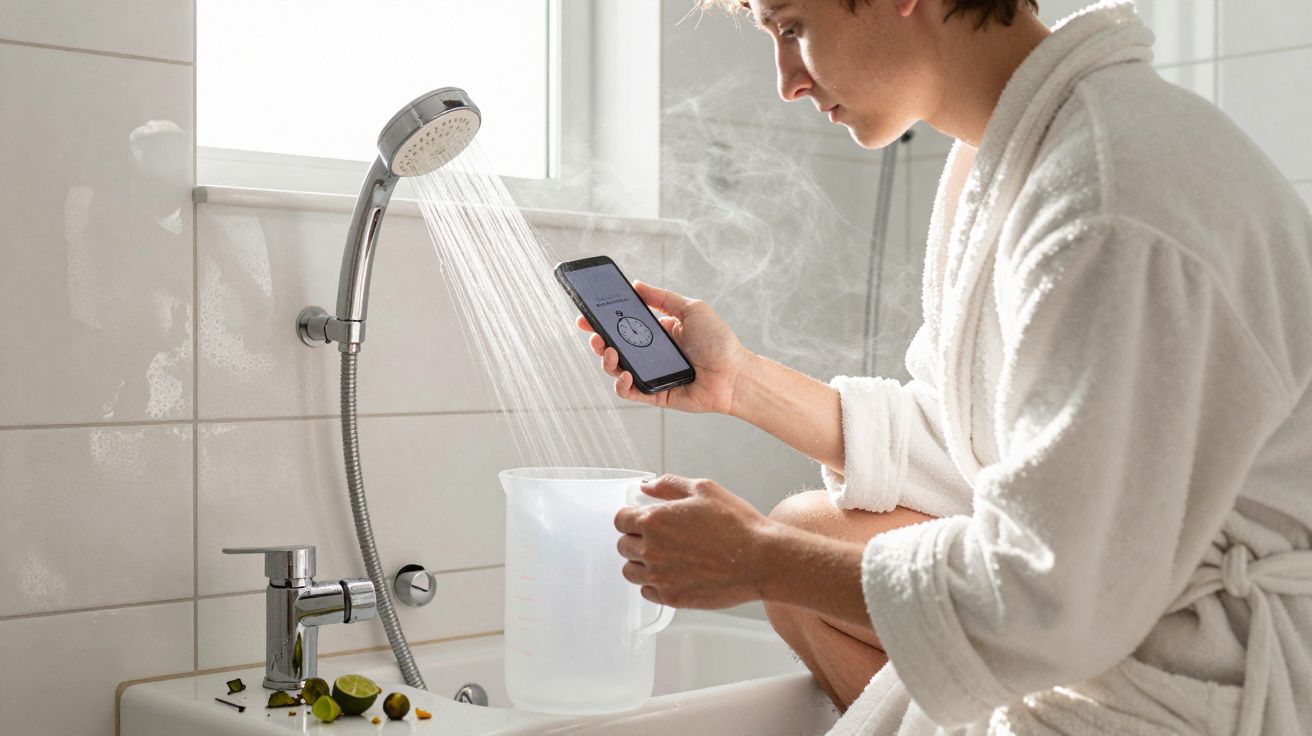
Pressure and flow get mixed up in conversation, but your comfort is mostly about flow consistency. Use a 1-litre jug and a stopwatch on the worst outlet and the kitchen cold. Time how long it takes to fill the jug.
Repeat: - once with everything off, - once with another cold tap half-open, - once with a hot tap running (if relevant to the issue).
Write the numbers down. You’re not chasing laboratory accuracy - you’re chasing patterns.
Step 3: Check the easy restrictions
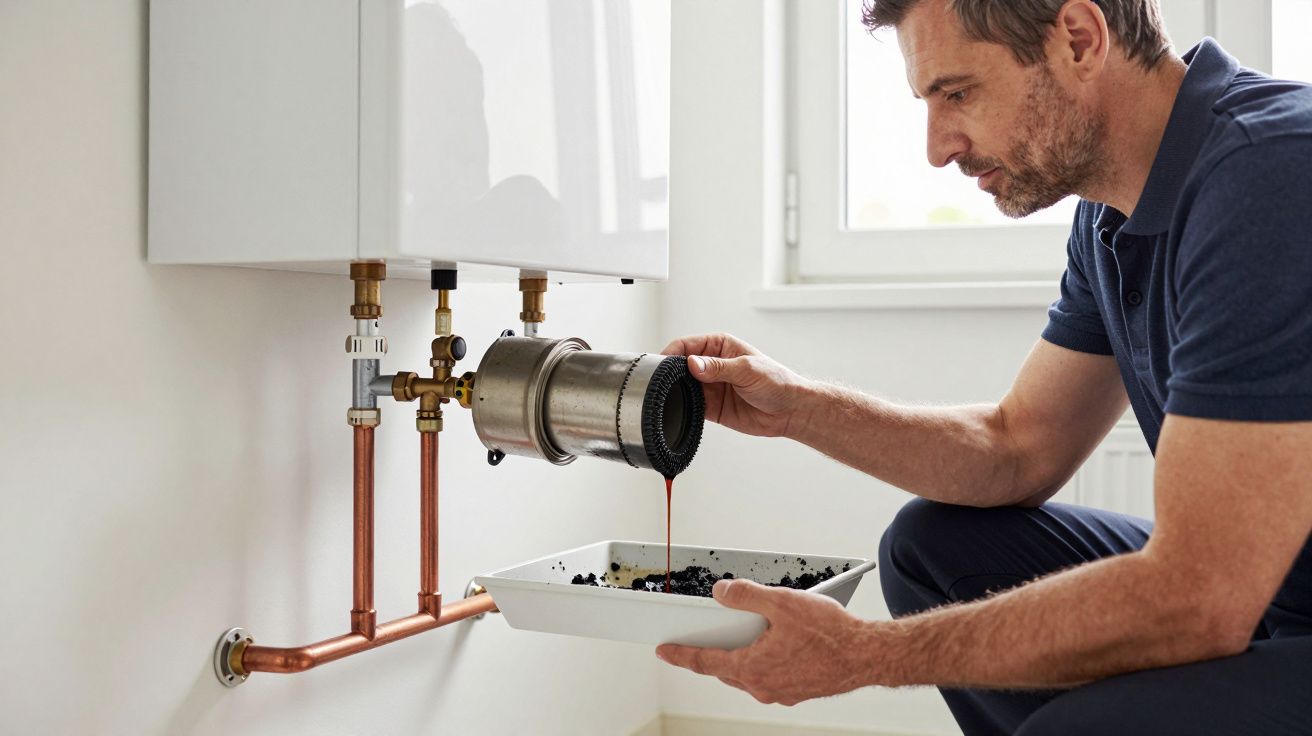
Before you blame the street, clear the choke points you can access safely: - Remove and rinse tap aerators (often full of grit after works). - Descale or replace the shower head and clean the hose washer. - Make sure the internal stop tap is fully open. - If you have a filter on a shower or inline valve, check it.
If one outlet improves dramatically after a clean, your “uneven pressure” was a local restriction all along.
The comfort fixes that actually match the cause
Once you know whether it’s demand, restriction, or control, the right fix becomes less dramatic - and often cheaper.
If it’s demand: manage the peaks, or increase capacity
- Stagger high-flow activities (yes, annoying, but immediate).
- Fit low-flow shower heads that keep spray quality while reducing draw.
- Consider whether the incoming mains is undersized for the household; in some cases a plumber can assess options like boosting (where permitted/appropriate) or reconfiguring pipe runs.
If it’s restriction: remove the bottleneck
This is where comfort upgrades feel “instant”. A partially closed valve or scaled shower head can turn a home into a place you brace yourself. Clearing that restriction restores predictability, which is what you actually want in the morning.
If it’s control: stabilise temperature and flow
Mixer showers and combis need minimum flow rates and steady supply to behave. If your diagnostics show pulsing or hot-side instability, solutions may involve: - servicing or replacing a thermostatic cartridge, - checking boiler settings and flow rate requirements, - assessing whether a pump is correctly sized and installed (and whether it’s hunting).
If you only fix the symptom (change the shower head) without fixing the control issue, the discomfort comes back - usually on the coldest day of the year.
A quick “comfort-first” checklist
If you want the shortest path from problem to relief, prioritise in this order:
- Clean/replace shower head and tap aerators.
- Confirm stop tap is fully open and valves aren’t half-shut.
- Do the jug-and-stopwatch flow test at kitchen cold vs problem outlet.
- Repeat the test under load (second tap running).
- If results point to supply limits or hot-side control issues, call a professional with your notes.
Those notes matter. When you can say “kitchen cold is stable, shower drops from X litres/min to Y under load”, you skip the vague part of the conversation and get to solutions faster.
| What you notice | Likely category | What to test next |
|---|---|---|
| Whole house weak at busy times | Demand/supply | Flow test at kitchen cold during peak vs off-peak |
| One shower goes needle-jet then dribbles | Restriction/control | Clean head/filter, then test pulsing with other taps off |
| Hot swings when cold tap opens | Control/flow balance | Compare hot vs cold flow rates at the same outlet |
FAQ:
- Can uneven water pressure be “normal” in the UK? Some variation is common, especially at peak demand, but big swings that affect showering and basic use usually indicate a restriction, undersized supply for the household, or a control issue worth diagnosing.
- Is this a water pressure problem or a boiler problem? If cold pressure is stable but hot drops or pulses, look towards the boiler/mixer controls and hot-side flow restrictions. If both hot and cold drop across the house together, look towards demand and incoming supply.
- Do I need a pressure gauge? It helps, but you can learn a lot from simple flow tests (litres per minute) and under-load comparisons. Comfort correlates strongly with stable flow.
- When should I call a plumber immediately? If you have sudden severe drops, banging noises, leaks, visible water staining, or if pressure changes coincide with boiler faults. Also call if you suspect a failing PRV or pump installation issues.



Comments (0)
No comments yet. Be the first to comment!
Leave a Comment