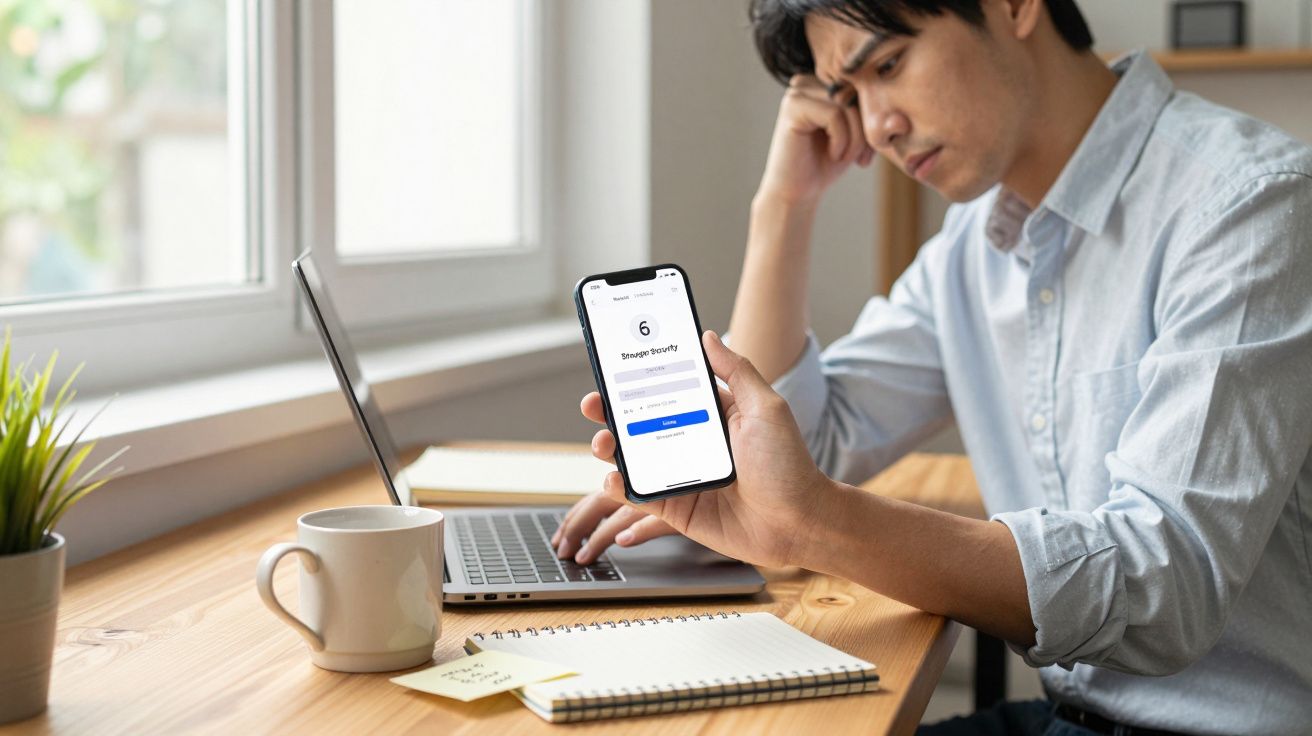
On Monday mornings, the phrase “of course! please provide the text you would like me to translate.” pops up in chat windows and helpdesks more often than you’d think, usually right after someone’s locked out and wants the quickest fix. A beat later comes the nudge: “it appears you haven't provided any text to translate. please provide the text you would like translated into united kingdom english.” - the digital equivalent of someone leaning over the counter and saying, gently, you’ve missed a step. That tiny exchange matters, because it captures the password problem in miniature: we reach for rituals and scripts when we’re stressed, and we mistake them for security.
There’s a common myth about password habits that refuses to die: that the safest password is the one nobody can ever remember, so you should make it as complex as possible and change it all the time. It sounds strict, it sounds grown-up, and it creates a tidy feeling of control. In practice, it mostly creates Post-it notes, recycled patterns, and a queue for resets.
The myth: “complex and constantly changing beats everything”
The old advice had a logic. If attackers guessed passwords by hand, then swapping “Password123” for “P@ssw0rd!9” felt like moving from a shed lock to a steel door. If you changed it every month, you imagined you were staying one step ahead.
But the world changed while the advice stayed. Attacks became automated, powered by leaked password databases, and tuned to the way humans actually behave. When rules force people into frequent changes, people don’t become safer - they become predictable.
Think about what “predictable” looks like in real life. It’s a capital letter at the front, a number at the end, and a polite exclamation mark. Then, next month, it’s the same thing with the number incremented, because nobody has the mental bandwidth to reinvent their identity every 30 days.
What really happens when you force password “discipline”
At 8:47am, a finance manager tries to log into a payroll portal, fails twice, and feels their shoulders rise. They try the “new” password, then the “newer” one, then the one that worked last quarter. By the time the reset email arrives, they’ve already opened a sticky note app and typed something they’ll recognise later.
That’s not laziness; it’s friction. Security that ignores human behaviour doesn’t create compliance. It creates workarounds that attackers love, because workarounds are consistent across offices, families, and whole industries.
The most dangerous habit isn’t “weak password” in the abstract. It’s password reuse-the same (or nearly the same) password across email, shopping sites, and that forgotten forum from 2017. One breach becomes a master key, and the attacker doesn’t need to guess anything. They just try what already worked elsewhere.
The better rule: length, uniqueness, and a second factor
If you only change one thing, make passwords longer and unique per account. Length gives you room to be memorable without being guessable, and uniqueness prevents one leak from turning into five compromised accounts.
A good mental model is “hard to guess, easy to type”. That usually means a passphrase: several ordinary words stitched together. Not a famous quote, not your child’s name, not anything a colleague could guess after a pub chat. Just something long, private, and dull.
Then add the thing that actually changes the game: a second factor (2FA/MFA). An authenticator app or a security key means a stolen password alone isn’t enough. It’s the difference between “someone knows your code” and “someone has your phone/key too”.
A practical upgrade plan that doesn’t turn into a hobby
You don’t need to rebuild your entire digital life in one weekend. You need a sequence that reduces the biggest risks first.
- Start with email. If someone gets into your email, they can reset everything else. Use a unique passphrase and turn on 2FA.
- Then do banking and payments. Anything that moves money or stores card details comes next.
- Then do work logins and cloud storage. Especially anything tied to clients, invoices, or shared documents.
- Use a password manager if you can. It removes the temptation to reuse and lets you go long without going weird.
- Stop changing passwords on a timer. Change them when there’s a reason: a breach, a suspicion, a shared device you no longer control.
The quiet win is reducing the number of decisions you have to make under pressure. The fewer “rules” you’re trying to remember, the less likely you are to improvise something attackers already anticipate.
Common traps (and how to sidestep them)
Some mistakes are so normal they feel harmless. They aren’t, but they’re fixable.
- “I’ll just add a symbol.” If the base is reused, a symbol doesn’t save it. Attackers try common substitutions first.
- “I’ll write it down, but hide it.” If you must write down a recovery code, store it properly (locked drawer, encrypted note), not on the monitor frame.
- “Text-message codes are fine forever.” SMS can be better than nothing, but authenticator apps or security keys are stronger where available.
- “My work account is separate.” Your work account is connected to your real name, your inbox, and often your personal phone. Treat it as high value.
Security isn’t a performance; it’s a habit with low drama. The best setup is the one you can repeat on a tired Tuesday without getting clever.
The small truth the myth tries to ignore
The goal isn’t to create a password you can’t remember. The goal is to make it not worth attacking, even if something else goes wrong. Long and unique limits guessing and reuse attacks. 2FA limits damage when a password leaks. A manager limits human fatigue, which is where most “bad password habits” are born.
If you want a simple test, ask yourself: if this password leaked tonight, what else would fall with it? If the answer is “half my life”, that’s not a complexity problem. That’s a uniqueness problem.
FAQ:
- Do I need to change my passwords every month? Not usually. Change them when there’s a clear trigger (breach, suspicion, shared access), and focus on long, unique passwords plus 2FA.
- Are passphrases actually safe? Yes, when they’re long, not predictable, and unique per account. Length is a major driver of resistance to guessing.
- Is a password manager worth it? For most people, yes. It reduces reuse and lets you have strong, unique passwords without relying on memory alone.
- What’s the first account I should secure? Your email. It’s the reset button for everything else.
- Is SMS 2FA good enough? It’s better than nothing, but an authenticator app or security key is generally stronger when available.

Comments (0)
No comments yet. Be the first to comment!
Leave a Comment