Most burst pipes don’t arrive with a dramatic bang. They start as tiny weaknesses that worsen under pressure fluctuations-those everyday rises and dips when a boiler fires up, a washing machine fills, or the mains demand changes on your street. Spotting the early signs matters because a slow, hidden leak can quietly damage floors, plaster, electrics, and joinery long before you see a puddle.
The tricky part is that your home can look “fine” while water is working behind the scenes. What you’re looking for isn’t one cinematic clue, but a pattern: small, repeatable oddities that keep showing up in the same place.
The quiet timeline: how a pipe fails without announcing itself
A pipe rarely goes from healthy to flooded in a day. More often, corrosion, hairline cracks, or stressed joints build up over months, then one cold snap or a sharp spike in demand turns “weird” into “serious”.
Pressure fluctuations speed this along. Each surge is a little shove at fittings, valves, and older pipework; if something is already compromised, the system can start “telling on itself” in subtle ways.
The early signs people miss (because they don’t feel like plumbing)
The first clues often look like general household quirks. Taken alone they’re easy to dismiss; together they’re a nudge to investigate.
1) A water bill that rises for no good reason
If your usage habits haven’t changed but your bill has, assume water is going somewhere. A slow leak from a cracked pipe under a floor can run continuously without showing on the surface for weeks.
A quick sense-check helps: note your meter reading before bed, avoid using water overnight, then check again in the morning. If it’s moved, you’ve got flow when you shouldn’t.
2) “Off” water pressure that comes and goes
A gradual drop in pressure can be many things, but inconsistent pressure-fine one minute, weak the next-can suggest a leak that worsens during pressure fluctuations. You might notice it most in upstairs taps or showers, where any loss shows up quickly.
If you’re getting sputtering taps or bursts of air, don’t just blame the system being “a bit temperamental”. Air can enter through a compromised section, especially on older setups.
3) Damp that doesn’t behave like normal condensation
Condensation tends to be seasonal and surface-level. Leak-related damp is often local and persistent: a patch that grows slowly, paint that bubbles in one spot, or skirting boards that start to warp without an obvious spill.
Pay attention to timing. If a patch looks worse after you’ve run the heating, used hot water, or had multiple showers, that pattern can point to pipework, not weather.
4) A new smell you can’t “clean away”
Musty odours that return after ventilation and cleaning can be a sign of moisture trapped in voids-behind cabinets, under laminate, inside boxed-in pipe runs. The smell is often strongest first thing in the morning or after the house has been closed up.
One common tell: you keep thinking the room needs airing, but it never quite fixes it.
5) Sounds that weren’t there before
Pipes do make noise, but listen for changes: knocking (water hammer), ticking, or a hiss that appears when no one is using water. Water hammer in particular can be linked to sudden pressure changes and can stress joints over time.
If you only hear it when appliances start or stop (dishwasher, washing machine), that’s worth noting. It’s often when pressure shifts are sharpest.
The “two-minute checks” that actually catch slow leaks
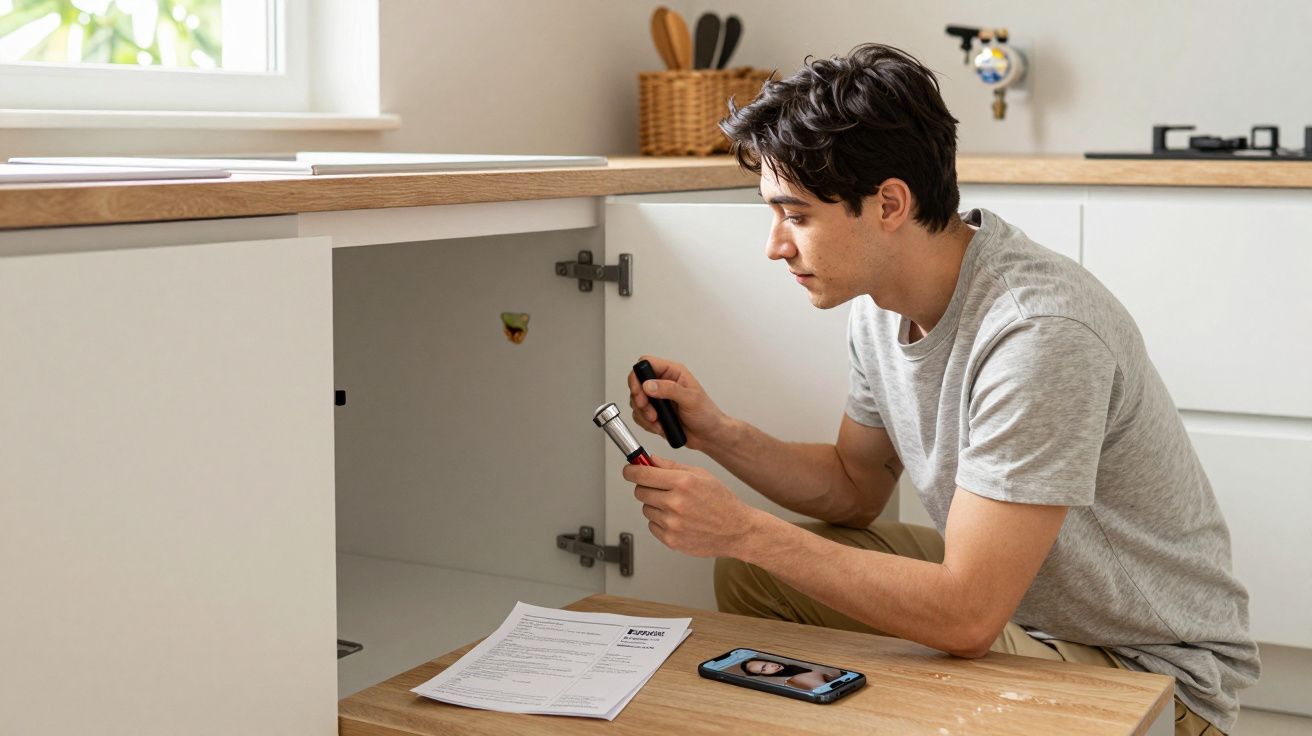
You don’t need specialist kit to do a first pass. You need a torch, patience, and a willingness to look where you normally don’t.
- Meter test (overnight or 30 minutes): no water use, then check if the meter moves.
- Toilet dye test: a few drops of food colouring in the cistern; if colour appears in the bowl without flushing, you’ve got a silent leak (which can mask other issues).
- Look under and behind: kitchen sink base units, behind the washing machine, around the boiler, and any visible pipe joints for green/white staining, rust marks, or warped chipboard.
- Feel for temperature oddities: an unexpected warm patch on a floor can indicate a hot-water leak; a cold patch that stays damp can suggest a mains leak.
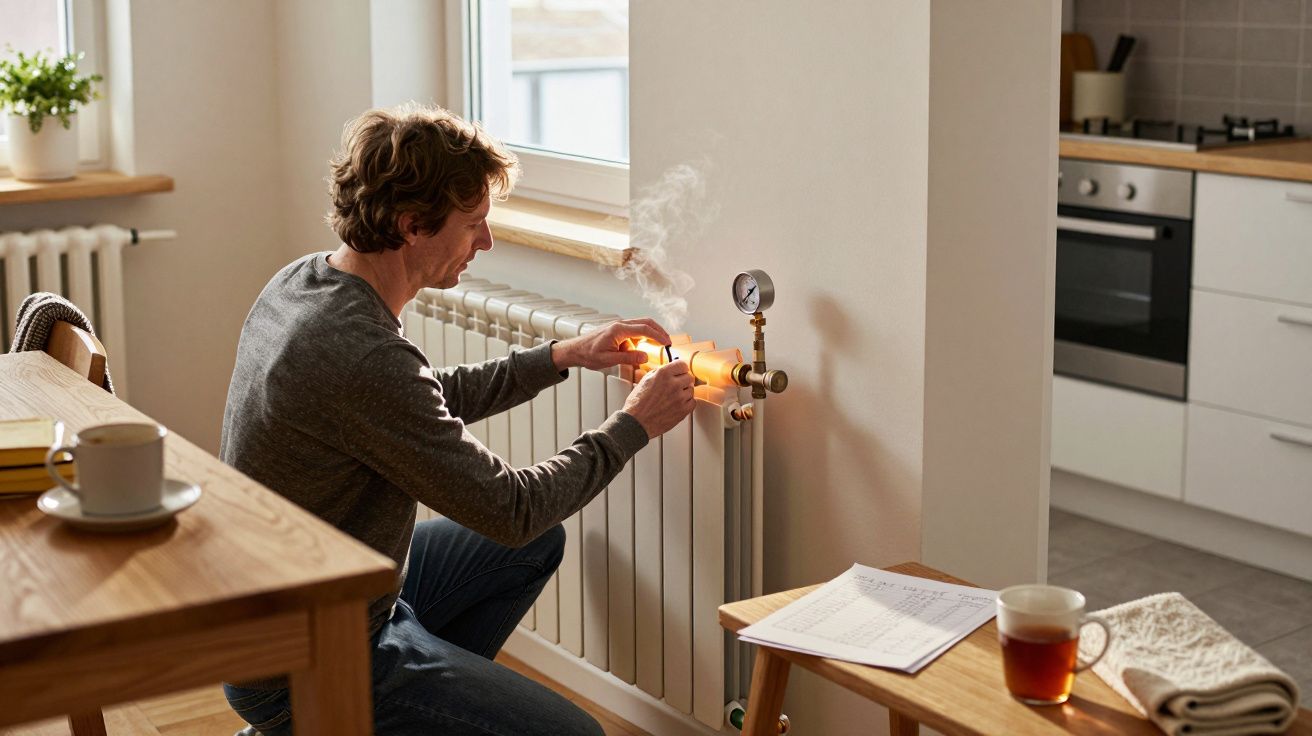
- Listen at night: when the house is quiet, stand near boxed-in runs or the airing cupboard and listen for faint flow.
Soyons honnêtes: most of us only look under the sink when something has already gone wrong. These checks work because they’re boring-and boring is where slow leaks live.
Why pressure fluctuations matter more than you think
Even if the leak is small, changing pressure can make it behave unpredictably. A pinhole leak might “mist” under high pressure and seem to vanish when demand drops, leaving you with inconsistent clues: a damp smell that comes and goes, a patch that dries then returns, a bill that spikes then levels off.
If you’ve recently had work done-new mixer tap, replaced stopcock, boiler swap-watch closely for a few weeks. Minor installation issues can hold up under steady conditions but fail when pressure swings hit.
When to stop investigating and call someone
There’s a point where DIY checking becomes delay. If any of the below is true, treat it as urgent.
- Your meter moves with everything off.
- You can see damp spreading across plasterboard, ceilings, or around electrics.
- You hear continuous flow sounds with no taps running.
- There’s a sudden drop in pressure across multiple outlets.
- You’re in a flat and notice signs near shared risers or service cupboards (it may affect neighbours).
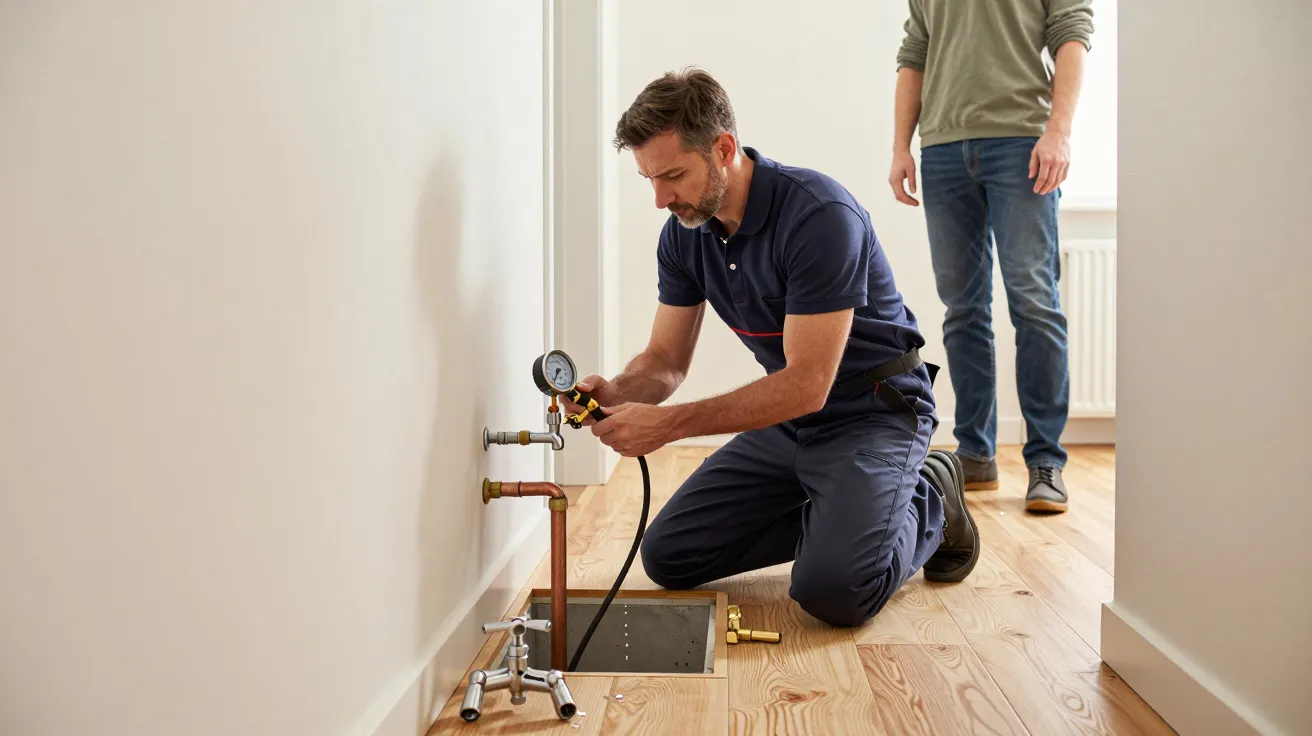
If you suspect a burst pipes scenario in a concealed area, a plumber can pressure-test sections and use acoustic or thermal tools to locate the issue without ripping up half the house.
A practical “do this now” checklist
If you want one simple sequence to follow:
- Take a photo of your water meter reading.
- Don’t use water for 30 minutes; re-check the meter.
- Walk the likely routes: boiler/airing cupboard → kitchen → bathroom(s) → any boxed-in runs.
- Note any repeatable patterns (after showers, after heating kicks in, after appliances run).
- If the pattern persists, book a professional visit before it turns into visible damage.
“The worst leaks aren’t the loud ones. They’re the ones that teach you to ignore small signals until they become expensive.”
FAQ:
- How can I tell if it’s a leak or just condensation? Condensation is usually widespread and seasonal; leak damp is local, persistent, and often worsens after water use or heating cycles.
- Can pressure fluctuations really cause burst pipes? They can contribute by repeatedly stressing weak joints or already-damaged sections, making a small defect grow over time.
- What’s the quickest test I can do tonight? The water meter test: avoid using water for 30 minutes (or overnight) and see if the meter moves.
- If I can’t see water, is it still urgent? Yes. Hidden leaks can rot floors and cabinetry and may affect electrics; early action is typically far cheaper than repairs after visible damage.
- Should I turn off the stopcock if I’m suspicious? If you have clear signs of an active leak (meter moving, spreading damp, flow sounds), turning it off can limit damage while you arrange help.



Comments (0)
No comments yet. Be the first to comment!
Leave a Comment