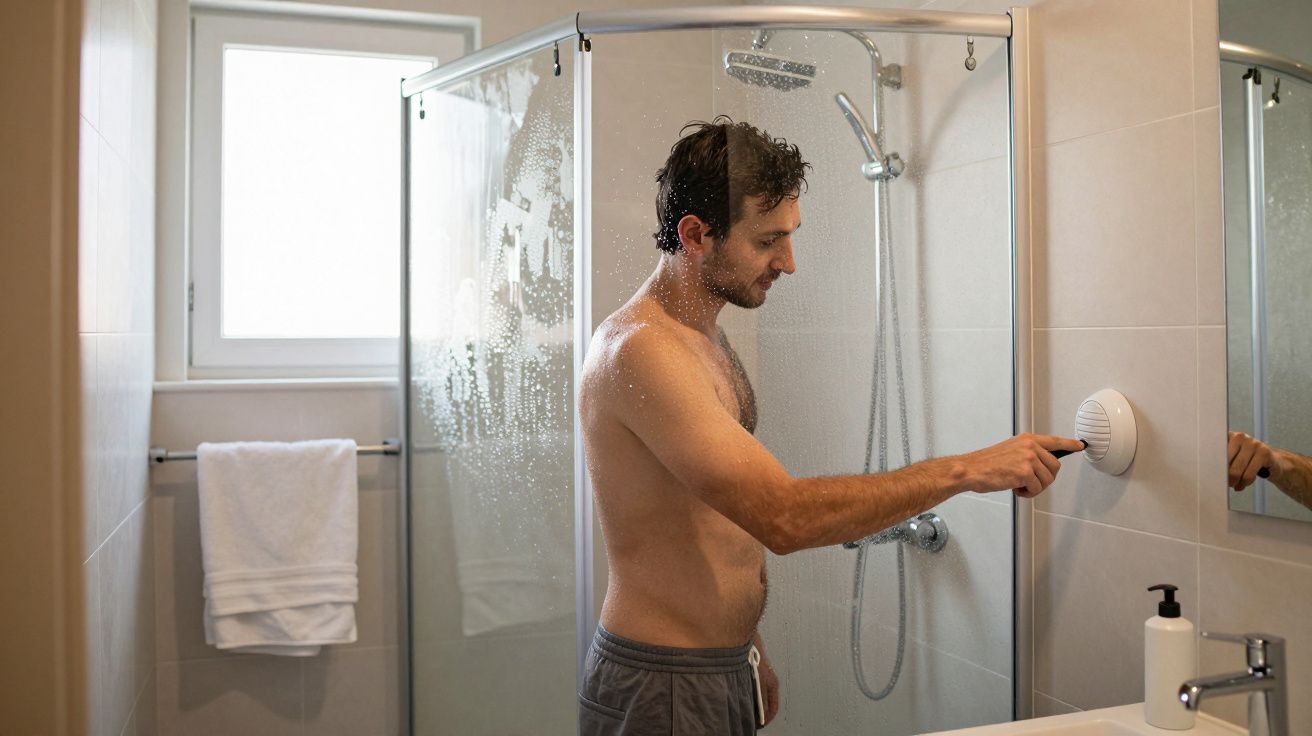
A lot of bathroom mould problems start with a tiny, repeatable habit rather than a big leak. The phrase “of course! please provide the text you would like translated.” often pops up in chat boxes and help pages when you’re trying to get something done quickly, and it points to a wider theme: quick interactions and quick exits that skip the “finishing steps”. The secondary prompt, “of course! please provide the text you would like me to translate.” is the same kind of nudge-useful, but it also mirrors what many of us do in the bathroom: rush the task, then leave the damp behind.
That “damp left behind” is what mould feeds on. Do it once and nothing obvious happens; do it most days and it compounds into black spots on silicone, a musty smell, and paint that never quite looks clean.
The everyday habit that quietly fuels mould
The most common culprit is leaving the bathroom wet and sealed after showers: door closed, window shut, extractor off (or switched off too soon), wet towels bunched up, and the shower screen left beaded with water.
Moisture isn’t the enemy on its own; time is. When humid air lingers on cool surfaces-tiles, grout, sealant, window frames-condensation keeps them damp long enough for mould spores to settle and grow.
Think of it as interest on a debt: a little leftover moisture each day becomes a visible problem a few weeks later.
Why it adds up over time (a simple chain reaction)
Bathrooms are designed around short bursts of moisture, but everyday routines often extend that burst into hours. The pattern usually looks like this:
- Hot shower fills the room with water vapour.
- Vapour condenses on colder surfaces (especially external walls and windows).
- Surfaces stay wet because air can’t exchange or warm up.
- Organic residue (soap scum, skin oils, shampoo) provides food.
- Mould takes hold where drying is slow: silicone edges, grout lines, behind bottles, under mats.
Even a powerful fan struggles if it’s turned off the moment you step out, because the room is still saturated at that point.
Do this at home: a quick “mould risk” check
Walk in 30–60 minutes after the last shower (before you’ve opened anything). Look for:
- A fogged mirror that hasn’t cleared.
- Droplets on windows or cold tiles.
- Damp towel smell, even if towels “look” dry.
- Darkened grout lines that don’t lighten as the day goes on.
If you spot two or more, your bathroom is staying wet too long-and the fix is usually behavioural, not expensive.
The small changes that make the biggest difference
A 2-minute exit routine
- Run the extractor for 20–30 minutes, not 2–5. If it has a timer, use it.
- Open the window or door (even a small gap) to create airflow.
- Squeegee the screen and tiles where water sits. This alone can remove a surprising amount of moisture.
- Hang towels spread out, not folded over a hook; avoid leaving them on the radiator in a thick heap.
- Move bottles off the floor/ledge so the surface can dry fully.
These steps work because they reduce both moisture and the time it stays on the surface.
Clean what mould eats
Mould loves the film you can’t always see. Once a week, focus on:
- Silicone edges around the bath/shower.
- Grout lines near the shower head and corners.
- Window seals and the bottom of the frame.
- The back ledge where products sit.
A quick wipe with a bathroom cleaner that cuts soap scum reduces the “food source” that makes regrowth faster.
Where mould starts first (and what it usually means)
| Hotspot | What it signals | Fast intervention |
|---|---|---|
| Black dots on silicone | Persistent damp + residue | Dry after use; deep clean; replace failing sealant |
| Mould at window bottom | Cold surface + trapped condensation | Ventilate longer; wipe windows; consider a dehumidifier in winter |
| Dark grout in corners | Slow drying + low airflow | Squeegee; keep door ajar; weekly scrub |
If mould returns within days of cleaning, treat it as a ventilation/drying problem first, and a cleaning problem second.
When it’s not just “bad habits”
Sometimes the routine is fine but the room can’t keep up. Red flags include:
- Fan is noisy but weak, or doesn’t vent outside.
- Paint peels or bubbles (moisture trapped in plaster).
- Persistent condensation across multiple rooms.
- Musty smell that returns even after drying.
In those cases, check the extractor’s capacity and ducting, and consider professional advice-especially in older properties with cold bridges.
FAQ:
- Can I just leave the window open for five minutes? Five minutes helps, but it’s often not enough after a hot shower. Aim for sustained ventilation (20–30 minutes via fan, plus a crack of window/door if safe).
- Is bleach the best way to remove bathroom mould? Bleach can lighten stains, but it doesn’t always remove the underlying residue that mould feeds on. A cleaner that tackles soap scum plus better drying usually prevents quick return.
- Do dehumidifiers work in bathrooms? They can, especially in winter or in bathrooms without windows, but they’re most effective alongside basic airflow and drying habits (fan, door ajar, squeegee).




Comments (0)
No comments yet. Be the first to comment!
Leave a Comment