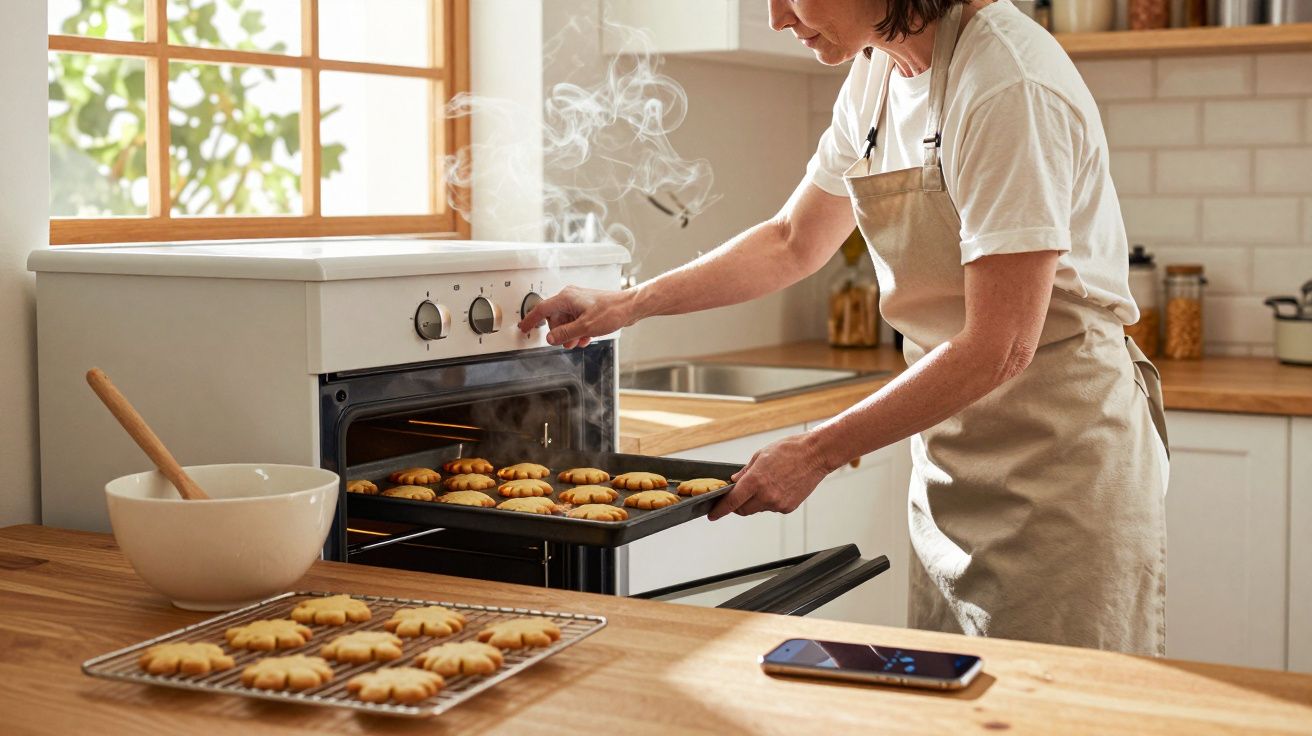
You only notice it once you start baking at home: the oven’s on “just for a bit”, the kettle’s gone on twice for tea, and the extractor’s humming like it always does. Then a little pop-up on a phone or a browser says, of course! please provide the text you would like translated. and, right behind it, it looks like you haven't provided any text to translate. please provide the text you'd like translated into united kingdom english. It’s the same feeling: a tiny action, repeated without thinking, that quietly adds up.
Home baking has its own version of that hidden accumulation. Not the price of flour or butter, but the habit of preheating early and keeping heat running between batches-because it feels efficient, tidy, “proper”. Over months, it can be the difference between baking as a treat and baking as a small, steady drain.
The baking habit that feels harmless (and why it’s so common)
Ask anyone who bakes regularly and you’ll hear the same rhythm. You preheat while you weigh ingredients. You leave the oven on because there’s “another tray in a minute”. You keep the door cracked open to cool things faster, because you’re in a rush and the kitchen’s cold anyway.
None of this is dramatic. That’s why it sneaks through.
The oven is the biggest single electric load in many kitchens. You don’t need a spreadsheet to understand that a 2–3kW appliance, run a little longer than necessary, will cost more than the extra spoon of caster sugar you spilled.
What makes it tricky is that the faff-saving choice often becomes the money-leaking choice. Preheating feels like good practice. Leaving the heat on feels like not wasting time. But electricity and gas don’t care about our intentions; they only count minutes.
Where the cost really creeps in: preheat time, idle time, and “one more batch”
Most people don’t overspend because they bake for three hours straight. They overspend in the gaps.
- Preheating too early: ovens can take 10–20 minutes to reach temperature, longer for older models. Starting it at the first whisk rather than when the tin is ready bakes money into the routine.
- Holding temperature between trays: that “I’ll just do the next batch” often turns into ten minutes of chatting, washing up, scrolling, and the oven cycling on and off to stay hot.
- Using the oven for small jobs: reheating two pastries, crisping one baguette, drying a handful of croutons. Each one feels tiny; the pattern is not.
A friend who bakes bread on Sundays described it perfectly: the oven becomes the background music of the house. It’s on while dough proves “just in case”. It stays on while lunch happens. It stays on again because the brownies are “easy since it’s already hot”. By tea time, the house smells wonderful-and the meter has been jogging all day.
What actually works without ruining your baking
You don’t need to stop baking. You need to stop donating extra minutes to heat.
The easiest wins are behavioural, not technical:
Preheat later than you think
Prep everything first: tin lined, tray ready, batter finished. Then preheat. Most recipes assume you’re organised; real life isn’t, so you end up paying for the delay.Batch smarter, not more
If you’re already heating the oven, plan one sensible second item that matches the temperature range (granola after cookies, roast veg after bread), instead of a chain of “might as well”.Use residual heat on purpose
Many bakes don’t need full heat right to the end. Turn the oven off a few minutes early for things like shortbread, meringues (with care), or anything finishing by gentle drying-then keep the door shut.Stop “cooling with the door open”
It feels like you’re reclaiming warmth, but you’re often just dumping heat unpredictably and inviting you to reheat later. Let food cool on a rack; let the oven cool on its own timetable.
If you want a one-time setup rather than daily discipline, check whether your oven has an eco mode, a rapid preheat toggle, or a timer that actually switches off. Lots of people use the timer as a reminder, not as an off-switch, and then wonder why the kitchen’s still hot.
The quiet maths: minutes matter more than masterpieces
It’s hard to feel the cost of an extra 12 minutes. You can’t taste it in the sponge. You only feel it when the bill arrives and everything looks slightly higher than expected.
To keep expectations realistic, think in “sessions”, not single bakes. If you bake twice a week and your habit adds 15–20 minutes of hot-oven time each session, that’s hours of oven cycling each month for no extra cake.
The point isn’t guilt. It’s control.
Small fixes are the only ones most people will stick with. Nobody wants baking to become a tight-fisted ritual. But shaving heat-time without touching the joy-that is the sweet spot.
| Habit shift | What you do | Why it helps |
|---|---|---|
| Preheat later | Oven on only when trays are ready | Cuts dead time at full power |
| Combine bakes | One planned add-on, not endless extras | Fewer “holding” minutes between trays |
| Use residual heat | Switch off a little early, door shut | Uses heat you’ve already paid for |
FAQ:
- Do I always need to preheat the oven? For many cakes, pastries and anything relying on a temperature “spring”, yes. But you can often preheat later than you do now-when the mixture is ready, not when you start.
- Is leaving the oven door open to heat the kitchen a good idea? Not usually. It can encourage longer oven use later and makes temperature control messier. If you need warmth, draught-proofing and targeted heating tend to be cheaper.
- What’s the easiest habit to change without thinking? Batch planning. Decide before you switch the oven on whether there’s a second item worth baking at the same temperature, then stop.
- Does a fan oven save money? It can, because you often cook at a lower temperature and sometimes faster. The bigger savings still come from reducing total “oven on” minutes.
- If I bake a lot, should I get an air fryer? For small portions, it can be cheaper and faster than heating a full-size oven. For big trays, bread, or multiple items at once, the oven still wins on capacity.


Comments (0)
No comments yet. Be the first to comment!
Leave a Comment