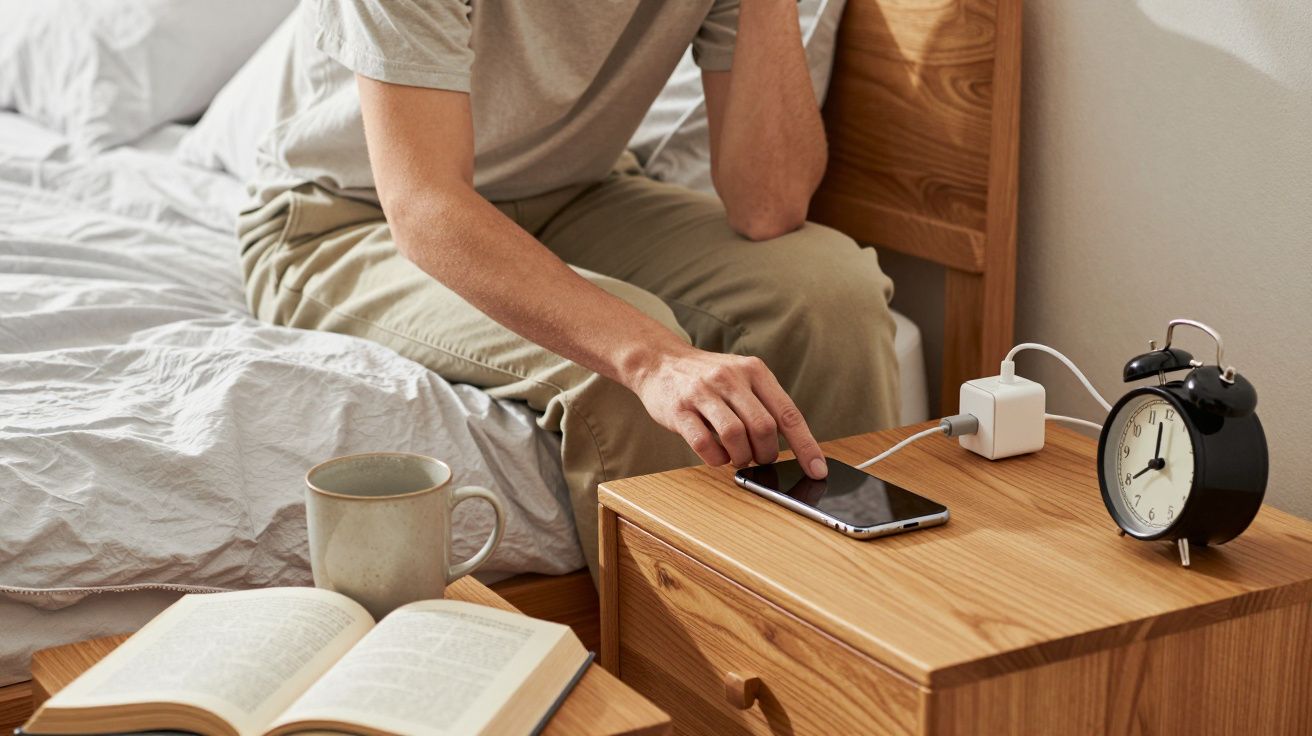
You don’t notice it when you type of course! please provide the text you would like translated. into a chat box late at night, or when certainly! please provide the text you would like me to translate. pops up as a cheerful prompt to keep going. But that tiny loop-one more message, one more scroll, one more “just checking”-is an everyday habit that nudges your sleep timing later, then lets the drift compound.
Sleep loss is loud. Sleep timing is quiet. And for many people, the bigger problem isn’t how long they sleep once they’re out-it’s how often they start the night later than they meant to.
The habit that quietly moves bedtime
It’s rarely a single culprit. It’s the cluster: replying, watching, reading, refreshing, and doing “small” tasks in the hour that used to signal the day is done. The brain clocks that light and mental effort as a hint to stay alert, even when your body wants rest.
Bedtime doesn’t usually collapse in one dramatic night. It slips by five to fifteen minutes, then repeats until it becomes your new normal.
The common pattern looks harmless: you get ready for bed, then pick up your phone “for a minute”. A message becomes a thread. A thread becomes a new tab. By the time you put the device down, the time you planned to fall asleep has already moved.
Why it adds up over time
A single late night is recoverable. The trouble is the maths of repetition. If you push sleep 20 minutes later four nights a week, you’ve effectively shifted your week by more than an hour-and your body doesn’t always bounce back with a lie-in.
That shift can create social jetlag: your sleep schedule on workdays diverges from your schedule on free days. The Monday morning sting isn’t just tiredness; it’s a clock mismatch you rehearse every week.
Sleep timing affects more than you think
When you sleep later, you often wake later-unless life forces an early alarm. That’s where the squeeze happens. You either lose duration, or you keep duration by moving your whole rhythm later, which can affect morning light exposure, appetite timing, and energy across the day.
Late timing also tends to drag habits with it. Evening snacks get later. “One last episode” gets easier to justify. Exercise slips from evening to “tomorrow”. None of these are moral failings; they’re predictable side effects of a schedule that’s drifted.
The bedroom becomes a command centre
The bed used to be a cue for sleep. Now it’s a place where you plan, shop, talk, watch, and work. Each extra function teaches your brain that lying down does not mean switching off.
Common bedtime “micro-triggers” that extend alertness:
- Checking messages after brushing your teeth “just in case”.
- Watching short videos that reset your attention every 20 seconds.
- Doing quick admin (banking, calendars, emails) that pulls in decision-making.
- Reading news that raises stress, even when you feel calm.
A simple self-check for tonight
Look at the last week, not just last night. When did you intend to turn the lights out, and when did you actually try to sleep? The gap is the behaviour, not the personality.
Try this 30-second audit:
- What time did you get into bed?
- What time did the screen go off?
- What time did you stop talking/working/scrolling?
- What time did you attempt sleep?
If you can’t answer, that’s useful data: the habit is running automatically.
How to keep bedtime from drifting without a full life overhaul
You don’t need a perfect routine. You need a friction point. Something small that interrupts the “one more thing” reflex and protects a consistent sleep window.
A two-step wind-down that actually fits real life
Pick a target: not “go to bed earlier”, but “screen-off time”. Then make it easy to follow on average, not just on your best days.
- Set a screen-off anchor: 30 minutes before your planned sleep time, not 90. Consistency beats ambition.
- Replace the final scroll with a low-stimulation default: shower, light stretching, a paper book, tomorrow’s clothes, or a short audio track with the screen face-down.
The goal isn’t to win the evening. It’s to stop losing ten minutes without noticing.
Practical guardrails that work in small flats and busy homes
- Charge your phone outside the bed zone (even just across the room).
- Use “Do Not Disturb” with a favourites list for true emergencies.
- Keep the bedroom slightly cooler and slightly darker than the rest of the home.
- If you must use a screen, lower brightness and avoid high-arousal content (arguments, breaking news, competitive games).
If your schedule is already late, shift it gently
People often try to fix sleep timing with a heroic early night. That can backfire: you lie awake, get frustrated, then cement the bed as a place of effort.
Instead, shift in small increments:
- Move your screen-off time 15 minutes earlier for three nights.
- Then move wake time 10–15 minutes earlier, and get outdoor light soon after waking.
- Keep weekends within an hour of your weekday wake time when you can.
A quick example that makes the drift visible
A commuter aims for sleep at 23:00, but scrolls until 23:25 most nights. They still wake at 06:45. That’s 25 minutes less sleep-five nights a week-more than two hours gone by Friday. Even if they “catch up” on Saturday, the body has learned a later rhythm, and Monday feels like a time zone change.
The payoff is boring-in the best way
When sleep timing stabilises, mornings get less dramatic. Appetite steadies. Energy becomes less dependent on caffeine luck. You stop negotiating with your pillow at 01:00 because you’ve trained the evening to end, not stretch.
Bedtime doesn’t need to be perfect to be powerful. It just needs to stop drifting.






Comments (0)
No comments yet. Be the first to comment!
Leave a Comment