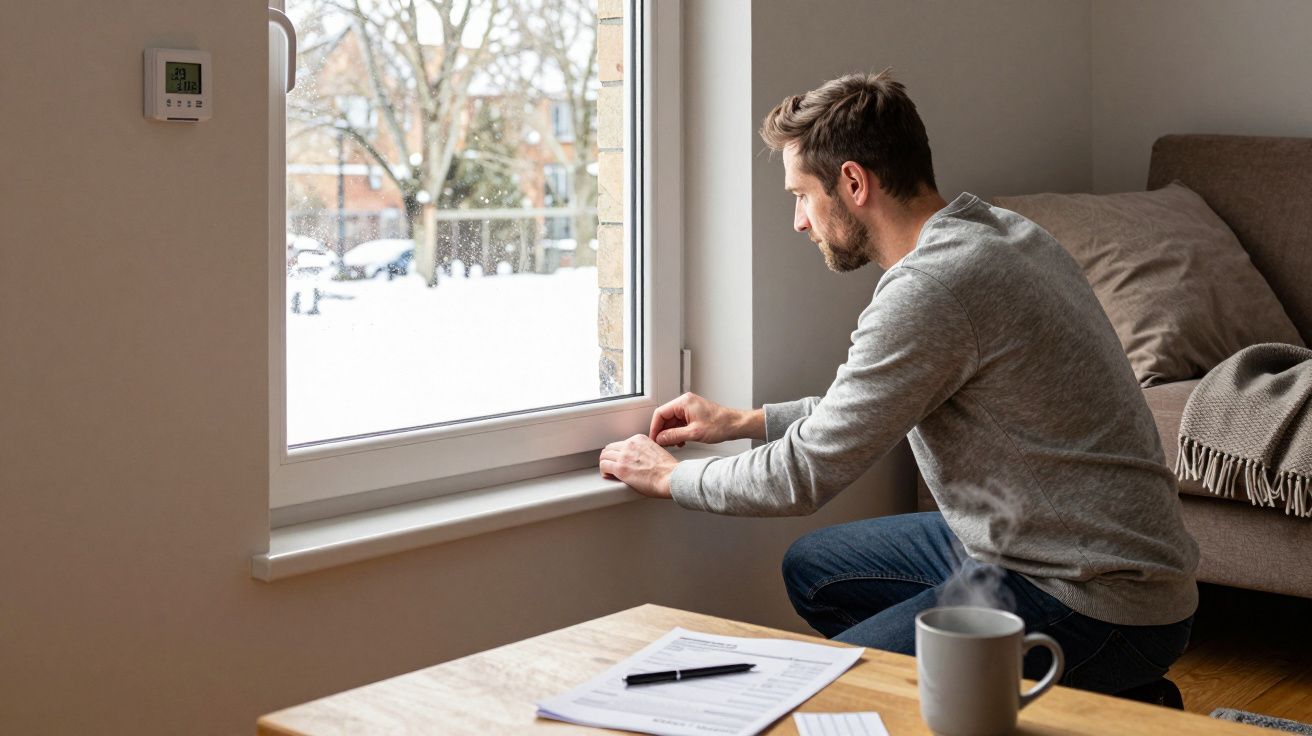
It starts the same way every year: the first cold snap, the radiators clanking into life, and that familiar promise to yourself that you’ll keep a stable indoor temperature “so the house doesn’t get cold”. Then user expectations kick in - the idea that comfort means a constant number on the thermostat - and your bills quietly climb while you wonder why it still feels draughty by the sofa.
Somewhere between the hallway chill and the bedroom that’s never quite right, a myth takes hold: that the best, cheapest way to feel warm is to keep the whole home evenly heated, all day, for months. It sounds sensible. It often isn’t.
The myth: “Keeping it steady is always cheaper - and always cosier”
Homeowners repeat it like a folk rule: don’t let the house cool down, because reheating it “costs more”. It’s the heating equivalent of leaving the tap running because turning it back on “wastes water”. You can almost hear the logic click into place.
The trouble is the house doesn’t care about logic. It cares about physics. Heat leaks out faster when the difference between inside and outside is bigger. If you keep the whole place warmer for longer, you usually lose more heat overall - and you pay for those losses.
There are exceptions, and that’s where the myth survives: some homes are so poorly insulated, or some heating systems so slow to respond, that people experience the alternative as miserable. They try a setback, hate the cold hour, and conclude the old rule must be true.
Why “always on” feels comforting (even when it’s costing you)
A stable indoor temperature is appealing because it removes decision-making. No fiddling, no “should I turn it up?”, no waking up to a cold kitchen and resenting your own frugality. For busy households, that ease is real.
It also matches user expectations shaped by hotels, offices, and modern marketing: warmth as a service that should be invisible, instant, and uniform. When your living room doesn’t feel like a lobby, it feels like something is “wrong”, even if the system is behaving exactly as designed.
And once you’ve paid for constant warmth, your tolerance changes. Twenty minutes of cool air stops feeling like “winter” and starts feeling like a personal failure.
What you’re actually paying for: time at temperature
Here’s the bit most people miss: the main cost driver isn’t whether the boiler fires “from cold”. It’s how long you ask the house to sit at a higher temperature than the outdoors.
Think in plain terms. If it’s 3°C outside and you hold 21°C inside all day, the house is constantly bleeding heat into the cold. If you let it drift down while you’re out or asleep, you reduce that bleed for those hours.
Reheating isn’t free, of course. But in many typical UK homes, the extra fuel needed to bring rooms back up is smaller than the fuel you saved by not propping the temperature up for half the day.
A simple way to sanity-check it: - Longer time warm usually means more total heat loss. - Higher target temperature usually means faster heat loss. - Heating from a lower baseline can cost less overall if the lower baseline lasts long enough.
The comfort trap: one thermostat, many microclimates
Most homes don’t heat evenly. They heat in patches.
The hallway steals heat. The north-facing room sulks. The corner sofa sits in a slow-moving river of cold air from a leaky window seal. So you crank the thermostat to fix a local problem with a whole-house solution.
That’s why constant heating can still feel disappointing. You’re paying to keep the average warm while the place you actually sit still feels wrong.
If you’ve ever thought, “It says 20°C but I’m freezing,” that’s not you being dramatic. That’s the difference between air temperature and comfort: draughts, humidity, radiant chill from cold surfaces, and the fact that your feet notice things your face ignores.
What to do instead: set the system up for reality, not vibes
The goal isn’t to suffer through a cold home to prove a point. It’s to match heating to how you live, while keeping comfort where it matters.
Try this approach for a week and see how it feels - not in theory, in your actual house:
Use a setback, not an on/off cliff.
Drop a few degrees when you’re asleep or out (e.g., 2–4°C). You’re reducing heat loss without turning the place into a fridge.Heat the rooms you use, not the rooms you own.
If you have TRVs, use them. If you don’t, consider whether one “whole house” schedule is forcing you to pay for empty spaces.Fix the “cold spot” before you raise the thermostat.
Curtains that actually meet the sill, a draught excluder, bleeding radiators, closing a door, moving a chair away from an external wall - these are boring, but they work.Aim for stable comfort, not stable numbers.
A stable indoor temperature sounds tidy. Stable comfort is messier: slightly cooler bedrooms, warmer living areas, and a schedule that anticipates your routine.
Let’s be honest: nobody wants a heating system that requires a spreadsheet. You want it to disappear. The trick is making it disappear without paying for 21°C in rooms no one’s in.
The small reframe that stops the winter argument in your head
Instead of asking, “Is it cheaper to keep it constant?”, ask: “What temperature do we need, in which rooms, at which times?”
That one question pulls you out of the myth and back into your own home. It also calms the conflict between comfort and cost, because you stop trying to satisfy user expectations that weren’t built for Victorian terraces, draughty conversions, or kids who refuse to wear socks.
You don’t have to choose between cosy and careful. You just have to stop paying for heat you can’t feel.
| Myth you hear | What’s usually true | Better target |
|---|---|---|
| “Always on is cheaper” | Longer time warm often costs more | Use a gentle setback |
| “One number = comfort” | Comfort depends on draughts and surfaces | Fix cold spots first |
| “Whole house or nothing” | Empty rooms drain money quietly | Heat where you live |
FAQ:
- Is keeping a stable indoor temperature ever the best option? Sometimes - particularly in very well-insulated homes, or where occupants are in all day and sensitive to temperature swings. The point is not that “steady is wrong”, but that “steady is always cheaper” is the myth.
- Won’t reheating from cold use loads more energy? It uses energy, yes, but the bigger factor is how much heat you lost while holding a higher temperature for hours. A modest setback often reduces total loss enough to outweigh the reheating.
- How big should my temperature setback be? Start small: 2–3°C overnight or when out. If it still feels comfortable, you can experiment. If mornings become miserable, reduce the drop or bring the warm-up earlier.
- Why does 20°C sometimes still feel cold? Draughts, cold walls/windows, low humidity, and where you’re sitting can make comfort feel worse than the thermostat reading suggests. Fixing air leaks and “radiant chill” often helps more than turning the dial up.
- What’s the easiest change with the biggest payoff? Tighten the schedule (heat less when you’re asleep/out) and address obvious draughts. They’re unglamorous, but they stop you paying to warm the street.

Comments (0)
No comments yet. Be the first to comment!
Leave a Comment