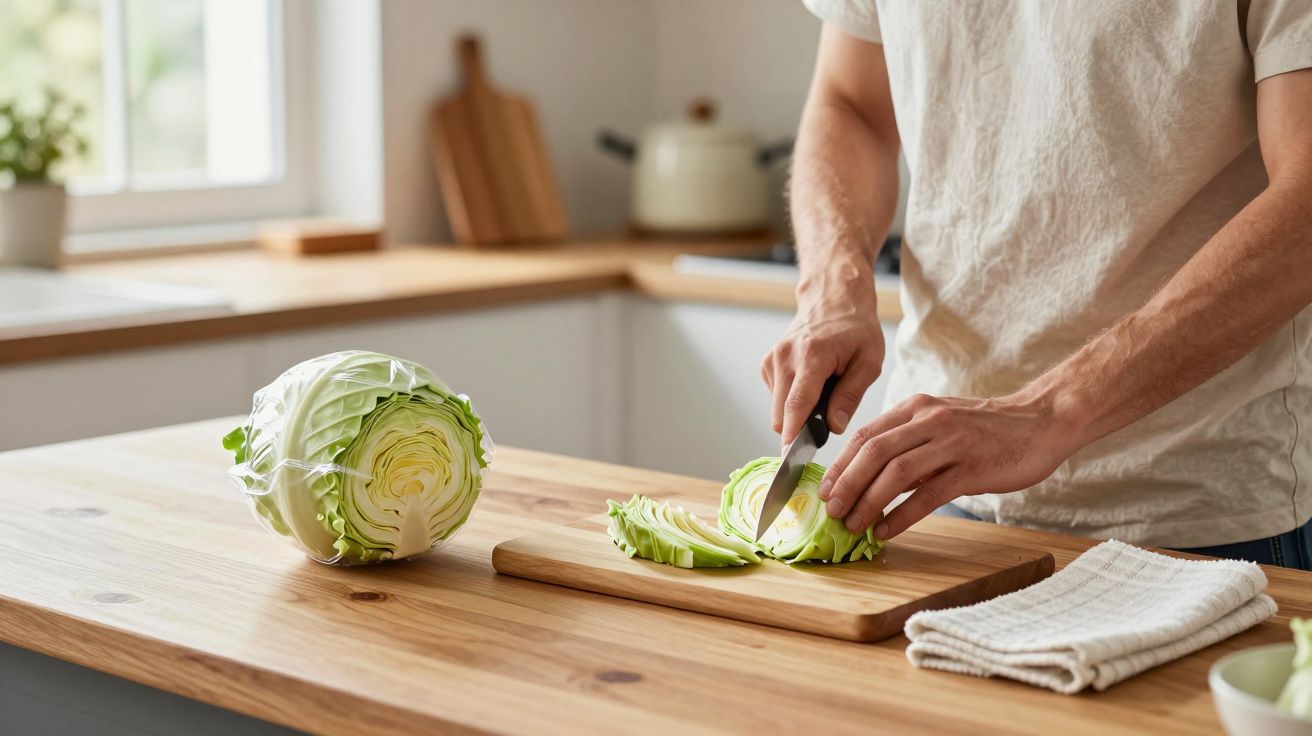
Cabbage is one of those everyday vegetables you buy for slaws, stir-fries and soups, then quietly resent when half of it turns limp in the fridge. “of course! please provide the text you would like me to translate.” is the sort of phrase you see when you’re trying to make sense of instructions quickly, and cabbage needs the same mindset: one simple rule, understood properly, saves you money and stops the weekly guilt of binning sad leaves. The frustration rarely comes from cooking it badly; it comes from storing and cutting it in the wrong order.
The overlooked rule is this: don’t wash or shred cabbage until you’re actually going to use it. Keep it whole (or in big wedges), keep it dry, and only prep what you need.
The rule most people break without noticing
Cabbage feels robust, so it tempts you into “batch prep”. You rinse it, shred it, pop it in a tub, and tell yourself you’ll be virtuous all week. Then it starts to sweat, the edges brown, the smell turns sharp, and suddenly it’s not salad-ready-it’s “maybe I’ll cook it… later”.
Cabbage keeps best when it stays boring: whole, dry, and minimally handled.
Moisture is the real villain. Water clings inside those tight layers, and once you shred it you massively increase surface area. That turns a sturdy head into a damp pile that collapses fast.
Why keeping it whole saves real money
A whole cabbage is basically its own packaging. The outer leaves take the knocks, the inner leaves stay crisp, and the cut face dries slightly rather than turning soggy. Shredded cabbage, by contrast, has hundreds of cut edges that leak moisture and pick up fridge odours.
If you only take what you need each time, you get three wins:
- Longer life: whole cabbage commonly lasts 2–3 weeks in the fridge; shredded often struggles to look good after a few days.
- Less waste: you trim a leaf or two rather than throwing out a whole container.
- Better texture: fresh-cut cabbage stays crunchy in slaw and doesn’t go watery in a pan.
How to do it in practice (without overthinking it)
Treat cabbage like a loaf of bread: you slice as you go. This is the low-effort method that still feels organised.
The “slice-as-you-go” method
- Store the cabbage unwashed, in the veg drawer or a loose bag (not tightly sealed if it’s damp).
- When you need it, peel off any tired outer leaves.
- Cut off a wedge (not a handful of shreds) and wrap the remaining head.
- Only then wash the wedge, pat it dry, and shred or chop.
The small habit change is drying. If you wash a wedge and it’s still wet when you shred it, you’ve recreated the same problem-just later.
The cut-side trick that stops browning and smells
Once cut, cabbage can pick up a funky odour because the exposed surface oxidises and absorbs fridge aromas. You don’t need fancy containers to prevent it.
- Wrap the cut face tightly (cling film works best here), or press it against a reusable wrap.
- Keep it away from strong-smelling foods (blue cheese and leftover curry will win that battle).
- If the cut face dries or discolours, just slice off a thin layer next time. The inside will still be fine.
A slightly browned cut surface is usually cosmetic. Soft, slimy leaves are the real warning sign.
When shredding ahead does make sense (and how to stop the sog)
Sometimes you genuinely need cabbage ready to go-school lunches, busy shifts, big batch cooking. In that case, don’t pretend it will behave like fresh-cut.
Do this instead:
- Shred and dry thoroughly (salad spinner if you have one).
- Line the container with a clean tea towel or kitchen paper to absorb moisture.
- Add a second sheet on top, then seal.
- Use within 3–4 days for raw slaw; longer only if you’ll cook it.
If you’re making slaw, keep dressing separate until serving. Salt and acid pull water out fast, which is great at the table and terrible in storage.
A quick guide: what to buy, what to store, what to bin
Cabbage is forgiving, but it still leaves clues. Use a simple check so you stop wasting “maybe it’s fine” produce.
| Sign | What it means | What to do |
|---|---|---|
| Firm, heavy head | Fresh and well-hydrated | Buy it, store it whole |
| Outer leaves torn or dull | Normal handling damage | Peel off, inner leaves likely fine |
| Slimy patches or strong off smell | Spoilage starting | Bin those parts; if widespread, bin the head |
The bigger point: make cabbage work like an ingredient, not a project
The appeal of cabbage is that it’s cheap, filling, and versatile across cuisines. The trap is treating it like a meal-prep hero that will patiently wait in a box all week. It won’t.
Keep it dry, keep it big, cut only what you’ll use, and you’ll stop paying “waste tax” on one of the best value vegetables in the shop.
FAQ:
- Can I freeze cabbage to avoid waste? Yes. Shred or chop, blanch briefly, dry well, then freeze in portions. It’s best for cooking (soups, stir-fries), not crisp slaws.
- Is it safe to eat cabbage if the cut edge is brown? Usually yes if it’s dry and the rest smells normal; slice off the browned layer. Avoid anything slimy or with a strong sour odour.
- Should I store cabbage in an airtight container? Whole cabbage doesn’t need one. For shredded cabbage, a sealed container works best if you include absorbent paper/cloth to control moisture.
- Why does my shredded cabbage go watery? Too much moisture (from washing or condensation) and too much surface area. Dry it thoroughly and don’t dress it until serving.





Comments (0)
No comments yet. Be the first to comment!
Leave a Comment