Leak detection is the quiet plumbing check most people skip until something smells damp, a ceiling bubbles, or the water bill does that nasty little jump. Preventive maintenance is the boring-sounding habit that stops those surprises becoming a £3,000–£15,000 “while we’re here” repair. I learned this the hard way: not from a dramatic burst pipe, but from a slow, polite leak that did its damage with impeccable manners.
It started with nothing you’d call a problem. A faint musty note in the airing cupboard. A towel that never quite dried. The boiler pressure dropping just a touch more often than usual. All easy to ignore-until you add up what “a bit of moisture” does to plaster, timber, electrics, and whatever’s living behind your skirting.
The check that catches the leak before the house does
The smartest version of leak detection isn’t ripping up floors. It’s a short sequence of observations that tells you whether you’ve got a hidden issue worth chasing.
Think of it like listening rather than guessing: you’re looking for patterns that shouldn’t be there, then you only escalate if the pattern holds.
Here’s the core check I now do a few times a year, and always before we go away:
- Pick a two-hour window when nobody needs water. No washing machine, no dishwasher, no showers, no outside tap.
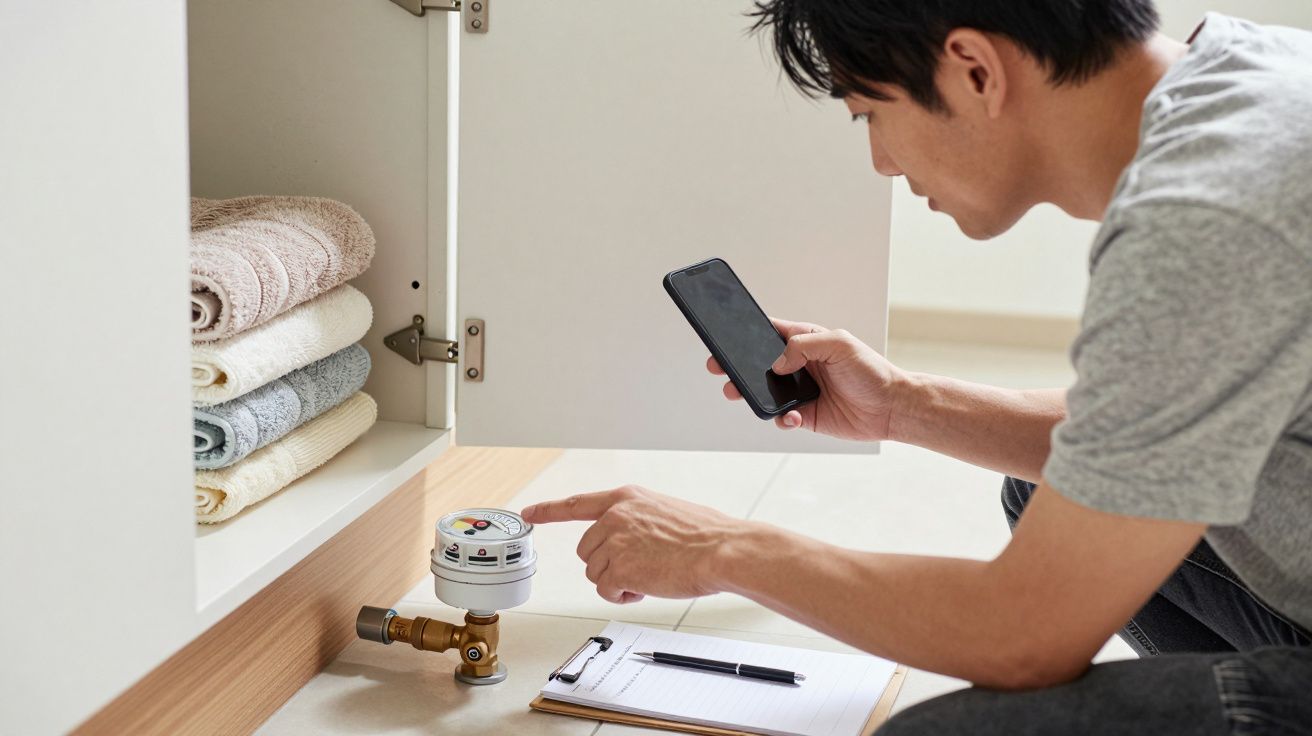
- Take a photo of your water meter. Most UK meters have a tiny “leak indicator” dial (a little star/triangle) that moves with very low flow.
- Wait two hours, then check again. If the indicator has moved-or the numbers have ticked up-something is using water when it shouldn’t.
- Rule out the easy culprits. Toilets are the big one. A silent cistern leak can waste hundreds of litres a day without drama.
If the meter is steady, you can relax. If it isn’t, you’ve just saved yourself months of “maybe it’s just the weather” while water quietly eats your building.
Why small leaks get expensive, fast
A slow leak feels harmless because it doesn’t flood. That’s the trap. Water that dribbles into the wrong place doesn’t just wet things-it changes them.
Plaster softens, then salts bloom. Timber swells, then rots. Metal fixings corrode. Insulation turns into a cold sponge. And once mould gets a foothold, you’re no longer fixing a leak-you’re dealing with indoor air quality, redecoration, and sometimes replacing the things you can’t see.
“Most costly water damage I see isn’t from a dramatic burst. It’s from a slow leak people lived with for months,” a local plumber told me, after pointing at a skirting board I’d assumed was ‘just old’.
The money isn’t only the plumber’s invoice. It’s the knock-on: plastering, joinery, flooring, drying time, and the domino effect of trades.
What to look for before you call anyone out
You don’t need to be technical to spot the early tells. You just need to know what “normal” looks like in your own home.
In bathrooms and kitchens: - Grout that’s darkening in one persistent strip - Silicone that keeps lifting or going black in the same corner - A vanity unit base that feels slightly swollen or soft - A tap that “sweats” constantly (could be condensation, could be a slow seep)
Around boilers and radiators: - Boiler pressure dropping regularly (after you’ve bled radiators and ruled out user error) - One patch of carpet near a radiator that feels cooler/damper - Greenish staining on copper pipework or white crusty deposits on joints
The weird, domestic clues: - A musty smell that returns after airing - Skirting boards that start to ripple or separate at the top edge - Paint that blisters in a particular patch, even when the room seems dry
None of these proves a leak. But if you spot two or three together, it’s time for proper investigation.
When “proper investigation” is worth it (and what it usually involves)
Professional leak detection is basically targeted problem-solving: confirm the leak, locate it with minimal disruption, then fix with the smallest possible opening-up.
Depending on the situation, a specialist might use: - Acoustic listening (hearing water movement in pipes) - Thermal imaging (seeing temperature differences from damp or hot-water lines) - Tracer gas (useful for tricky, tiny leaks) - Moisture mapping (pinpointing where damp is strongest)
The point isn’t fancy tools for their own sake. It’s avoiding the old method of “lift everything until we find it”, which is where costs and chaos balloon.
If your meter test indicates flow, or you’re seeing repeat damp in the same place, paying for a targeted detection visit can be cheaper than redecorating the same wall twice.
The preventive maintenance routine that keeps you out of trouble
Nobody wants a new household hobby. This is the light-touch version-small checks that keep you ahead of expensive surprises.
- Do the meter test quarterly (and always before holidays).
- Test toilets for silent leaks: add a few drops of food colouring to the cistern, wait 15 minutes without flushing. If colour appears in the bowl, the flush valve is leaking.
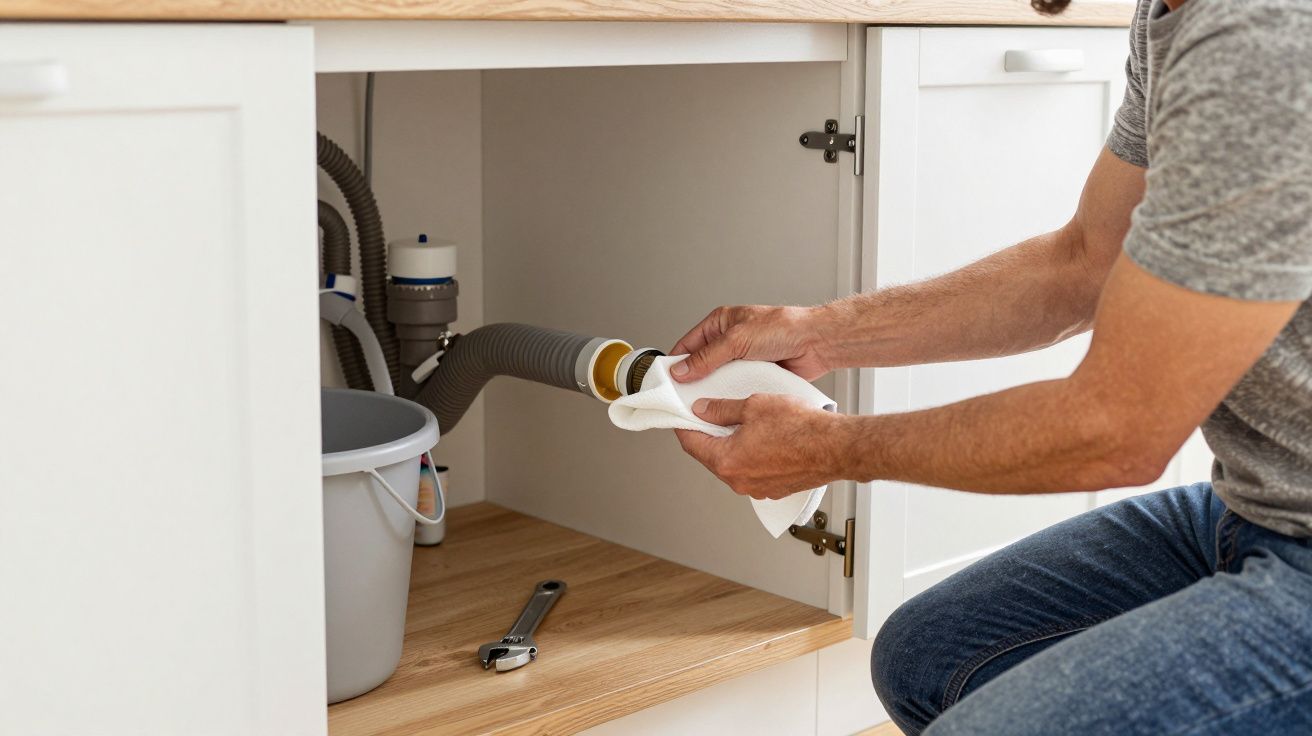
- Look under sinks with a dry tissue: wipe the trap and isolation valves; a tissue shows a slow weep you won’t see.
- Know where your stopcock is and make sure it turns. A stuck stopcock during an emergency is its own kind of disaster.
- Keep an eye on boiler pressure: note the number when all is well; changes are easier to spot when you have a baseline.
This is preventive maintenance in its most realistic form: five minutes here and there, in exchange for not having to replace a ceiling later.
What I’d tell a friend over a cuppa
Do the meter check once. It’s oddly calming when the little dial stays still, and oddly clarifying when it doesn’t. If it moves, don’t panic-start with toilets, then visible fittings, then call someone with the right kit before you start pulling panels off in frustration.
Leaks don’t get better with time. They just get better at hiding.
FAQ:
- Is the water meter test reliable for leak detection? It’s a strong first screen for hidden leaks, as long as you’re sure nothing is using water during the test (including appliances and outside taps).
- What’s the most common hidden leak in UK homes? A silently running toilet is up there. It can waste a surprising amount of water without any obvious sound.
- If my boiler pressure keeps dropping, is that definitely a leak? Not definitely, but it’s a common sign-especially if you’re topping up often. A heating engineer can rule out issues like the expansion vessel, but leaks in heating circuits do happen.
- Will home insurance cover leak-related damage? Sometimes, but it varies by policy and cause. Many policies cover “escape of water” damage but won’t cover the cost of fixing gradual wear-and-tear; early detection helps either way.
- When should I call a leak detection specialist instead of a general plumber? If you’ve got repeated damp with no visible source, a failed meter test, or you’re trying to avoid lifting floors/tiles, targeted detection can reduce disruption and total cost.




Comments (0)
No comments yet. Be the first to comment!
Leave a Comment