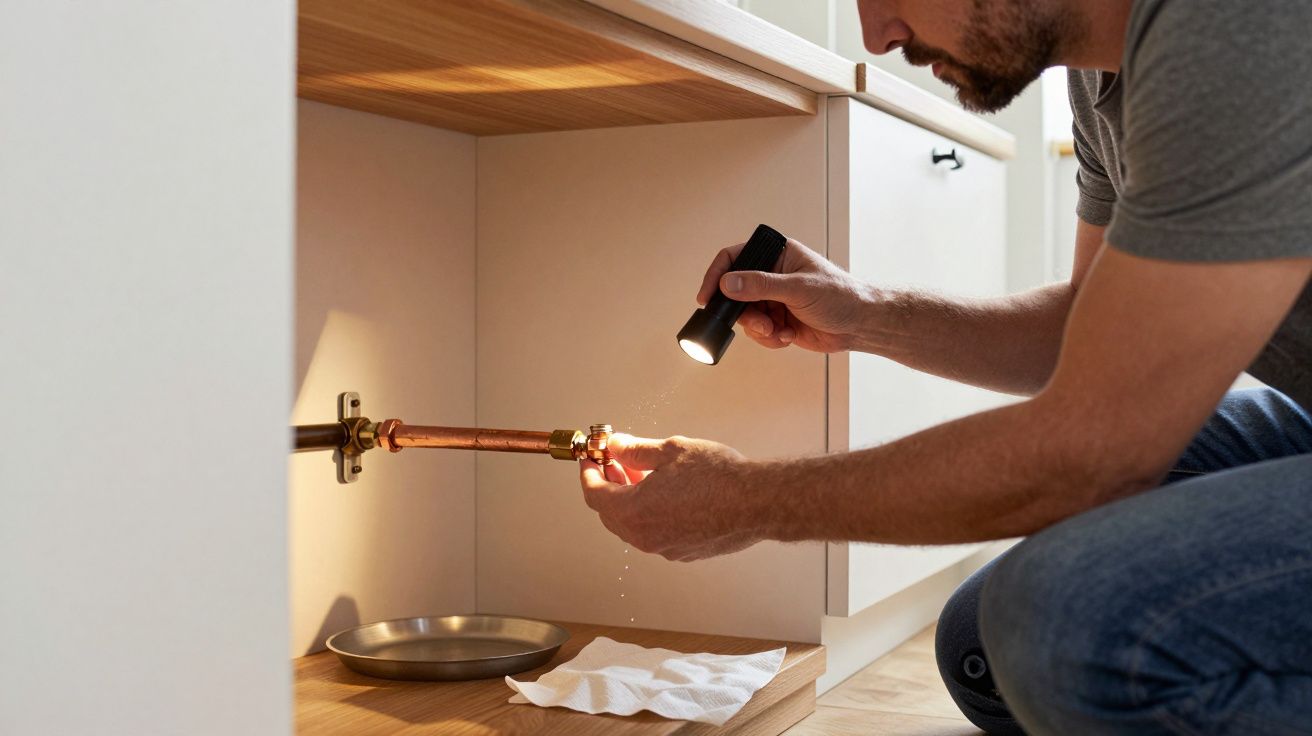
You know that oddly specific summer moment: you come back from a weekend away, turn on the tap, and something sounds… wrong. The pipework behind your walls and floors is built to cope with daily use, but thermal expansion in hot weather can quietly push it into failure modes that look like “random plumbing problems”. It matters because the fix is often cheap if you catch it early, and expensive if you wait for the ceiling stain to appear.
Most people blame winter for plumbing drama, and fair enough-frozen pipes are obvious. Summer failures are sneakier. They show up as a new drip, a tap that starts hammering, or a hairline crack you only notice when the water pressure drops at the worst possible time.
The failure that doesn’t look like a heat problem
When something leaks in July, we tend to reach for the usual suspects: a worn washer, a dodgy joint, “old house plumbing”, hard water, builder bodges. Heat rarely makes the list, partly because nothing is freezing and bursting in front of you.
But heat changes materials. It doesn’t need to be a heatwave that melts roads; a loft space, a sun-facing wall, or a conservatory void can sit at temperatures your plumbing never sees in winter. Add a bit of movement every day, and fittings that were “fine for years” start to lose the argument.
What thermal expansion is doing to your pipework (in normal human terms)
Pipes get longer when they get warmer. Not dramatically, not in a cartoon way-but enough that, over several metres, the movement adds up. The pipe wants to slide, bow, or press against whatever is stopping it.
If the pipe can move freely, it usually just… moves. The trouble starts when it can’t: tight clips, sharp bends, badly placed joist holes, foam that locks it in place, or fittings that are already under a bit of tension. The stress goes somewhere, and that “somewhere” is often a joint, a valve body, or a weak section of plastic that’s been slightly over-tightened since 2014.
Here’s what that can look like in real homes:
- A slow weep at a compression fitting that only appears on hot afternoons
- A plastic push-fit joint that starts dripping after a boiler cupboard gets warm
- Loud ticking or knocking as pipes expand and rub against timber
- A hairline crack near a bend where the pipe has been forced into position
The classic summer set-ups that trigger it
Some houses are basically designed to put plumbing in the hottest, least forgiving places. You don’t notice until the weather turns and your “perfectly normal” system starts behaving like it’s haunted.
1) Loft pipe runs and tank-fed bits
Lofts can hit brutal temperatures even on mild days. If you’ve got pipework running across joists up there-especially plastic-expansion and contraction cycles can be daily, not seasonal. Pipes that are clipped too tightly or wedged through tight holes start to complain.
2) Sun-facing walls and boxed-in pipes
That neat little box-out behind the toilet, or the concealed run in an external wall, can become a warm tunnel. If there’s no room to move, the pipe presses on the boxing, the clips, or the fitting, and you get a drip that comes and goes like it has a schedule.
3) Underfloor runs and poorly allowed-for movement
Underfloor heating gets all the attention, but regular water pipes under floors also expand. If someone has pinned them down hard, foamed them into place, or routed them with no slack, the stress concentrates at the nearest rigid point-often a tee or elbow.
4) “It was fine until we renovated”
New kitchens and bathrooms often change the environment around the plumbing. Insulation, tighter boxing, new clip positions, and hotter appliances can all raise temperatures locally. Sometimes the work is good; it’s just that the pipework that used to breathe now can’t.
The signs you can catch before it becomes a ceiling repair
Heat-related failures don’t always announce themselves with a dramatic spray. They’re more like a slow, annoying drip that makes you doubt your own eyes.
Things worth taking seriously:
- A damp patch that appears, dries, then reappears (especially after hot days)
- A faint green/white crust on copper joints or around valves (dried leakage)
- Musty smells in cupboards that “shouldn’t” smell
- New creaks, ticks, or knocking that sync with hot water use or afternoon heat
- A pressure drop you only notice when two taps run at once
If you’ve got a combi and the pressure keeps needing topping up, don’t automatically assume “radiators need bleeding”. In summer, a tiny weep can evaporate before it ever shows as a puddle.
What you can do without ripping your house apart
This isn’t a call to panic-replumb your property. It’s a nudge to stop treating summer leaks as mysterious bad luck.
A few practical checks make a difference:
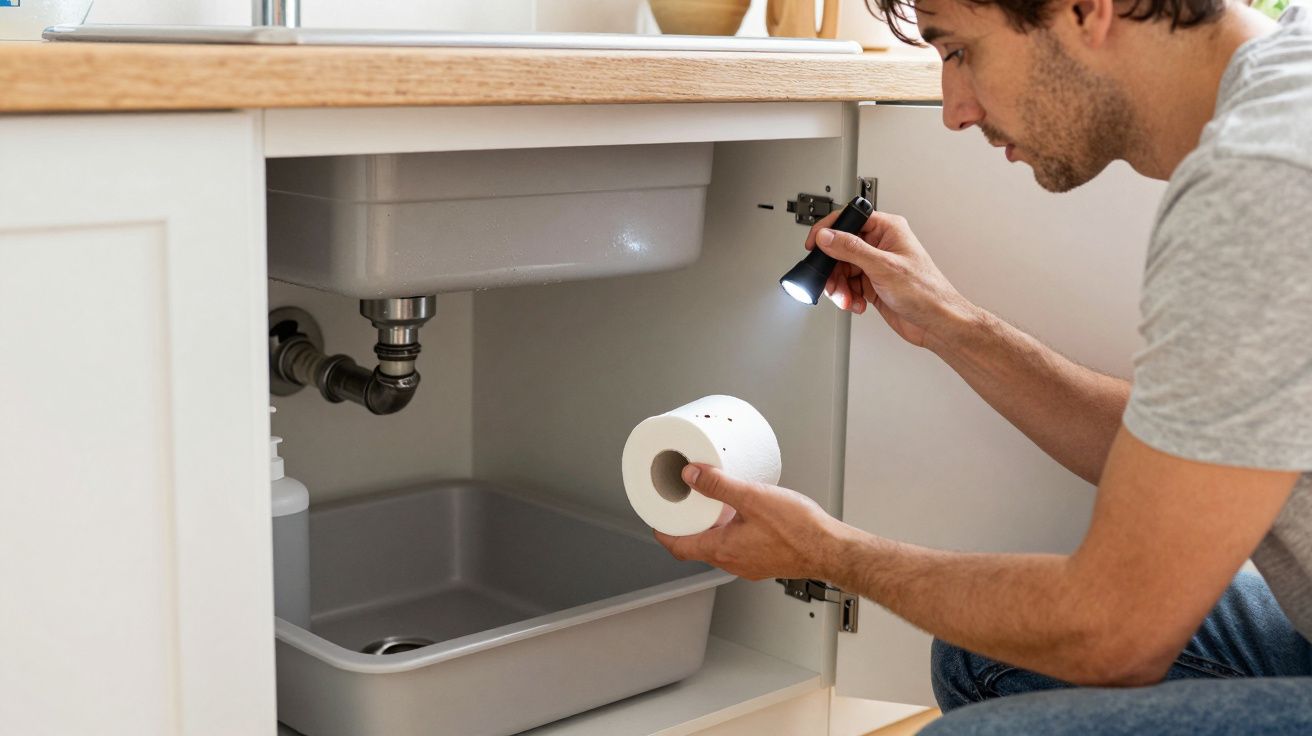
- Look in the hottest places first. Loft, airing cupboard, boiler cupboard, behind appliances, any boxed-in runs on sunny walls.
- Run water, then listen. Expansion noises often show up after hot water use, or later in the day when voids warm up.
- Check clips and contact points. Pipes shouldn’t be strangled. If they’re rubbing wood, you’ll often see a polished line or dust track where they’ve been moving.
- Don’t “just tighten it” blindly. Over-tightening compression fittings can deform olives and make the leak worse once temperatures shift again.
- If it’s push-fit and accessible, inspect the insertion and support. Many drips are not “faulty fittings” so much as stress and slight misalignment over time.
If there’s any sign of damage, or you can’t see the suspect joint, it’s plumber territory. The expensive part of plumbing is rarely the fitting; it’s the water that travels before anyone notices.
Why this catches people out (and why it’s getting more common)
Short answer: hotter summers, warmer lofts, and more boxed-in “clean” finishes. Add in modern plastics, mixed materials, and tighter tolerances, and systems have less slack for movement than they used to.
The frustrating bit is that the plumbing hasn’t suddenly become terrible. It’s just being asked to live in a different temperature range, in tighter spaces, while still staying perfectly sealed.
FAQ:
- Is thermal expansion only a plastic pipe problem? No. Copper expands too; it’s just often less obvious because copper runs are sometimes better supported. Both can leak if movement is restrained and stress concentrates at joints.
- Why would a leak appear only in the afternoon? Voids and boxed-in sections heat up through the day. The pipe expands, a joint shifts slightly, and you get a weep that may stop again as everything cools.
- What’s the quickest “tell” that heat is involved? Leaks or noises that correlate with hot spells, sunny days, or warm cupboards/lofts-especially if the same joint behaves differently morning vs evening.
- Should I insulate pipes in the loft in summer? Insulation can help stabilise temperature swings, but it can also trap heat in some situations. If you’re seeing issues, get advice rather than wrapping everything blindly.
- When is it an emergency? Any active leak you can’t stop, water near electrics, or signs of ceiling bulging/staining. Turn off the water at the stopcock and call a professional.





Comments (0)
No comments yet. Be the first to comment!
Leave a Comment