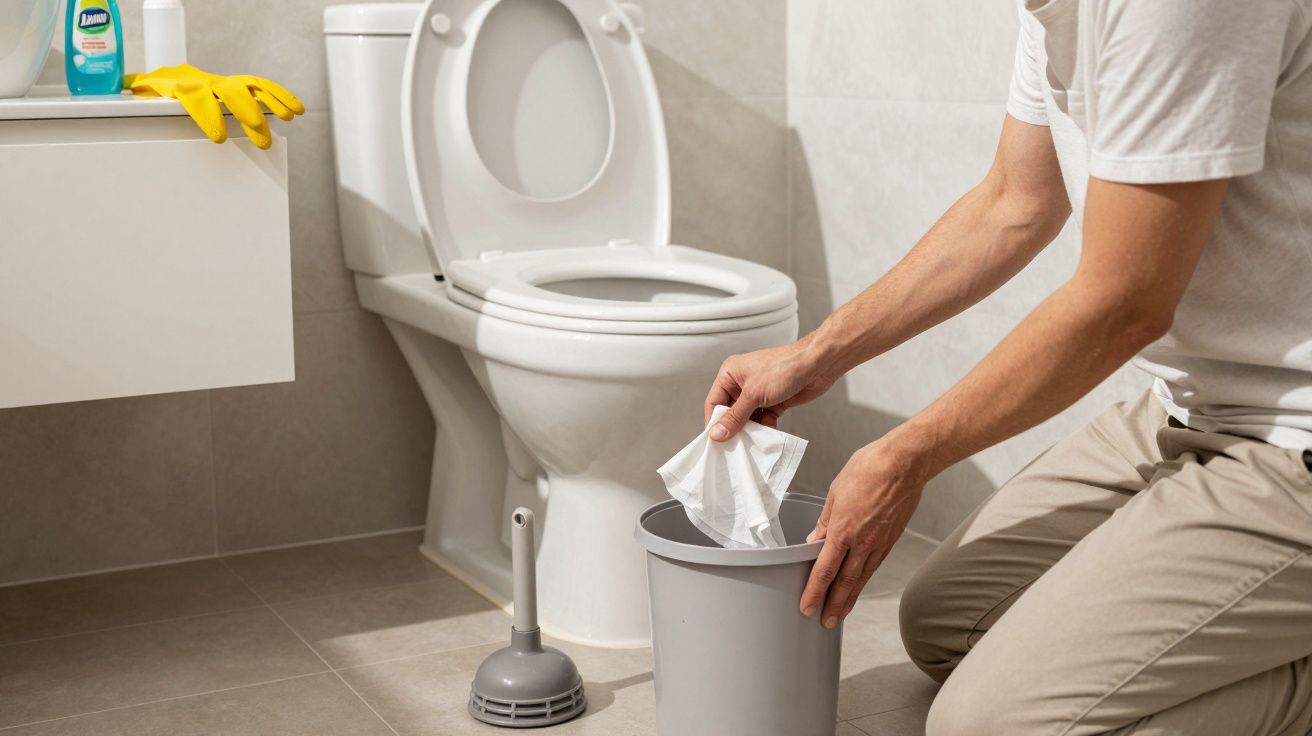
Most household plumbing systems are built to cope with daily use, but user behaviour can quietly take years off their working life. The habit is simple: treating drains and toilets as a shortcut for “getting rid of” things, then relying on harsh quick-fix chemicals when flow slows. It often feels harmless because nothing breaks immediately - the damage builds where you can’t see it.
You usually only notice it when a tap runs weak, a toilet keeps refilling, or a blockage becomes a weekend emergency. By then, seals have hardened, joints have been stressed, and the inside of pipework is rougher than it should be, which makes the next problem arrive sooner.
The habit: “flush it and forget it” - then nuke it with chemicals
Many homes fall into the same routine. Wet wipes go down the loo because they look like paper. Grease goes down the sink because it’s liquid when warm. Hair is pushed through the plughole because it’s fiddly to bin it.
When the system starts to complain, the next step is often a strong drain opener “to clear it fast”. That combination - unsuitable waste plus repeated chemical shock - is what shortens system life long before you see a leak.
If it’s not toilet paper, it’s not a toilet item. And if it’s not water and a small amount of soap residue, it’s not a drain item.
What it does inside the pipes (and why it escalates)
Blockages are rarely one dramatic event. More often, they’re layers.
Grease and fats cool and cling to pipe walls, catching food particles and forming a sticky lining. Hair tangles around that lining like a net. “Flushable” wipes don’t break down like toilet paper, so they snag on rough sections, bends, and joints. Over months, the effective diameter of the pipe shrinks, and everyday flow becomes more turbulent and more likely to deposit more debris.
Harsh drain chemicals can add a second problem. They generate heat and caustic reactions that can stress older plastics, soften some seals, and accelerate corrosion on vulnerable metal components. They also don’t always remove the whole blockage - they can punch a small channel through it, leaving a rough, stubborn mass that regrows quickly.
Early signs people ignore (because everything still “works”)
The system often warns you gently first. These are the small tells that the inside of the pipework is starting to lose its smooth, self-clearing behaviour.
- A sink that drains, but slowly, especially after washing up
- Gurgling sounds from plugholes when a nearby tap runs
- Toilet flushes that feel slightly weaker or need a second press
- A faint, recurring drain smell that returns after cleaning
- Water level in the pan that rises a bit before dropping
None of these guarantee a major fault, but they do indicate that flow is being disrupted and residues are sticking around.
A better routine: small, regular, low-drama maintenance
The aim is boring reliability: keep surfaces smoother, reduce what can stick, and avoid chemical “shock treatments” becoming your normal.
In the kitchen: stop feeding the pipework
- Let cooking fats cool, then wipe pans with kitchen roll and bin it
- Use a sink strainer and empty it daily
- Run hot (not boiling) water for a short burst after washing greasy items
- If you use a dishwasher, scrape plates first - it’s still plumbing at the end
In the bathroom: catch the tangle before it forms
- Fit a hair catcher in the shower and clear it every couple of days
- Bin cotton buds, floss, and wipes - even the ones labelled “flushable”
- If you’re in a hard-water area, descale little and often rather than “wait for failure”
A simple monthly descale can help in places where limescale affects moving parts, such as toilet cistern mechanisms. Mild acids like white vinegar are often used because they dissolve calcium deposits without the aggressive punch of many proprietary acids - but keep contact time sensible and never mix with bleach.
Do not mix vinegar and bleach. The fumes can be dangerous.
If you feel tempted by drain opener, try this first
Sometimes you do need a stronger response, but a small sequence can avoid repeating the chemical cycle.
- Remove and clean the trap/plughole insert if accessible
- Use a plunger properly (tight seal, short sharp pushes)
- Try a drain snake/zip tool for hair blockages
- Only then consider a product - and follow the label exactly
If chemicals become a monthly habit, it’s usually a sign you’re masking an underlying restriction (fat build-up, wipe snag, poor fall, or a partially collapsed pipe). A one-off call-out can be cheaper than repeated damage and repeated products.
What plumbers keep finding in “mystery” blockages
Ask any engineer what comes out of domestic pipes and the list is remarkably consistent. The details vary, but the pattern is the same: items that don’t break down, plus something sticky to glue them in place.
- Wet wipes and cleaning cloths
- Cooking fat mixed with coffee grounds
- Sanitary products and nappy liners
- Excessive “in-tank” toilet tablets that shed residue into the mechanism
Those last ones are a quiet culprit. Some continuously dosing products can leave film, soften rubber parts, or contribute to gritty build-up that makes a valve seat less reliable over time. The toilet still flushes - until it doesn’t seal properly and you get a slow, expensive leak.
A quick “do this, not that” cheat sheet
| Do this | Not that | Why it matters |
|---|---|---|
| Bin wipes, floss and buds | Flush “just one” | Snags start blockages and backups |
| Wipe grease, use strainers | Pour fats down the sink | Grease lines pipes and traps debris |
| Mild, regular descaling where needed | Strong chemical shocks as routine | Reduces wear on seals and pipe surfaces |
FAQ:
- How often should I descale a toilet cistern in a hard-water area? Roughly monthly is a common rhythm, but adjust to your water hardness and how quickly deposits appear. Keep contact times sensible and rinse well afterwards.
- Are ‘flushable’ wipes ever safe? In practice they often don’t break down like toilet paper and are a leading cause of blockages. If you want fewer call-outs, treat them as bin-only.
- Is occasional drain opener always bad? Used rarely and exactly as directed, it can be useful. The problem is repeated reliance, which usually means the pipe is already restricted and the underlying cause hasn’t changed.


Comments (0)
No comments yet. Be the first to comment!
Leave a Comment