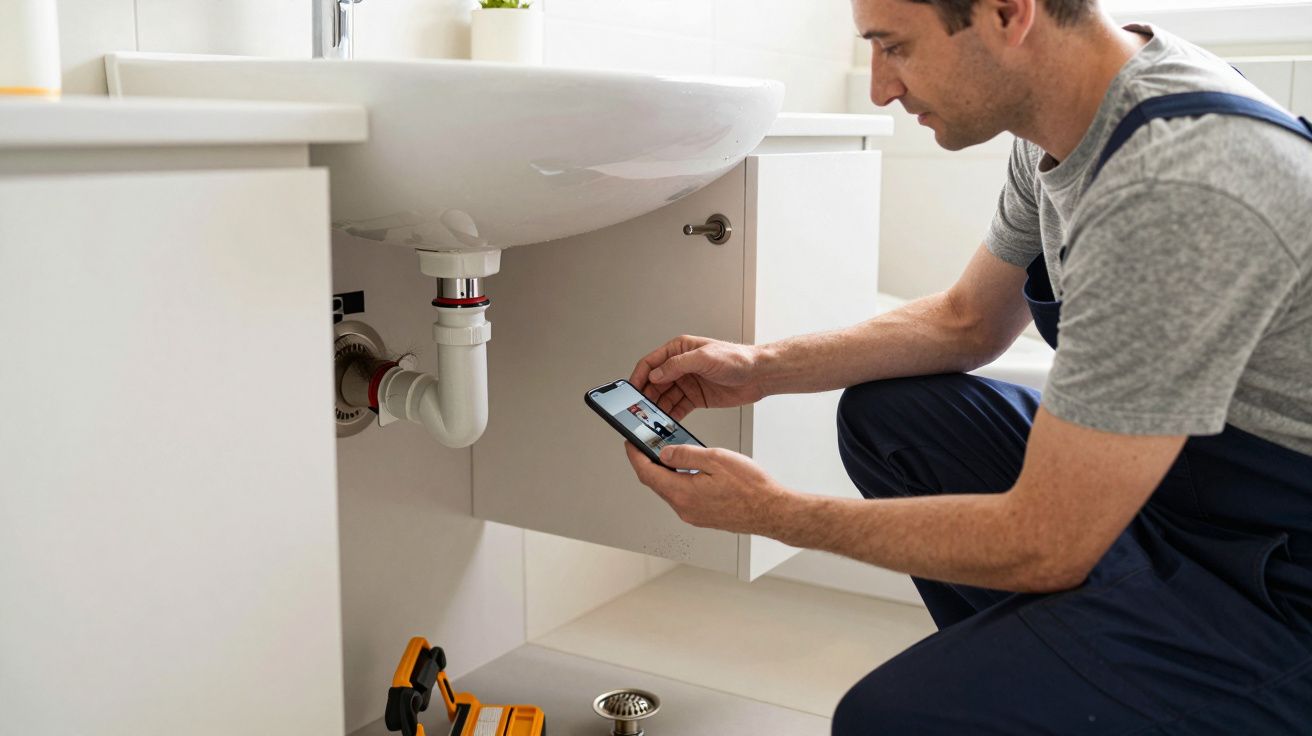
A letting agent once told me, “It’s always fine until it isn’t.” In rental properties, that moment often arrives right after usage increases - an extra tenant, more showers, a home-working routine - and suddenly a quiet bit of pipework becomes the loudest problem in the building. The twist is that the damage doesn’t just mean a call-out; it can snowball into compliance risks when leaks, mould, blocked drainage or sewage backing affect habitability.
Most landlords budget for boilers and redecorations because they feel like the big-ticket items. Plumbing, by contrast, gets treated as “background”: it worked at check-in, so it will keep working. Then the first winter hits, the occupiers actually live there, and the system shows what it really is.
The underestimated issue: drainage capacity, not the tap
The failure point isn’t usually the shiny bit you can see. It’s the hidden capacity of waste pipes, traps, and ventilation - the parts that cope fine with light use, then struggle when the routine becomes heavier.
Think of the typical trigger events:
- A single occupier becomes two, or a couple becomes an HMO.
- A washing machine joins a dishwasher on the same waste run.
- A power shower replaces a low-flow unit.
- “Flushable” wipes enter the chat.
None of that feels dramatic. Yet combined, it increases flow, fat, lint, hair, and heat cycling through pipework that may already be marginal.
Why it gets worse in rented homes (and why it’s predictable)
Owner-occupiers notice early signs because they live with them: slow draining, gurgling, the faint smell that arrives after the bath. In rentals, those symptoms often get reported late, reported vaguely, or masked by quick fixes like chemical drain cleaners.
Behind the scenes, the risks stack up:
- Older flats with long horizontal runs and poor fall.
- Converted houses where multiple kitchens/bathrooms join one undersized stack.
- Inconsistent workmanship: too many bends, poor solvent welds, traps installed incorrectly.
- Tenants using the property harder than the “single occupant” assumption baked into the original setup.
You don’t need negligence for this to happen. You just need real life.
The most expensive plumbing jobs are rarely “sudden”. They’re the end of a slow blockage, a tiny leak, or a venting issue that had months to grow teeth.
The compliance angle: when “maintenance” becomes a breach
Plumbing faults feel like maintenance until they impact health and safety. Once there’s damp, mould, sewage odour, or repeated loss of sanitation, you’re no longer in the realm of inconvenience.
Where compliance risks tend to appear is in the delay and the paper trail:
- Repeated reports of slow drainage or leaks with no lasting fix.
- Moisture leading to mould in bedrooms (often blamed on “lifestyle” until the leak is found).
- Bathroom or kitchen becoming unusable for prolonged periods.
- Water ingress affecting electrics, ceilings, or fire-stopping penetrations around pipes.
Even if the initial cause is “just a blockage”, the outcome can touch fitness for habitation expectations, HHSRS-type hazards, insurance disputes, deposit arguments, and local authority attention. The plumbing problem becomes a management problem.
What to check before usage increases (a practical pre-flight)
If you’re moving from one tenant to a family, or from a standard let to sharers, treat it like a change of load on a structure. You don’t need a full strip-out; you need targeted checks that surface weak points.
A sensible baseline looks like this:
- Confirm pipe sizes and falls on key runs (kitchen waste, main stack connections).
- Test drainage under load: run taps while the washing machine drains; flush while the shower runs.
- Check trap seals and venting: gurgling and smell often means poor air admittance, not “dirty tenants”.
- Inspect known risk points: under-sink fittings, silicone joints, washing machine hoses, toilet pan connectors.
- Identify shared lines in flats/conversions so you know what’s yours to maintain and what’s communal.
If you manage multiple properties, repeat the same routine. The value isn’t the checklist; it’s the consistency.
The small interventions that prevent the big call-out
There’s a “boring middle” between doing nothing and replacing pipework. It’s where most of the money is saved.
- Fit a proper hair trap and specify it in the welcome pack (showers are blockage factories).
- Replace aging flexi waste hoses with rigid where possible; they sag, trap sludge, and smell.
- Add or correct an air admittance valve where venting is inadequate (done correctly, not as a bodge).
- Schedule a proactive clean of kitchen waste lines in high-use lets (especially HMOs).
- Ban wipes, and make it unmissable: a sign by the loo beats a clause in a contract.
The goal is simple: stop blockages forming, and stop minor leaks feeding damp before anyone calls you.
Quick symptom map (what it usually means)
| Symptom | Likely cause | What to do first |
|---|---|---|
| Slow kitchen sink + smells | Grease build-up in waste run | Mechanical clean/rodding; avoid caustics |
| Gurgling after flush | Poor venting / trap siphonage | Check venting, trap depth, AAV suitability |
| Damp patch near bathroom | Slow leak at connector/seal | Isolate, inspect joints, fix and dry properly |
The landlord’s mistake: treating plumbing as a “tenant issue”
Usage increases, so the temptation is to assume misuse. Sometimes it is. But the more common reality is that the system was never robust enough for normal, higher occupancy patterns.
If you respond with blame instead of diagnosis, you tend to get two outcomes: tenants stop reporting early signs, and the first report you take seriously is the expensive one. That’s when ceilings stain, joists get wet, and “a bit of drain smell” turns into a remediation job with contractors, dehumidifiers, and a void period.
Plumbing is unglamorous, but it’s one of the fastest routes from “fine” to “formally a problem”. Treat capacity like an asset, not an afterthought.
FAQ:
- Is this mainly an issue for HMOs? HMOs amplify it, but any tenancy change that increases showers, laundry and cooking can expose weak drainage and venting in ordinary lets.
- Do chemical drain cleaners help as prevention? They can mask symptoms and damage seals or pipework; mechanical clearing and better fittings (traps, rigid runs, strainers) are usually safer and more effective.
- What’s the earliest warning sign worth acting on? Recurring slow drains and gurgling. They’re the “check engine light” before leaks, smells, and damage escalate.




Comments (0)
No comments yet. Be the first to comment!
Leave a Comment