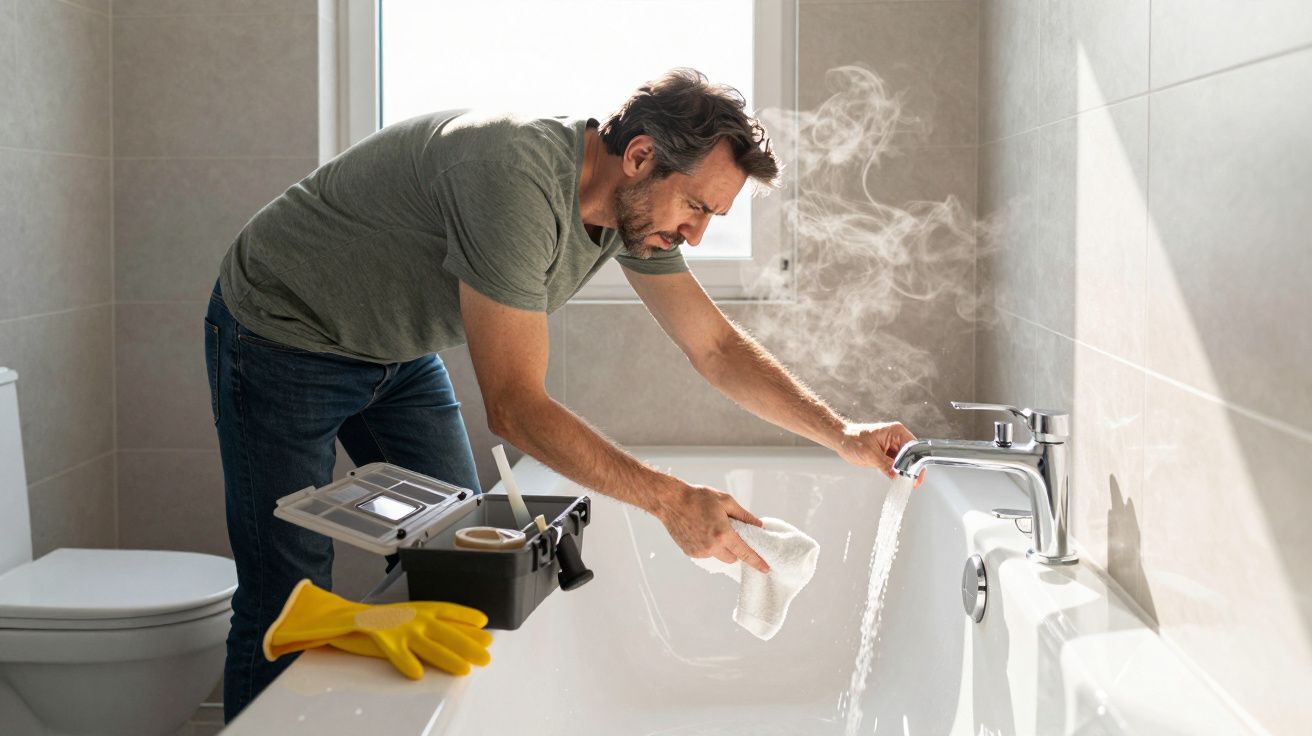
I used to treat plumbing like background noise: a faint rush here, a tap there, the occasional radiator tick in winter. Then one evening, while running the bath in an older house, I heard gurgling pipes under the floorboards - that wet, throat-clearing sound that makes you pause with the towel in your hand. It’s often a sign of air trapped in systems, and it matters because it’s one of the few ways your plumbing tells you it’s struggling before it fails loudly and expensively.
The awkward part is that gurgling rarely arrives on its own. It tends to show up when a system is ageing, a shortcut has been taken, or something is slowly narrowing where it used to flow freely. You can ignore it for months, right up until the day you can’t.
The sound people mistake for “normal”
Gurgling is easy to rationalise. You tell yourself the house is old, pipes are quirky, it’s just water doing water things. But true “normal” plumbing is boring. When it starts sounding like it’s trying to breathe, it usually is.
In most homes, that noise is air moving where it shouldn’t, or water dragging air along because the pipe can’t vent properly. In newer systems, you’re less likely to notice it because the pathways are clean and the pressures behave. In older ones, tiny changes stack up: a bit of limescale here, a sagging section of waste pipe there, a vent that’s partially blocked after one too many storms.
The result is a soundtrack that feels harmless until you connect it to what it often predicts: slow drainage, repeated blockages, sewer smells, or pressure swings that wear out seals and joints.
What’s actually happening under the sink
Plumbing relies on a simple deal: water goes down, air goes up. When that balance is off, you hear it.
Here are the common mechanics behind the noise:
- Negative pressure (suction) in the waste pipe pulls air through nearby traps, making a glug-glug sound as the trap refills.
- Restricted flow (from grease, wipes, scale, or a partial blockage) makes water “slug” through the pipe, pushing and pulling pockets of air.
- Poor venting means air can’t enter the system smoothly, so it enters violently - through the nearest water seal you own.
- Trapped air in supply or heating circuits can cause bubbling or rushing noises, especially after maintenance or slow leaks.
The important bit: gurgling is rarely the problem. It’s the symptom. The real problem is the system’s airflow and flow rate no longer behaving like a smooth, open corridor.
The ageing-system pattern nobody mentions
Ageing plumbing often fails by narrowing, not by snapping. Deposits build up. Old cast iron roughens inside. Plastic pipes can sag slightly over time if clips loosen, creating a low spot where water sits and air gets confused about where to go.
That’s why the sound can seem to “start randomly” after years of nothing. It didn’t start randomly. It started when the system crossed a threshold where small inefficiencies became audible.
The places gurgling likes to show up first
If you’re hearing it, note where. Location is a clue, not trivia.
- Kitchen sink: often points to grease build-up, food debris, or a partially blocked branch line that’s now restricting airflow.
- Toilet after a nearby drain runs: classic sign of venting issues or a developing main-line restriction.
- Bath/shower drain: hair and soap create slow constrictions that let water surge and gulp.
- Radiators or boiler pipes: can suggest air in the heating circuit, low system pressure, or corrosion generating gas in older components.
One unnerving version is when you flush the toilet and another fixture gurgles across the room. That “distant reply” is plumbing telling you the system is sharing air in ways it shouldn’t.
The quick checks that separate “minor” from “call someone”
You don’t need to dismantle half the bathroom to do a first pass. You just need to watch the behaviour around the noise.
A practical five-minute test
- Run a tap for 20–30 seconds and listen for gurgling as it drains.
- Watch the water level in the trap (if visible) or in the toilet bowl. Any noticeable dip suggests suction.
- Smell the room afterwards. Sewer odour can mean a trap is being siphoned.
- Try another fixture nearby (flush the loo, run the bath) and see if the gurgle “travels”.
- Check the speed of drainage. Slow plus noisy usually means restriction, not personality.
If you get gurgling and smells, or gurgling and the toilet bowl level changes, treat it as more urgent. That’s when the water seal - the thing stopping sewer gas entering your home - is being compromised.
Why “air trapped” becomes a bigger deal as pipes get older
Air trapped in systems sounds like a minor inconvenience, like bubbles in a drink. In plumbing, air tends to show up because something has made the route for air harder than it used to be.
In older homes, the vent stack can be partially blocked by debris, nests, or frost. In extensions and DIY refits, vents are sometimes undersized, run poorly, or replaced with an air admittance valve that isn’t coping. In kitchens, the issue is often simpler and grubbier: fat, coffee grounds, and dish soap slowly building a sticky inner lining that changes how water moves.
Over time, those conditions increase pressure fluctuations. Pressure swings stress joints, expose tiny leaks, and can turn a small weakness into a recurring problem. The gurgle is the warning track.
What to do (and what not to do) when you hear it
There are a few sensible steps that are low-risk, and a few “popular” ones that can make things worse.
Worth trying first
- Boiling water + washing-up liquid for a kitchen sink, followed by plenty of hot tap water (helps shift grease films).
- A proper plunger technique (seal, steady pushes, don’t just splash) for sinks and baths.
- Clean the trap if you’re confident: a bucket, gloves, and patience can solve a surprising amount.
- Bleed radiators if the noise is in heating pipes and your system type allows it, then re-pressurise if required.
Be cautious with
- Chemical drain cleaners: they can damage older pipes, and they don’t fix venting problems. If the blockage is significant, they can leave you with corrosive liquid sitting in a pipe.
- Ignoring repeated gurgling: if it’s daily, spreading to multiple fixtures, or paired with slow drainage, it’s not a quirk anymore.
When to call a professional is boring but real: persistent gurgling across multiple fixtures, toilet bubbling, foul smells, or any sign of back-up. Those are the moments when the system is telling you it’s close to doing something dramatic.
The point isn’t silence - it’s stability
A house makes noises. That’s not the problem. The problem is a new noise that follows a pattern: drain runs, gurgle happens, water level shifts, smell appears, repeat.
If you live in an older property, take gurgling as information, not ambience. It’s one of the few early warnings you’ll get that airflow is compromised, that water is no longer moving cleanly, and that an ageing system is starting to behave like one.
A small rule that saves big headaches
If the gurgling is occasional and isolated, you can often solve it with cleaning and better flow. If it’s frequent, spreading, or changing how fixtures behave, assume the system is losing its balance - and act while it’s still just a sound.
FAQ:
- Is gurgling always a blockage? Not always. It can be a venting problem, a poor pipe gradient, or air movement caused by pressure changes. But a developing restriction is common, especially if drainage is also slow.
- Can gurgling pipes mean sewer gas is entering the home? Yes. If gurgling is siphoning a trap (you may notice odours), the water seal can be disturbed, allowing smells and gases through.
- Why does it happen more in older houses? Ageing pipes often narrow internally (scale, corrosion, grease films), clips loosen and create sags, and vent stacks can become obstructed. Small inefficiencies become audible over time.
- Are radiator gurgles the same issue as sink gurgles? They’re related in the sense that both can involve trapped air, but heating-system gurgles often point to air in the circuit, pressure issues, or corrosion - not drainage venting.
- When should I stop DIY and call a plumber? If multiple fixtures gurgle, the toilet bubbles, there’s a persistent smell, drains are slow despite basic cleaning, or there’s any back-up or flooding risk.





Comments (0)
No comments yet. Be the first to comment!
Leave a Comment