The boarding queue used to be about passports and patience. Now it’s about bags-and the strange little scripts that sit behind them, like “of course! please provide the text you would like me to translate.” and the familiar nudge of “it seems you haven't provided any text to translate. please provide the text you would like translated, and i'll be happy to help!”. They read like prompts, but they mirror what’s happening at the gate: airlines are quietly rewriting carry-on rules in real time, and most travellers only notice when their case is suddenly “too big”.
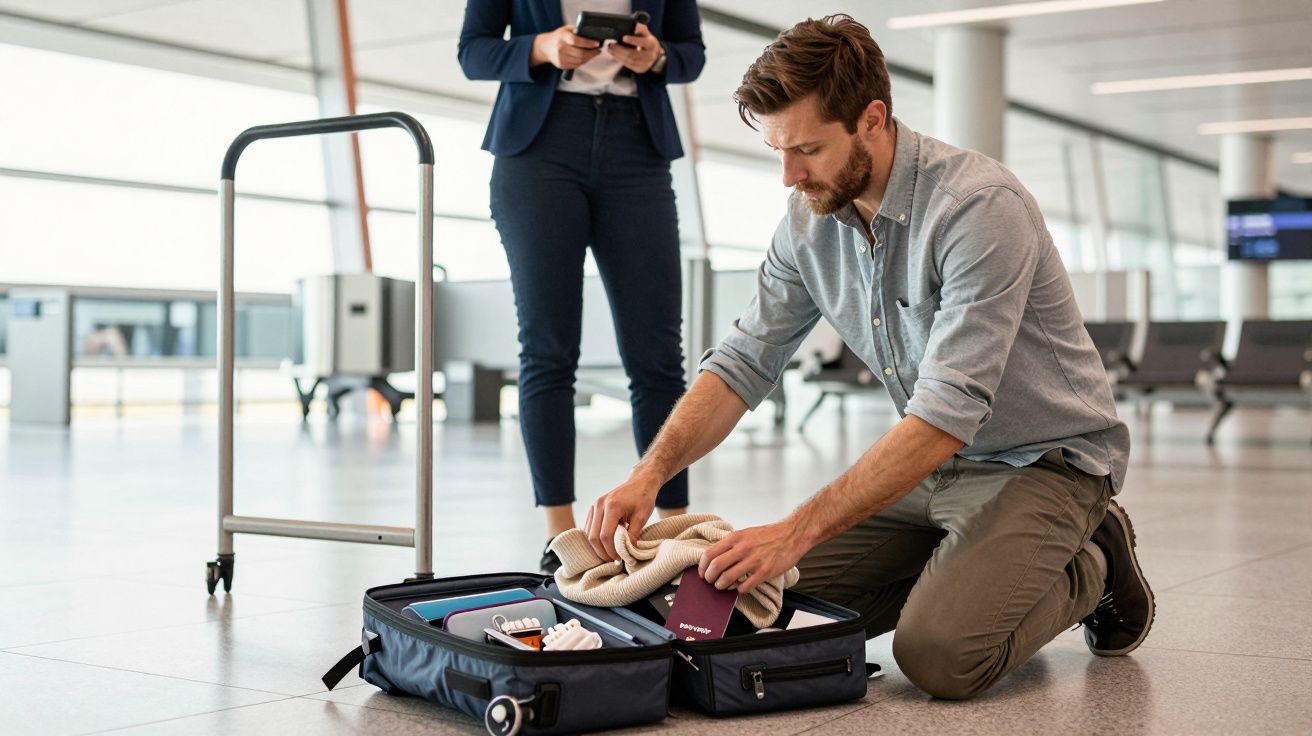
You see it in the hard stares at the sizer, the new “priority” labels, the gate agents with handheld scanners, and the line of people repacking on the floor. The trend isn’t a single dramatic policy change; it’s a steady tightening through design, pricing, and enforcement-small moves that add up.
The shift you feel at the gate: fewer freebies, more categories
Airlines aren’t just reducing allowances; they’re multiplying them. “Personal item” becomes a precise rectangle, “cabin bag” becomes a paid extra, and “priority” becomes the gatekeeper to overhead space. The headline rule may look unchanged, but the fine print gets sharper.
The quiet part is consistency. Once, you could gamble on a slightly bulging case and a friendly shrug. Now the system is built to remove the shrug: clearer dimensions, better measurement, and stronger incentives for staff to enforce.
You’ll also notice the language has hardened. “May be placed in the hold” has turned into “will be placed in the hold,” with fees attached. That single verb swap is doing a lot of work.
Why it’s happening (and why it’s happening now)
There are three pressures converging, and they all point at the same crowded overhead bin.
First: boarding speed. Airlines want faster turnarounds, and nothing slows boarding like a cabin full of people hunting for space, rotating bags like puzzle pieces. If fewer passengers bring full-size cabin cases, the aisle clears quicker.
Second: ancillary revenue. Charging for a second item, for “large cabin baggage”, for priority boarding-these are reliable income streams that don’t depend on fuel prices or seasonality. The product isn’t the bag; it’s the permission.
Third: passenger behaviour. Over time, travellers learned to avoid checked bags-fees, delays, lost luggage, baggage claim. The result is predictable: everyone brings more upstairs, until upstairs breaks.
The bins didn’t change. The habits did. The rules are catching up-quietly, and with receipts.
What’s different in practice: enforcement, not just policy
The biggest change is not the allowance printed on your booking. It’s the way it gets enforced.
Airlines have leaned into three tactics:
- More visible sizers placed where you can’t avoid them (check-in, bag drop, and especially at the gate).
- Stricter “personal item” interpretation, treating backpacks and totes like geometry problems rather than “reasonable”.
- Gate-based fees that are high enough to feel punitive, nudging you to prepay earlier next time.
Travellers feel this as a mood shift. The gate used to be negotiable. Now it feels automated, even when a human is speaking.
The new carry-on strategy: pack for the rule you’ll meet, not the rule you remember
If you’re flying with more than one carrier on a trip, the strictest airline effectively sets the limit. That’s where people get caught: their outbound flight was fine, and the return is where the “same bag” becomes a problem.
A few habits are winning right now:
- Choose a bag that fits personal-item dimensions, not “cabin case” marketing. Many “underseat” bags are sold as if they’re universal; they aren’t.
- Pack so the bag keeps its shape. A soft bag stuffed to bursting often fails a sizer even if the fabric could technically compress.
- Keep one ‘gate-ready’ pocket. Power bank, meds, documents, a layer-so if you’re forced to check the main bag, you’re not stranded.
- Prepay if you know you’ll need it. Gate fees are designed to hurt more than online add-ons.
If you’re travelling for work, this is where minimalism stops being an aesthetic and becomes a logistics choice. A small backpack that slides under the seat can be the difference between calm and chaos.
The subtle winners: backpacks, slings, and “boring” rectangles
Hard-shell cabin cases still dominate, but they’re the most visible target. The quiet winners are bags that don’t look like they’re pushing it: plain backpacks with flat fronts, slim duffels that don’t bulge, and structured personal-item bags that hold their dimensions.
It’s less about volume and more about silhouette. Gate staff aren’t measuring litres. They’re judging whether your bag will cause a scene in the aisle.
And once travellers adapt, airlines can tighten further without backlash. If most people already comply, enforcement stops feeling like an event and starts feeling like “just how it is”.
A quick guide to reading your allowance without getting stung
The trick is to separate what’s included from what’s allowed. Airlines often allow more if you pay-but they only include the minimum.
Look for:
- Item count (one item vs two) rather than only dimensions.
- Weight limits, which can be enforced at bag drop even if size is your worry.
- Route and fare differences-the same airline can vary allowances by ticket type and destination.
- “Operated by” notes on codeshares, where the operating carrier’s rules usually apply.
If the policy page feels like it was written to prevent certainty, that’s not an accident. The business model prefers you to buy “just in case”.
| What’s changing | How it shows up | What to do |
|---|---|---|
| Personal item rules tightening | Smaller underseat dimensions, stricter sizers | Pick a genuinely slim bag; don’t overstuff |
| Cabin bag becoming a paid extra | “Basic” fares include only one item | Compare total price with baggage included |
| Gate enforcement becoming normal | Higher gate fees, fewer exceptions | Prepay extras and pack a check-ready backup |
FAQ:
- Will my usual cabin case still work? Maybe, but don’t assume. Check the specific dimensions for your fare type and route, and remember that enforcement has tightened even when the written rule looks similar.
- What’s the difference between a personal item and a cabin bag? A personal item is designed to go under the seat; a cabin bag typically goes in the overhead locker and is often an add-on on cheaper fares.
- Why are gate fees so high? They’re meant to change behaviour: either you pack smaller or you pay earlier online, which is cheaper for the airline to process.
- If my bag squashes into the sizer, is it fine? Sometimes, but not always. If it visibly bulges or needs force, staff may still tag it for the hold-pack so it fits without a fight.
- What’s the safest one-bag option right now? A structured backpack or personal-item bag that reliably fits underseat dimensions, packed to keep its shape and easy to place without blocking the aisle.






Comments (0)
No comments yet. Be the first to comment!
Leave a Comment