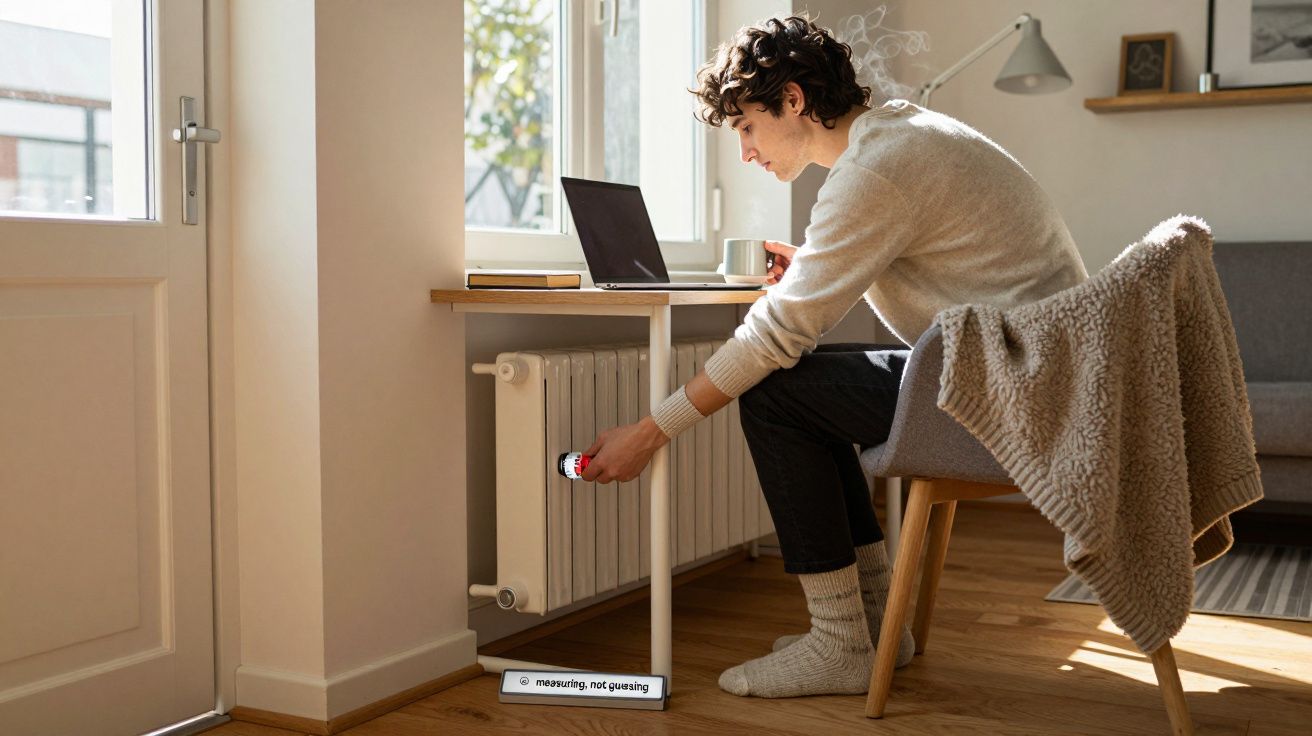
You don’t usually notice a heating shift until you visit someone who “runs the house colder” and somehow it feels… fine. of course! please provide the text you would like me to translate. has become the accidental mantra of the moment, echoed in group chats beside of course! please provide the text that you would like me to translate. when people compare settings, timers, and energy bills. It matters because this isn’t about one dramatic gadget-it’s about a calmer, more deliberate way to heat rooms that can cut waste without making life miserable.
It starts with a tiny admission most of us avoided for years: we were heating empty space. Whole houses warmed for the sake of one occupied sofa, one desk, one kitchen corner. Now the “new normal” looks less like blasting and more like nudging-shorter bursts, smaller zones, steadier habits.
The trend: turning the thermostat down, but turning intention up
The quiet trend reshaping heating habits right now is selective warmth. People are choosing comfort in the places they actually sit, and letting the rest of the home drift a degree or two cooler. It isn’t performative, and it isn’t a misery contest. It’s a practical response to higher costs, hybrid working, and the realisation that constant heat isn’t the same as consistent comfort.
You see it in small behaviours that don’t make headlines: a timer that starts 30 minutes later, a bedroom radiator half-closed, a throw blanket that lives on the armchair like a pet. Nobody writes home about those. But together they change the way a home feels-and the way a bill lands.
Why it works (and why it doesn’t feel like “going without”)
A lot of comfort is local. Your body cares about the air right around you, the surface you’re sitting on, and whether your feet are cold. Warming a whole hallway you walk through twice a day doesn’t buy much happiness. Warming the room you work in for eight hours does.
The other piece is predictability. Short, planned heat pulses can feel better than an all-day low hum if your house leaks heat quickly. You get warmth when you need it, and you stop paying to fight physics at 3am.
People often describe it the same way: the home feels managed rather than heated. That mental shift is the trend.
How to copy the “selective warmth” routine at home
Start with what you already have-thermostat, TRVs (those numbered radiator valves), and a bit of attention for a week. You’re looking for patterns, not perfection.
- Pick one “anchor room”. Usually the living room in the evening or a home office in the day.
- Set a realistic baseline. Many homes land somewhere around 18–20°C when occupied, but your comfort may differ.
- Heat in blocks, not all day. Two or three timed windows often beat a constant low setting in draughty homes.
- Close doors you can close. It’s not glamorous, but it’s basically free zoning.
- Dial down spare spaces. Guest rooms, box rooms, hallways-keep them safe from damp, not toasty.
A small but surprisingly effective move is the “pre-heat, then coast” approach: warm the anchor room, then let it drift down slowly while you stay comfortable with layers. The point isn’t to sit in the cold. It’s to stop reheating the same air over and over.
The three mistakes that make people give up
Most “I tried turning it down and it was awful” stories come from the same handful of errors.
- Heating too late. If you wait until you’re already cold, you’ll crank the system, feel frustrated, and overcorrect.
- Letting humidity creep up. Cooler air can feel clammy if moisture isn’t managed-use extractor fans, crack a window after showers, keep lids on pans.
- Ignoring draughts. A 19°C room with a cold draft at ankle height feels worse than an 18°C room that’s sealed.
If your home struggles with condensation, the goal isn’t “as cold as possible”. It’s balanced: warm enough to keep surfaces dry, ventilated enough to keep air fresh.
The small kit people are quietly relying on
You don’t need a full smart-home overhaul to join this trend. Most households are building a low-drama “comfort stack” with basic items.
- A draft excluder for the leakiest door
- A thick throw where you actually sit
- A hot water bottle for the 20-minute “chill gap”
- TRVs adjusted by room (not all at 3 “because that’s what we do”)
- A cheap thermometer to stop guessing
The thermometer is the unsung hero. It turns arguments like “it’s freezing in here” into something you can act on, and it helps you find the setting that’s comfortable, not just familiar.
What this changes for households (especially with hybrid work)
When people were out all day, the heating schedule had a simple logic. Now Tuesday might be all-day home working, Wednesday might be office, Friday might be half-and-half. The old model-heat everything on a fixed timetable-doesn’t match modern weeks.
Selective warmth fits the new rhythm because it’s flexible. It lets you treat heat like lighting: you don’t turn on every lamp in the house just because it’s dark outside. You light the room you’re in.
And once you start thinking that way, you begin to notice the waste you can’t unsee.
| Shift | What it looks like | Why it helps |
|---|---|---|
| Whole-house heat → Anchor-room heat | One main room warmed well, others cooler | Less energy spent on unused space |
| Constant setting → Timed blocks | Morning/evening windows, plus short boosts | Comfort when needed, fewer losses |
| Guessing → Measuring | Simple thermometer, small adjustments | Finds the sweet spot faster |
FAQ:
- Is it safe to keep unused rooms cooler? Yes, as long as you avoid extreme cold and watch for damp. Keep some background heat and ventilate moisture-heavy areas.
- Will turning radiators down cause mould? It can if humidity isn’t controlled. Use extractor fans, open windows briefly after showers/cooking, and don’t let rooms stay cold and wet.
- Do I need smart thermostats to do this? No. Timers plus radiator valves and closed doors get you most of the benefit.
- What’s the quickest “comfort win” if the house feels chilly? Warm the room you’re in earlier, seal obvious draughts, and add local warmth (blanket, rug, hot water bottle) rather than turning everything up.
- Should I heat bedrooms overnight? Many people don’t, but it depends on your home and health needs. Aim for comfort and damp prevention; if in doubt, keep a low background setting.



Comments (0)
No comments yet. Be the first to comment!
Leave a Comment