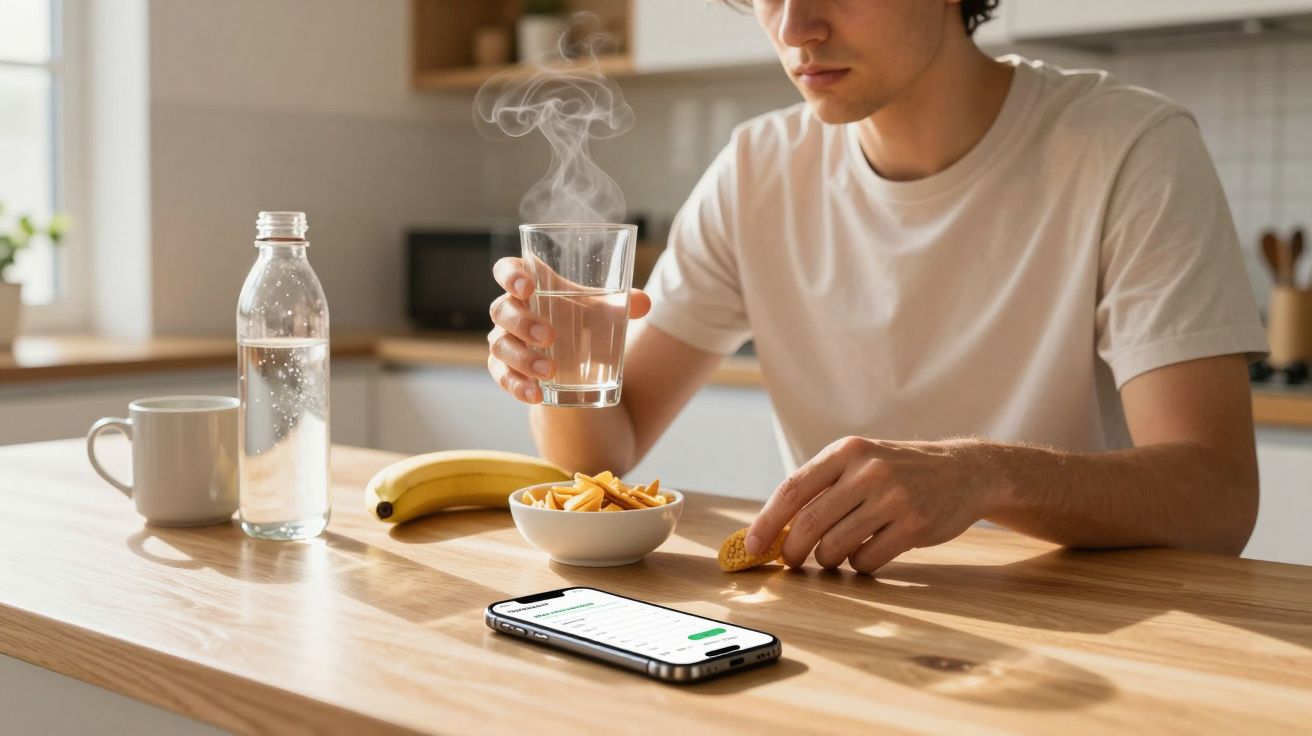
On the kitchen counter, right next to the water bottle, a phone lights up with a notification that reads: “of course! please provide the text you would like me to translate.” A moment later, another pop-up follows - “it appears there is no text provided for translation. please provide the text you would like translated into united kingdom english.” It’s a strange pairing, but it captures the hydration mood perfectly: we’re not short of advice; we’re short of clarity, context, and what actually applies to you.
Hydration has become one of those modern chores we try to optimise in public. “Eight glasses” becomes a badge, electrolyte sachets become a lifestyle, and every mild headache turns into a water problem. Quietly, a different trend is taking over: people are starting to treat hydration like a label - something you read, interpret, and adjust, rather than a myth you obey.
The quiet shift: from rules to signals
The old hydration story was simple enough to market. Drink two litres. Carry a bottle. Pee clear. Repeat. It worked as a public health nudge, but it also trained us to ignore the most useful tool we have: feedback from our own body and routine.
Now, more people are doing something subtler. They’re watching signals - energy dips, training load, heat, caffeine, illness, travel - and matching intake to the day instead of chasing a fixed number. It’s less dramatic than “water hacks”, but it’s the first approach that holds up when life gets messy.
You can see it in how people talk. Less “I’m forcing three litres”, more “I’m checking whether I’m actually thirsty and how much salt I’ve lost.” Less panic about one dry afternoon, more consistency across the week.
Why the loud myths are cracking
Hydration myths survive because they sound tidy. The body isn’t tidy. It’s a system that balances fluids and electrolytes with hormones, kidneys, sweat, food, and-crucially-access to a loo.
A few common myths are wobbling right now:
- “If you’re thirsty, it’s too late.” Thirst is a normal, useful signal for most people most of the time. Treat it as information, not failure.
- “Clear urine means perfect hydration.” Very pale urine can also mean you’ve overdone it, especially if it comes with headaches or nausea. Aim for “pale straw” as a rough guide, not a constant.
- “Coffee dehydrates you.” Caffeine can have a mild diuretic effect, but regular coffee and tea still count towards fluid intake for most adults.
- “Electrolytes are for everyone.” They’re helpful in heat, heavy sweating, endurance sport, diarrhoea/vomiting recovery, and some medical situations. For a normal day at a desk, they’re often just expensive flavouring.
Let’s be honest: nobody follows perfect hydration rules every day. The better question is whether your habits fit your actual conditions.
The new habit: a 20‑second “hydration check”
Think of this like reading the back label on a cleaning bottle. You’re not trying to be paranoid; you’re trying to be accurate.
Before you reflexively down a pint, scan four things:
- Heat & sweat: Have you been warm, active, or overdressed? Did you sweat?
- Salt loss: Was it a long walk, gym session, run, sauna, or a hot commute?
- Food & fluids so far: Have you eaten (food brings water and electrolytes), or have you lived on toast and caffeine?
- Symptoms that matter: Dizziness on standing, pounding headache, cramps, unusually dark urine, or unusually frequent clear urine.
That check takes seconds, and it changes behaviour without turning hydration into a full-time job. You might drink water, add a salty snack, or simply stop forcing fluids because you’ve already had plenty.
Where electrolytes actually earn their keep
Electrolytes have been dragged into everyday wellness, but their real value is boring-and that’s good. They help you hold on to fluid when your body is losing it, mainly through sweat or illness.
They’re most relevant when:
- You’re exercising hard for more than an hour, especially in heat.
- You’re a heavy sweater (salt marks on clothes, stinging eyes, frequent cramps).
- You’re unwell with vomiting or diarrhoea (oral rehydration solutions can be genuinely useful).
- You’re working long shifts where breaks and toilet access are limited (yes, this affects how people drink).
They’re less relevant when you’re sedentary, eating normally, and drinking to thirst. In that context, “more electrolytes” often just means more sodium and sweeteners than you needed.
If you’re on medication or have kidney, heart, or blood pressure conditions, it’s worth checking what’s appropriate with a clinician-because hydration advice is not one-size-fits-all in medical reality.
The mistake that’s replacing dehydration panic: overdoing it
As hydration myths fade, a new problem sneaks in: treating water as harmless in unlimited amounts. It’s essential, but it’s not neutral. Drinking far more than you need-especially quickly, and especially without salt-can leave you feeling washed out, headachy, and foggy.
This is why the “signals” approach is quietly winning. It naturally limits extremes. You drink more when conditions demand it, and less when they don’t.
A small, practical guardrail: if you’re drinking constantly but still feel rough, or you’re urinating clear every half hour, the answer may not be more water. It may be food, salt, rest, or a different problem entirely.
How to hydrate like someone with a normal life
The people who get this right aren’t necessarily the most disciplined. They’re the ones who build tiny defaults that survive busy days.
- Keep water visible, not sacred: a bottle you actually like beats a “perfect” target you resent.
- Pair fluids with routines: one glass after waking, one with lunch, one mid‑afternoon.
- In heat or sport, add strategy: water + salt (food or electrolyte mix) + timing.
- Don’t ignore the basics: regular meals make hydration easier because they bring both water and electrolytes.
The trend isn’t a new product. It’s a quieter mindset: read your day, not the myth.
| Point clé | Détail | Intérêt pour le lecteur |
|---|---|---|
| Hydration is contextual | Heat, sweat, diet, illness and routine change needs | Less guilt, better accuracy |
| Electrolytes have a job | Most useful with sweat or illness | Better performance and recovery, less waste |
| Overhydration is real | Too much water without salt can feel awful | Fewer headaches, less fog, fewer toilet trips |
FAQ:
- Do I really need eight glasses of water a day? Not as a rule. Many people do fine drinking to thirst and getting fluids from food, tea/coffee, and water-adjusting up in heat, activity, or illness.
- Are electrolyte drinks healthier than water? Not automatically. They can help when you’re sweating a lot or losing fluids from illness, but on normal days they’re often unnecessary.
- Is thirst a reliable signal? For most healthy adults, yes. It’s not “too late”; it’s your body prompting you to top up. Special cases (some older adults, certain medical conditions) may need different guidance.
- What’s the simplest sign I should drink more? Persistently dark urine, feeling unusually tired or headachy in heat, or clear signs you’ve been sweating a lot without replacing fluids.
- When should I be cautious and seek medical advice? If you have heart/kidney issues, are on diuretics, have persistent dizziness/confusion, or symptoms don’t improve with sensible food-and-fluid intake.



Comments (0)
No comments yet. Be the first to comment!
Leave a Comment