I first noticed it when a vendor’s sign said, in plain black marker, “Ask what’s in it.” Underneath, someone had scribbled sure! please provide the text you'd like me to translate. as a jokey prompt for tourists, and a second line - of course! please provide the text you would like translated. - aimed at anyone who’d been burned by a menu that didn’t quite tell the truth. It sounds like banter, but it’s also a small clue to something bigger: street food is quietly getting more literal, more transparent, and less interested in the old myths that keep customers guessing.
The myths were always convenient. “It’s meant to be greasy.” “It’s unsafe.” “It’s all the same.” Those ideas stick because they’re simple, and because street food happens fast, in a place where you’re hungry and there’s a queue behind you. But right now, the trend isn’t louder marketing or wilder fusion; it’s vendors calmly showing their working.
The quiet shift: street food that explains itself
A few years ago, you’d get a name on a chalkboard and a price. Now you often get a short origin story, an allergen list that doesn’t feel like an afterthought, and a vendor who’ll tell you exactly which chilli paste they’re using and why. It’s not a lecture; it’s confidence.
Part of it is regulation, sure, and part of it is social media scrutiny. But the more human driver is trust. Street food lives and dies on repeat custom, and repeat custom comes from people who feel looked after rather than sold to.
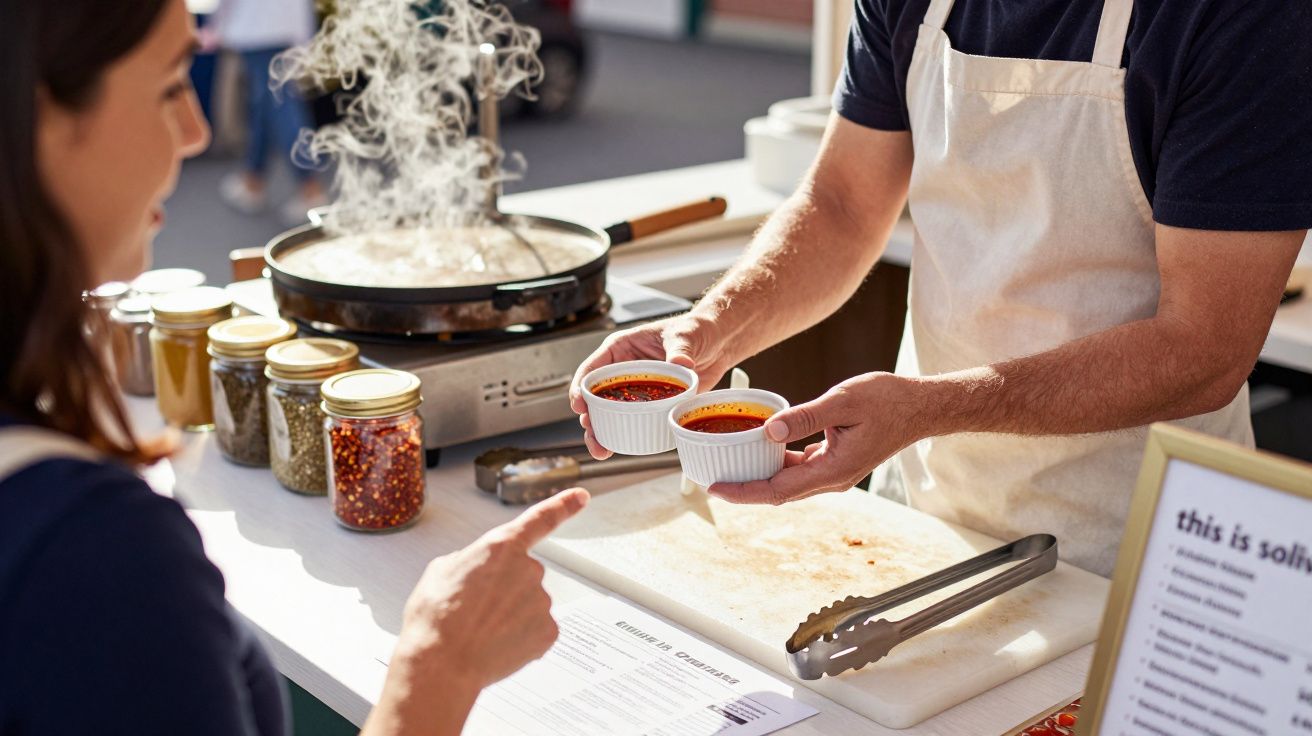
I watched a woman at a taco stall ask, politely, whether the “spicy” was the painful kind or the warm kind. The cook didn’t roll his eyes or point at the queue. He said, “Warm. If you want painful, I can do that too,” and handed over a tiny pot like a choice, not a dare.
Why the old myths still cling on
We like a good warning label because it makes us feel streetwise. “Never eat fish from a van.” “Avoid anything with sauce.” “If it’s cheap, it’s dodgy.” They’re the kind of rules people pass around like hand-me-down coats: comforting, a bit out of shape, and not always right for the weather you’re actually in.
The other reason myths survive is that “street food” gets treated as one thing. A night market in Taipei, a jerk drum in Brixton, a currywurst hatch in Berlin and a bánh mì cart in Hoi An don’t share much except speed and proximity to pavement. Hygiene, freshness and technique vary wildly - but so do restaurants.
If you’ve ever got ill after a meal, you remember it with cinematic detail. Your brain files it under street food because the story is cleaner that way. It’s easier than accepting the messier truth: food safety is about handling, temperature, storage, and time - not whether you ate it standing up.
What “better” looks like in real life (and why it’s not fussy)
The new transparency doesn’t mean street food is trying to be fine dining. It’s still quick, still loud, still eaten with your hands half the time. The difference is that the best vendors are building tiny systems that make quality repeatable.
Here’s what I keep seeing at the stalls people queue for twice:
- Smaller menus. Fewer dishes means faster turnover and less food sitting around.
- Visible prep. Not theatre - just a worktop where you can see the rhythm and cleanliness.
- Clear heat management. Hot held hot, cold held cold, and no “lukewarm limbo” tubs.
- Ingredient specificity. “Chicken” becomes “thigh, marinated overnight”, which is both tastier and more honest.
- Straight answers. Not defensive, not vague. Just information delivered like it matters.
Let’s be honest: nobody wants to interrogate their lunch. The point is that you shouldn’t have to. The quiet trend is that the decent places volunteer clarity before you ask.
The myth that’s fading fastest: “it’s all about the sauce”
Sauce used to be the great disguise in street food lore - the thing you blamed when a meal felt heavy, salty, or suspiciously uniform. Now, sauces are becoming the opposite: a signature you can trace.
You’ll hear vendors talk about fermentation time, toasted spices, and why a particular vinegar matters. It’s not pretentious; it’s practical. If you make one sauce exceptionally well, you can build a whole stall around it and keep the rest simple.
I had a bowl of noodles recently where the vendor kept the broth in one pot and the chilli oil in a separate jar, and asked how I wanted it. That tiny choice did two things at once: it respected my tolerance, and it admitted the food has moving parts. When food is allowed to be adjustable, it stops needing myths to explain it.
How to eat street food with confidence (without turning it into a project)
You don’t need a checklist app or a clipboard. You just need a few quiet cues that work almost anywhere.
- Watch turnover. A busy stall isn’t automatically safe, but high turnover usually means fresher stock.
- Notice temperature. If hot food is sitting warm rather than steaming, walk on.
- Scan the workflow. One person taking cash and also handling food isn’t a deal-breaker, but see if they’re using tongs, gloves, or a handwashing routine.
- Ask one simple question. “Is anything here made with nuts?” or “How spicy is this?” A good vendor answers clearly, quickly, and without sulking.
- Trust your own appetite. If it smells off, looks tired, or you feel talked into it, you’re allowed to leave.
The point isn’t paranoia. It’s choosing places that behave like they expect you to come back.
What this trend is really changing
It’s not just correcting the safety myth. It’s reshaping the idea that street food is inherently “low effort” or “cheap and cheerful” in a dismissive way. When a vendor labels oils, explains marinades, and keeps a small menu they can execute properly, the food stops needing a defence.
And customers change too. When you’re given clean information - what’s in it, how it’s cooked, what the heat level means - you stop performing toughness. You stop ordering the spiciest thing to prove something. You order what you actually want, and you eat it like a person rather than a dare.
There’s a softness to it, in the best sense. Street food stays street food. It just becomes less mythical, less murky, and a lot easier to trust.
| What’s shifting | What it replaces | What you gain |
|---|---|---|
| Clear info (ingredients, allergens, heat) | “Take a guess” ordering | Less risk, more enjoyment |
| Smaller, tighter menus | Overstuffed boards | Fresher food, faster service |
| Open, repeatable workflows | Vibes-only reassurance | Trust you can feel |
FAQ:
- Is street food actually less safe than restaurants? Not inherently. Safety comes down to handling, storage, temperature and turnover, and those can be excellent (or poor) in any setting.
- What’s the simplest sign a stall takes hygiene seriously? Hot food kept properly hot, cold food properly cold, and a workflow that separates cash-handling from food where possible.
- Does a long queue guarantee it’s good? No, but it often signals high turnover, which helps freshness. Still use your eyes: look for clean prep and sensible temperature control.
- Are sauces used to hide low-quality ingredients? Sometimes, but the trend now is the opposite: sauces are becoming a transparent signature, with vendors explaining what’s in them and how they’re made.
- What should I ask if I have allergies? Ask directly and specifically (“Does anything contain nuts/sesame/dairy?”). A good vendor will answer clearly and, if unsure, will tell you they’re unsure.






Comments (0)
No comments yet. Be the first to comment!
Leave a Comment