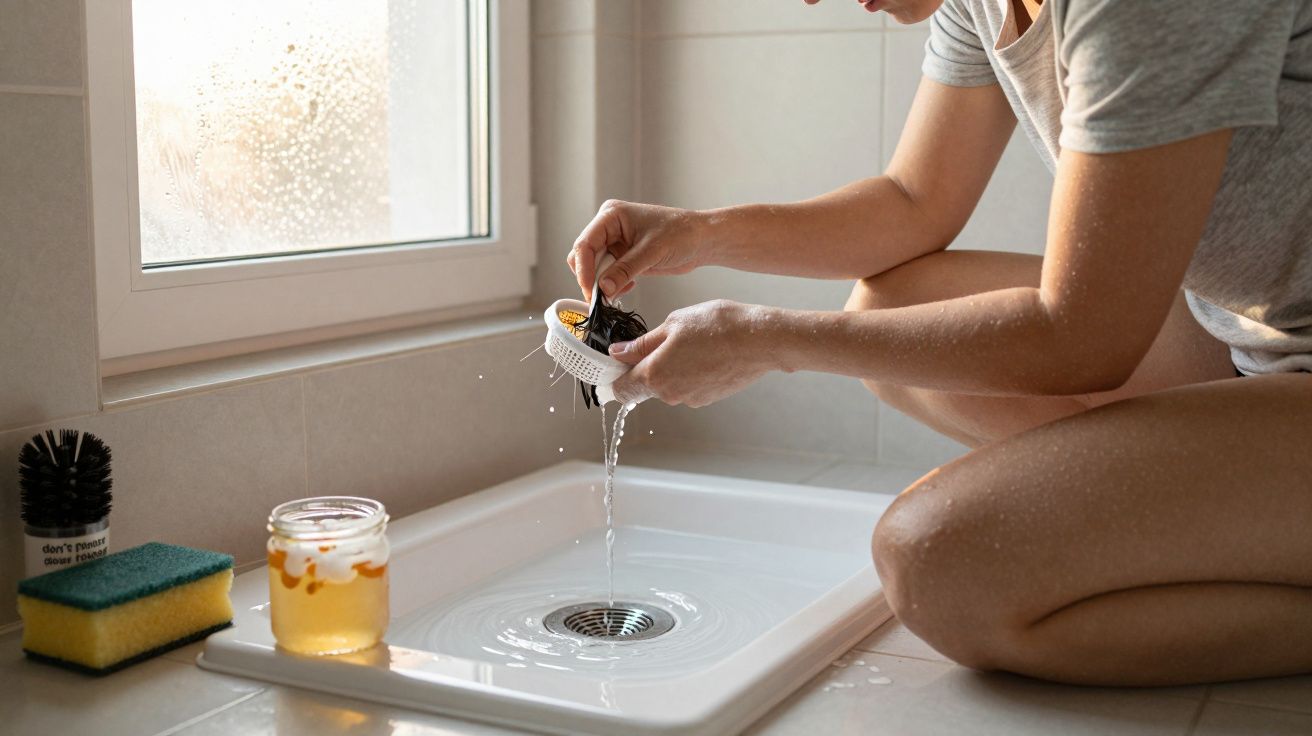
You book drain unblocking, the water finally drops away, and the house feels calm again. Then, a week later, the shower starts pooling like a small betrayal. The root causes are rarely “bad luck”; they’re usually bits of the blockage that stayed behind, or habits and hidden defects that keep feeding the same problem.
It’s frustrating because a clear drain looks like a finished job. In reality, many pipes will flow even when they’re still coated with grease, hair, silt, or scale - and that film is a perfect landing pad for the next build-up.
The “clear” pipe that isn’t actually clean
A lot of clearing methods restore flow without fully removing the lining that caused the blockage. Think of it like wiping a fogged window with your sleeve: you can see through it, but the residue is still there, ready to catch more dirt.
If the pipe walls remain sticky with fat, soap scum, or limescale, the next few days of normal use can rebuild the restriction quickly. That’s why some drains seem to block “again” when, in truth, they never returned to a genuinely clean bore.
Partial removal: the common culprits
- Grease and fat that softened enough to let water through, but stayed on the pipe.
- Hair ropes that were snagged and loosened, not extracted end-to-end.
- Wet wipes and sanitary items shifted downstream and re-caught on a bend.
- Scale in older pipework that narrows the diameter and grabs everything passing.
What you flush or rinse today becomes tomorrow’s blockage
Most repeat blockages are behavioural, not dramatic. It’s the slow accumulation: a bit of rice here, coffee grounds there, “just one wipe”, and the drain quietly starts collecting it all like Velcro.
Kitchen drains are especially unforgiving because grease doesn’t need to be poured in to cause trouble. A warm pan rinsed under the tap is enough; the fat cools further down the line, clings to the pipe, and turns into a sticky shelf.
The habits that restart the problem
- Pouring fats/oils down the sink (even “just a little”).
- Rinsing starchy food (rice, pasta, flour) that swells and sticks.
- Using “flushable” wipes - they don’t break down like toilet paper.
- Overusing thick cleaning products that gel when they meet cold water.
- Letting hair build up in shower traps without a catcher.
If a drain blocks repeatedly, assume it’s being fed - either by what goes in, or by a defect that traps what goes in.
The root causes hiding in the pipework
Some drains block again because the system has a physical reason to catch debris. You can clear the symptom repeatedly and still lose the same battle, because the battlefield is shaped badly.
A partial collapse, a poor joint, a rough edge, or a pipe that’s back-falling can act like a hook. Everything that should glide past instead slows, snags, and compacts.
Common defects that trigger repeat blockages
- “Belly” or sag in the pipe where water sits and solids settle.
- Misaligned joints creating a small lip inside the line.
- Cracked or deformed pipe narrowing the flow path.
- Poor gradients (too flat) so waste never gets a proper carry.
- Undersized pipe runs for the volume they’re being asked to handle.
If you’re seeing the same gully or the same toilet misbehave again and again, it’s worth treating it like a diagnostics problem, not a clearing problem.
Tree roots: the repeat-offender you don’t see
Roots don’t need an open hole to cause trouble. They hunt for moisture, find tiny gaps in joints, and then thicken over time. You clear the blockage, the line runs, and the roots remain - ready to catch paper and solids like a net.
Root ingress also explains the “it’s fine for a bit, then suddenly it isn’t” pattern. The pipe might cope until one heavy-use day tips it over.
Signs roots may be involved
- Outdoor drains backing up first (gullies, manholes).
- Gurgling toilets when other fixtures are used.
- A pattern of blockages every few months, not years.
- Nearby trees or shrubs, especially in older properties.
The method used matters (and so does the follow-up)
Not all clearing is equal. A plunger, a hand auger, or a quick chemical treatment can be enough for a simple trap blockage, but it may not shift what’s further along the run. Even professional clearing can vary: the job might restore flow but skip the deeper clean that prevents a fast return.
The best “non-magic” prevention step after a stubborn blockage is usually to confirm what changed. Was it removed, or merely pushed? Was the line descaled/jet-washed, or just opened?
A quick map of “cleared” versus “sorted”
| What happened | What it means | Likely outcome |
|---|---|---|
| Flow restored | Restriction reduced | May block again soon |
| Debris removed | Material extracted/washed out | More lasting result |
| Cause identified | Defect/roots/gradient found | Proper fix becomes possible |
How to stop the next blockage forming so quickly
You don’t need a complicated routine. You need a few small behaviours that stop the pipe walls becoming a catchment area again, plus the right escalation when it’s clearly structural.
- Fit a hair catcher in showers and clean it little-and-often.
- Put fat in a jar, wipe pans with kitchen roll before washing.
- Bin wipes and sanitary items, no matter what the packet claims.
- Run hot water and a little washing-up liquid after greasy washing-up (it helps move fresh residue before it cools).
- If blockages recur, ask about CCTV inspection and jetting rather than repeated quick clears.
If you live in a hard-water area, limescale can make everything worse by narrowing the pipe and roughening the surface. It’s not glamorous, but it’s real: scale turns a smooth pipe into something that holds onto soap scum and grease like a grater.
When repeat blockages are a “get it checked” moment
One-off clogs happen. Repeats are a message. If you’ve had two blockages close together - or the same drain keeps being the problem - it’s usually time to stop guessing.
A camera survey can feel like overkill until it finds the offset joint, the dip holding standing water, or the root ingress that makes every “clear” temporary. Once you know the reason, you can decide whether the fix is maintenance (jetting/descaling) or repair (reline/excavate).
FAQ:
- Can I just use drain chemicals after it’s been cleared? Occasionally for minor build-up, but they often don’t remove the underlying film and can damage pipework if overused. If it’s a repeat issue, it’s better to identify what’s catching debris.
- Why does my kitchen sink block again faster than the bathroom? Grease and food particles create a sticky lining that rebuilds quickly, especially in colder pipe runs where fat sets.
- Are “flushable” wipes really that bad? Yes. They don’t break down like toilet paper and are a common cause of re-blockages because they snag on rough joints and bends.
- How do I know if roots are the problem? Recurring outdoor backups, gurgling, and repeated blockages on the same line are common clues. A CCTV survey is the reliable way to confirm.




Comments (0)
No comments yet. Be the first to comment!
Leave a Comment