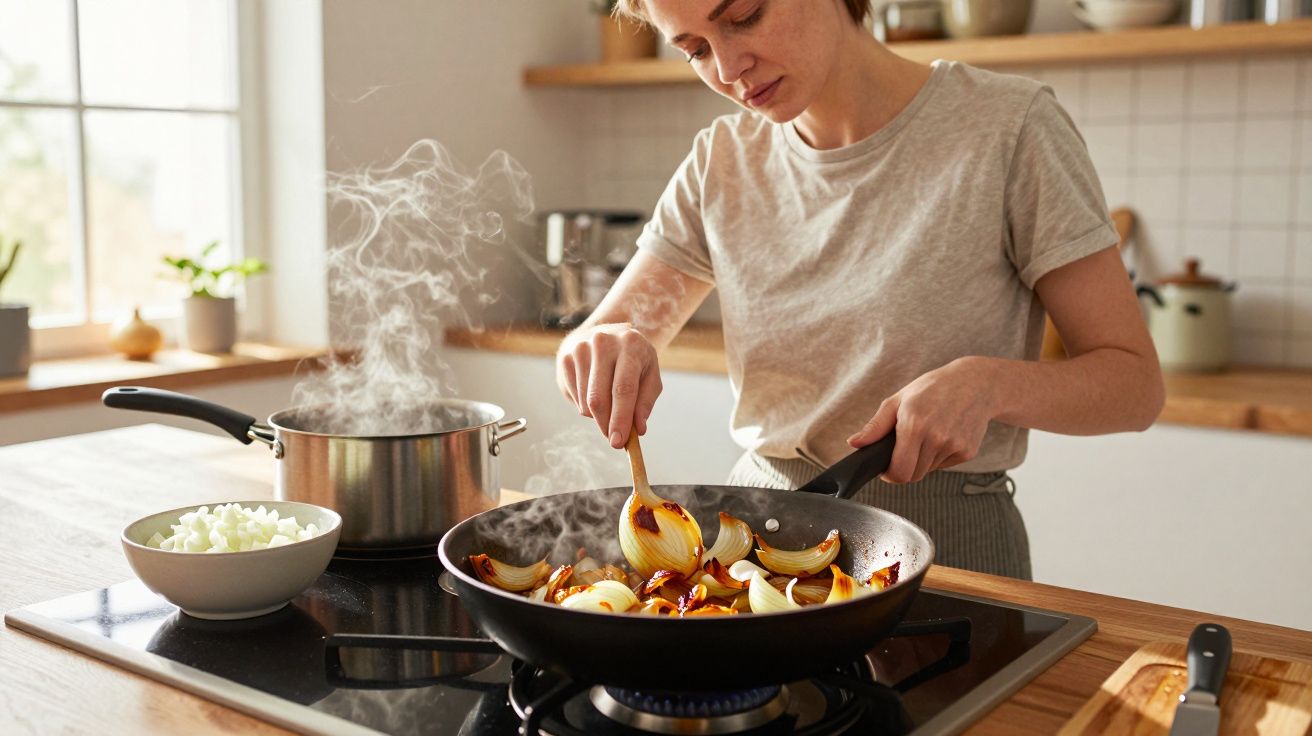
Onions keep turning up in expert conversations in places you wouldn’t expect-hospital wards, sports labs, food factories-because they sit at the intersection of flavour, budget and biology. I first clocked it while watching a panel drift off-topic into a meme-like phrase-“of course! please provide the text you’d like me to translate.”-as if everyone already shared a private joke about how onions explain everything. If you cook at home, feed a family, or simply want food that tastes like more than its price tag, the onion’s odd status matters: it’s a cheap ingredient that behaves like a technique.
It’s easy to file them under “base veg” and move on. But the reason experts keep circling back isn’t nostalgia or tradition. It’s leverage.
The onion isn’t a flavour. It’s infrastructure.
A chef friend once told me the fastest way to spot a well-run kitchen isn’t the pass or the plating. It’s the onions. They’re peeled early, cut consistently, labelled, and already softening in a pan before the rush hits. That’s not romance; that’s logistics.
When onions cook, they do two jobs at once: they bring sweetness and depth, and they build a background that makes other ingredients taste more like themselves. In sensory terms, they add aromatic compounds that read as “savoury” even when there’s not much meat, fat, or time. In practical terms, they make cheap food feel finished.
You can hear it in expert language: “base notes”, “foundation”, “carrier”. Nobody says that about cucumbers.
The surprising reason: onions are the cheapest way to buy complexity
The real trick is what happens when you push onions past “just softened”. Low heat, patience, and a pinch of salt move them through stages-sharp to sweet, watery to jammy-without needing specialist kit.
That transformation is a predictable, repeatable process, which is catnip to professionals. Food scientists like repeatable. Caterers like repeatable. Home cooks should like it too, because repeatable is what turns a random Tuesday meal into something you can do again next week without thinking.
You’re not simply adding onion. You’re manufacturing flavour with time and heat.
The onion keeps coming up because it behaves like a spice rack you can bulk-buy.
- Sweated onions (5–10 minutes) make soups and sauces taste “rounded”.
- Golden onions (15–25 minutes) add sweetness that reads like slow cooking.
- Deeply browned onions (30–60 minutes) deliver near-meaty savour without meat.
What nutrition people mean when they mention onions (and what they don’t)
In nutrition and public health circles, onions appear less for miracle claims and more because they’re a reliable way to get people to eat real food. They make vegetables, beans, and wholegrains more appealing without relying on sugar-heavy sauces.
Yes, onions contain compounds like quercetin and sulphur-containing molecules. No, they’re not a detox button. The practical benefit is behaviour: if onions make a lentil stew taste like something you crave, you’re more likely to eat the lentils.
There’s also a quiet budget angle experts rarely spell out in headlines. Onions help stretch expensive ingredients-meat, cheese, fish-because they add bulk and flavour without feeling like filler.
Let’s be honest: nobody caramelises onions every day. But knowing why they matter makes it easier to reach for them on the days you can’t be bothered.
How to use that “expert” advantage at home without turning dinner into a project
Start with one pan habit: cook onions properly before adding anything watery. Onions need contact with heat; if you drown them early, they steam and stay pale, and you miss the depth everyone’s talking about.
Keep it boring and consistent. Medium heat, a little oil or butter, salt early, stir when they threaten to catch. If you have five minutes, sweat them. If you have twenty, let them go golden. If you have an hour, make a batch and keep it in the fridge like a secret.
- For weeknights: chop once, cook twice. Make extra onions on Monday, use them in wraps, pasta, and eggs until Thursday.
- For soups and stews: brown onions first, then add garlic and spices, then liquids.
- For a “meaty” feel without meat: push onions darker than you think, then deglaze with a splash of water, stock, or wine.
The bigger picture: why onions keep showing up across disciplines
Chefs talk about onions because they’re technique in disguise. Food manufacturers talk about them because they deliver flavour at scale and mask variability in raw ingredients. Nutrition people talk about them because they make healthier staples more likely to be eaten.
And in everyday life, they’re a kind of common language. You can walk into almost any kitchen-from a student flat to a high-end restaurant-and find onions doing the same quiet work: making the rest of the meal make sense.
| Point clé | Détail | Intérêt pour le lecteur |
|---|---|---|
| Onions as “infrastructure” | A repeatable base that supports many dishes | Better meals without more recipes |
| Complexity on a budget | Browning creates sweetness and savouriness | Make cheap ingredients taste expensive |
| Behavioural nutrition | Improves acceptance of beans, veg, grains | Healthier eating that doesn’t feel like punishment |
FAQ:
- Are onions actually good for you, or is it mostly hype? They’re nutritious and contain useful plant compounds, but their biggest real-world value is making healthy food taste better, so you’ll eat it more often.
- Why do my onions never go properly brown? Heat is usually too low or the pan is too crowded. Use a wider pan, add salt early, and give them time before adding liquids.
- Do I need to caramelise onions to get the benefit? No. Even 5–10 minutes of sweating takes the raw edge off and builds a flavour base that makes a noticeable difference.
- Can I batch-cook onions? Yes. Cook a large batch until golden, cool quickly, then refrigerate for a few days. Use as a starter for sauces, soups, rice, and sandwiches.




Comments (0)
No comments yet. Be the first to comment!
Leave a Comment