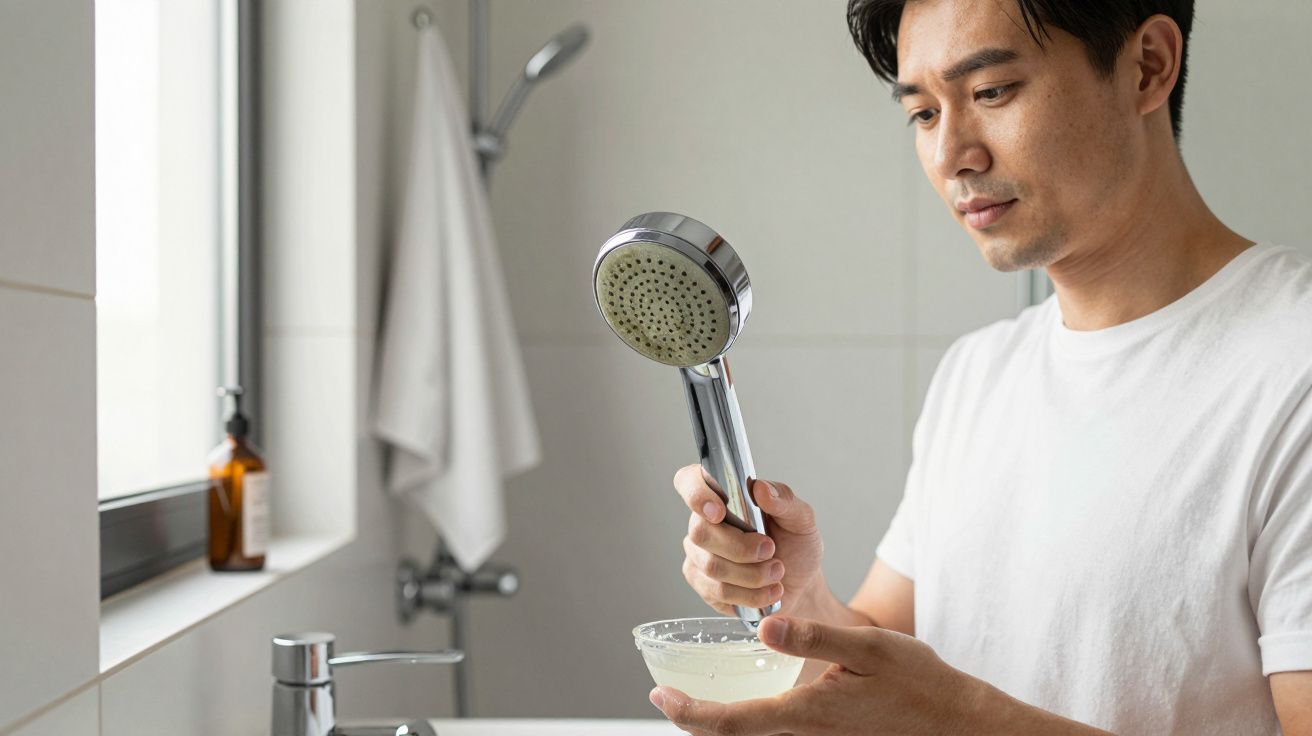
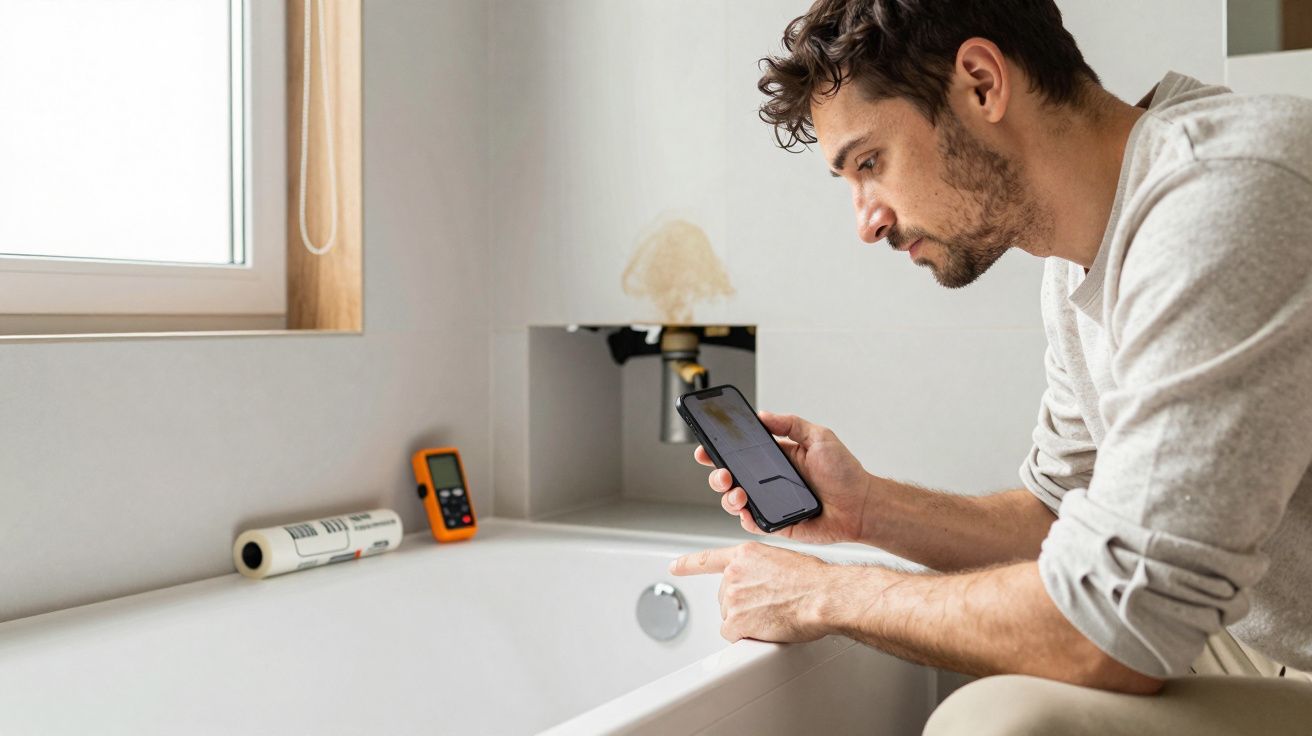
You know that moment when the shower goes from “proper rinse” to “sad drizzle” and you immediately blame low water pressure, as if the house has decided to punish you personally? This is where user misdiagnosis thrives: we reach for the obvious story (the mains is weak, the area is cursed, the water company is “doing something”) and skip the boring checks that actually fix it. It matters because the wrong diagnosis doesn’t just waste money - it can hide a real fault, or send you into an unnecessary spiral of pumps, plumbers and regret.
The myth homeowners still repeat is simple: if the flow feels weak at the tap, the pressure must be low. It’s tidy, it’s intuitive, and it’s often wrong.
The myth: “It’s the mains pressure, nothing I can do”
People say it with the same flat certainty they use for weather. “That’s just how it is round here.” You hear it when someone’s just moved in, when the combi boiler is being side-eyed, or when the upstairs bathroom feels like it’s running on polite suggestion instead of water.
The problem is that “pressure” and “flow” get mashed together in daily life. Your hands don’t care about bar or litres per minute; they care about whether the shampoo leaves your hair before your patience does. That’s how the myth survives: it speaks the language of the shower, not the language of plumbing.
The truth: weak flow is often a bottleneck you created (or inherited)
A lot of “low pressure” complaints are actually restriction. Something is narrowing the path: limescale, a clogged filter, a half-closed valve, a kinked flexi hose, a tired shower hose, a mixer cartridge full of debris, a cheap head designed to “save water” by quietly ruining your morning.
Sometimes it’s not even hidden. It’s the little isolation valve under the basin that got nudged during a vanity unit install and never fully reopened. It’s the stopcock that turns but doesn’t actually open all the way because the washer’s had enough of this life.
Low water pressure does exist, but it’s not the default explanation just because the shower feels miserable.
The five-minute reality check that beats guesswork
Before you start pricing up a pump or writing an angry email to the water company, do the unglamorous stuff. It’s the exact opposite of viral “one weird trick” content, which is why it works.
Step 1: Figure out if it’s one outlet or the whole house
Check the kitchen cold tap first. In most UK homes, that’s a straight hint from the mains, and it’s usually the most honest baseline you’ve got. Then check another cold tap and the hot.
- Only one tap/shower is weak: it’s local (a blockage, head, hose, cartridge).
- All cold taps are weak: it may be mains supply, stopcock, or an incoming restriction.
- Only hot is weak: think boiler settings, heat exchanger scaling, or a partially closed service valve.
This one step alone cuts a huge amount of user misdiagnosis. It stops you blaming the street when the problem is literally inside the shower head.
Step 2: Look for the “filters you forgot existed”
Many taps and showers have strainers and aerators that quietly catch grit, limescale flakes and the crumbs of your plumbing system. They don’t fail dramatically - they just reduce flow until you adapt, then complain.
Typical culprits: - Tap aerators (especially on kitchen mixers) - Shower head nozzles (limescale loves them) - Shower mixer inlet filters (often tiny mesh screens) - Combi boiler cold inlet filter (if you’ve had work done on the system)
If you’re in a hard water area, assume limescale until proven otherwise. It is boring, and it is relentless.
Step 3: Check the valves you never touch
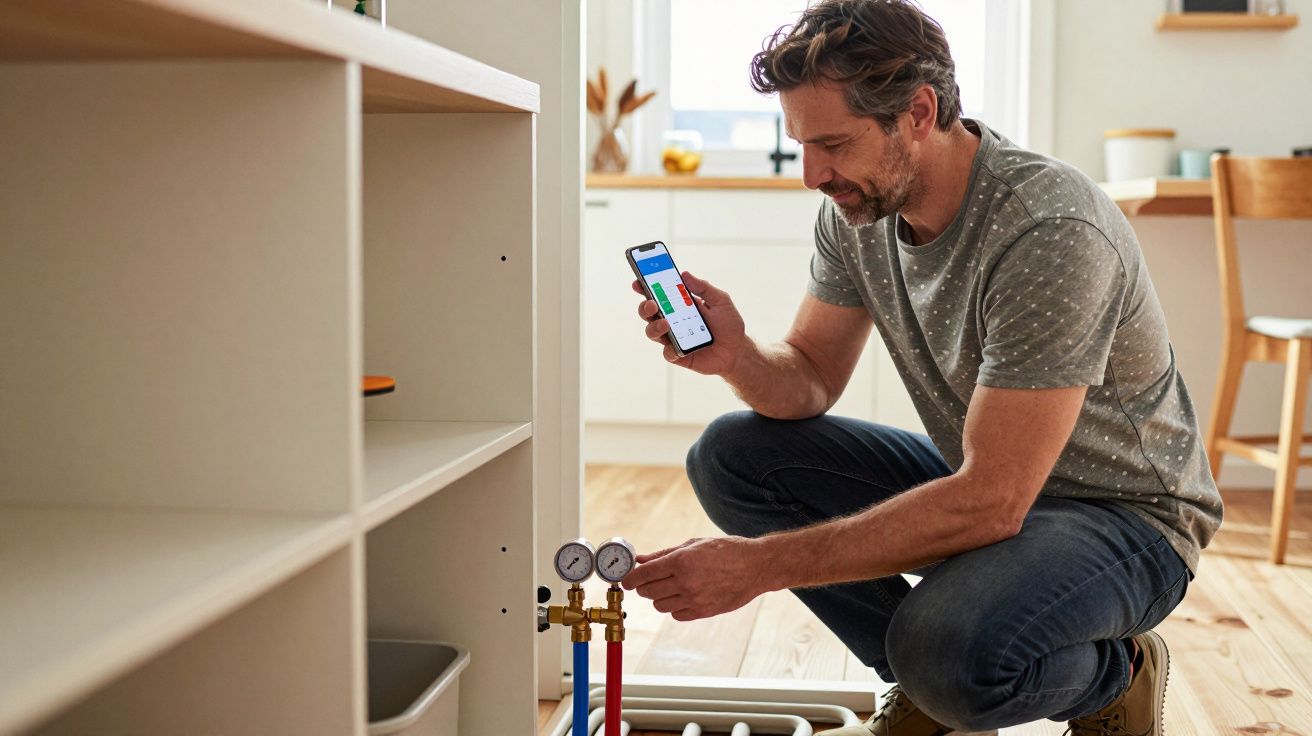
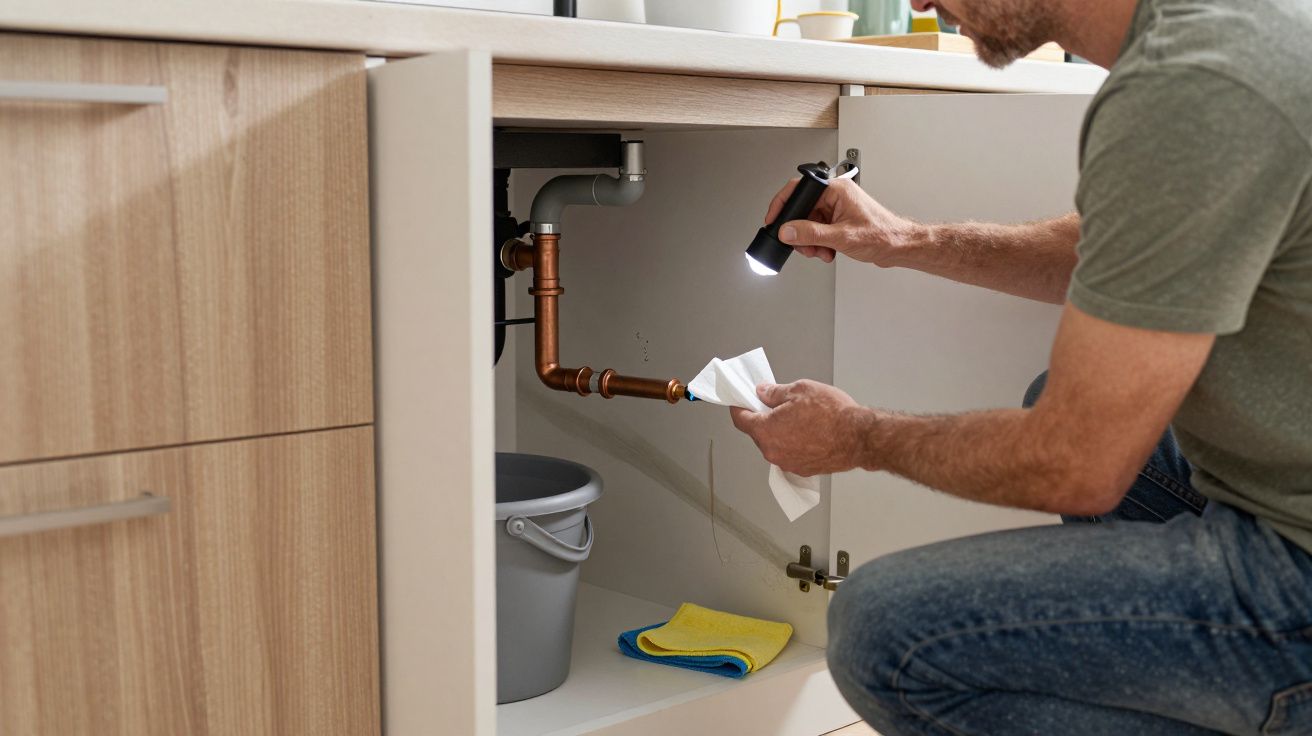
Under sinks and behind toilets, you’ll often find isolation valves with a screwdriver slot. They’re meant for maintenance, but they’re also perfect for being left half-closed after someone “just quickly” did a job.
Also check: - The internal stopcock (often under the kitchen sink) - Any visible valves near the cylinder (if you have one) - The shower’s service valves (if fitted)
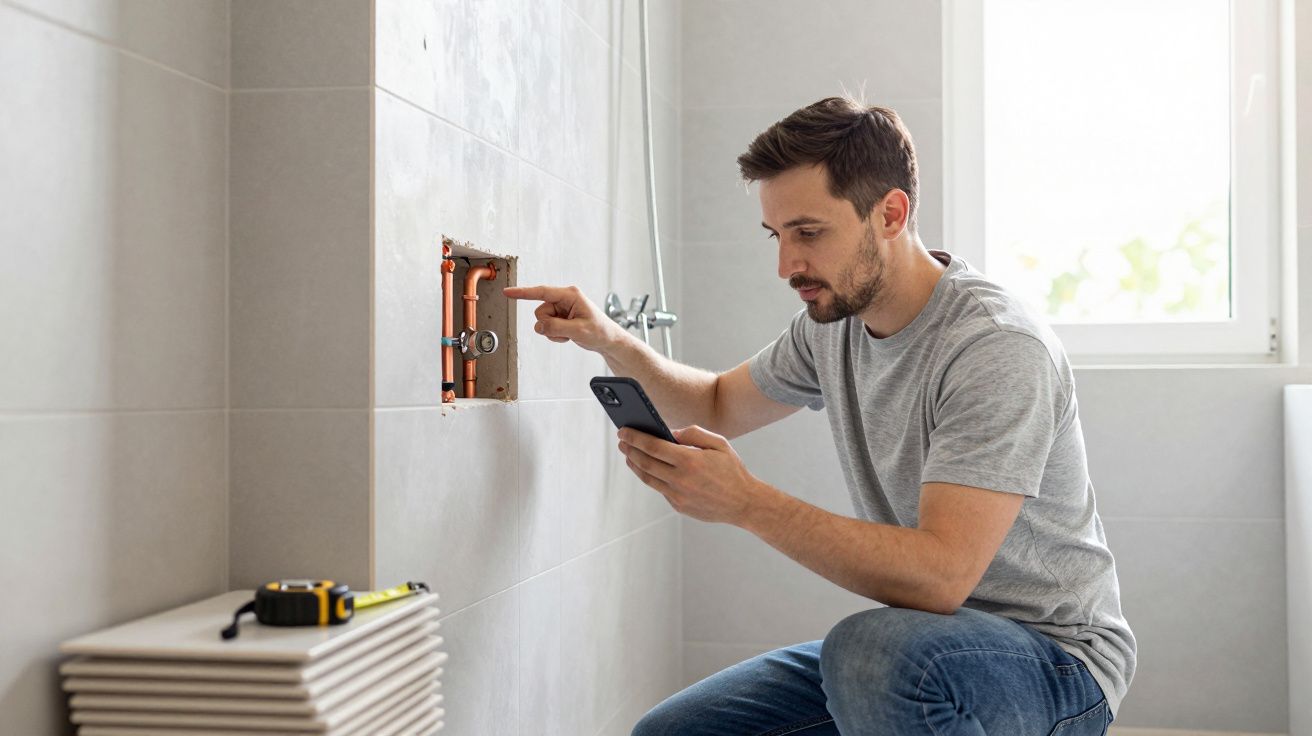
If you’re not sure, take photos before you touch anything so you can return it to how it was.
When it really is low water pressure (and what to do next)
Sometimes the myth happens to be true. Mains pressure can be limited by your area, peak demand times, or an issue with the supply pipe. But even then, you want proof before you buy a solution.
A simple test that’s more useful than “it feels weak”
Do a quick flow-rate check on the kitchen cold tap: time how long it takes to fill a 10-litre bucket.
- 10 litres in 30 seconds = 20 L/min (usually fine)
- 10 litres in 60 seconds = 10 L/min (noticeably limited)
- 10 litres in 90 seconds = ~6–7 L/min (often problematic for powerful showers)
This doesn’t give you pressure in bar, but it gives you a practical number that correlates with your lived experience. It also gives you something concrete to tell a plumber - or your water supplier - instead of “it’s rubbish”.
The supply pipe reality nobody mentions
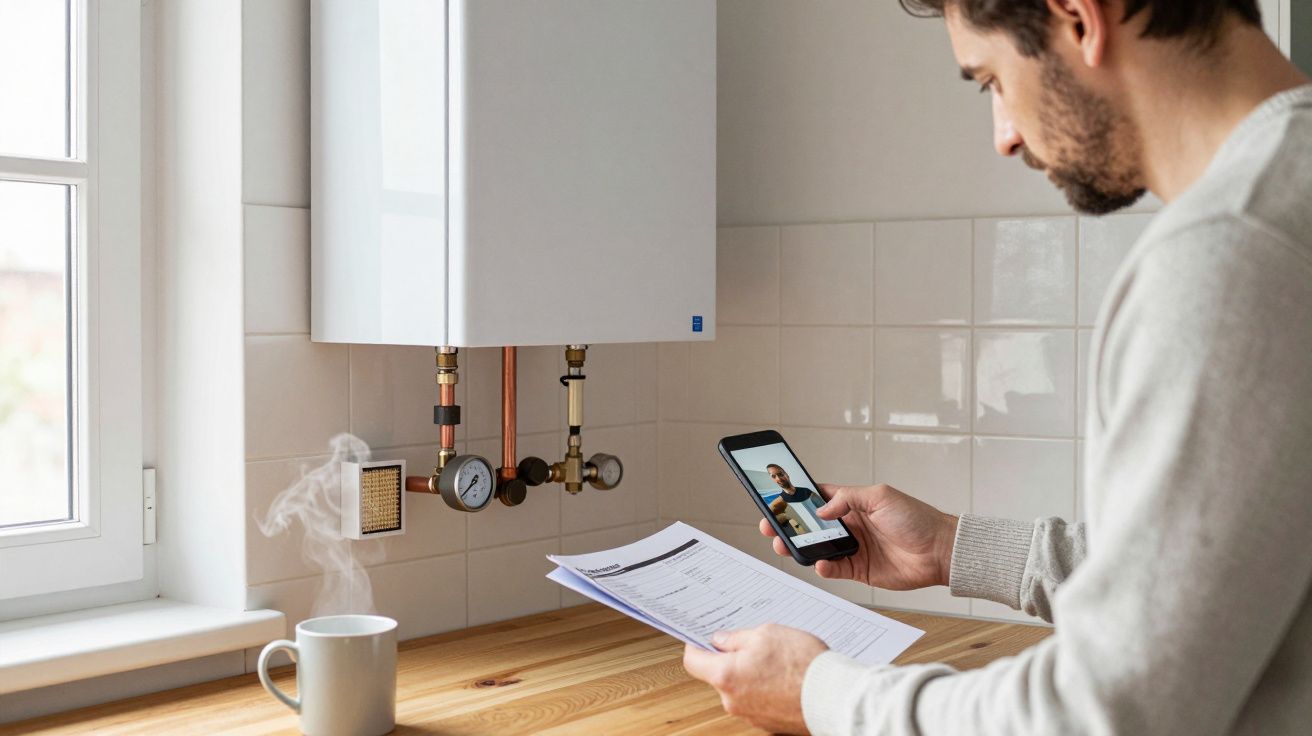
Older properties can have a narrower incoming supply pipe. That can cap your available flow no matter how fancy the shower is. Likewise, a partially blocked stop tap, a failing pressure reducing valve, or debris after street works can choke things at the point where the mains enters the house.
If all cold outlets are consistently weak, that’s the moment to consider a proper investigation. Not a panic purchase. Not a pump that masks a restriction. A calm, boring check of what’s actually happening.
The most expensive mistake: treating symptoms like causes
A pump can make a weak shower feel better - sometimes. It can also be the wrong answer if you’re on a combi (where certain pump setups are inappropriate), if the issue is a clogged filter, or if you’re already limited by the incoming main. Plenty of people spend hundreds to “fix the pressure” and end up with the same weak flow plus a noisy box in the airing cupboard (or, worse, a setup that causes other problems).
The myth keeps you focused on big, dramatic fixes. The real world is usually smaller: a mesh screen full of grit, an aerator packed with chalk, a valve turned the wrong way.
A calmer way to think about it
Instead of asking, “Is my pressure low?”, ask: “Where does the water stop being generous?” Start at the kitchen cold tap and work outwards. Treat it like a map, not a mystery.
You don’t need to become a plumber. You just need to stop letting user misdiagnosis do the driving when you’re already annoyed, already wet, already late.
FAQ:
- Is “low pressure” the same as “low flow”? Not always. Low pressure is the force available; low flow is how much water actually gets through. Restrictions (limescale, filters, cartridges, valves) often cause low flow even when pressure is fine.
- Why is upstairs worse than downstairs? Gravity and pipe runs matter. In some setups, upstairs hot and cold supplies may be from a tank or affected by longer, narrower pipework, making restrictions show up more dramatically.
- Can a shower head really make that much difference? Yes. Some heads are designed to reduce flow, and many clog with limescale. Swapping or descaling a head is one of the cheapest high-impact tests you can do.
- When should I call the water company? If all cold taps are consistently weak and you’ve checked the internal stopcock is fully open, it’s reasonable to ask them to check supply issues - especially if neighbours have the same problem.

Comments (0)
No comments yet. Be the first to comment!
Leave a Comment