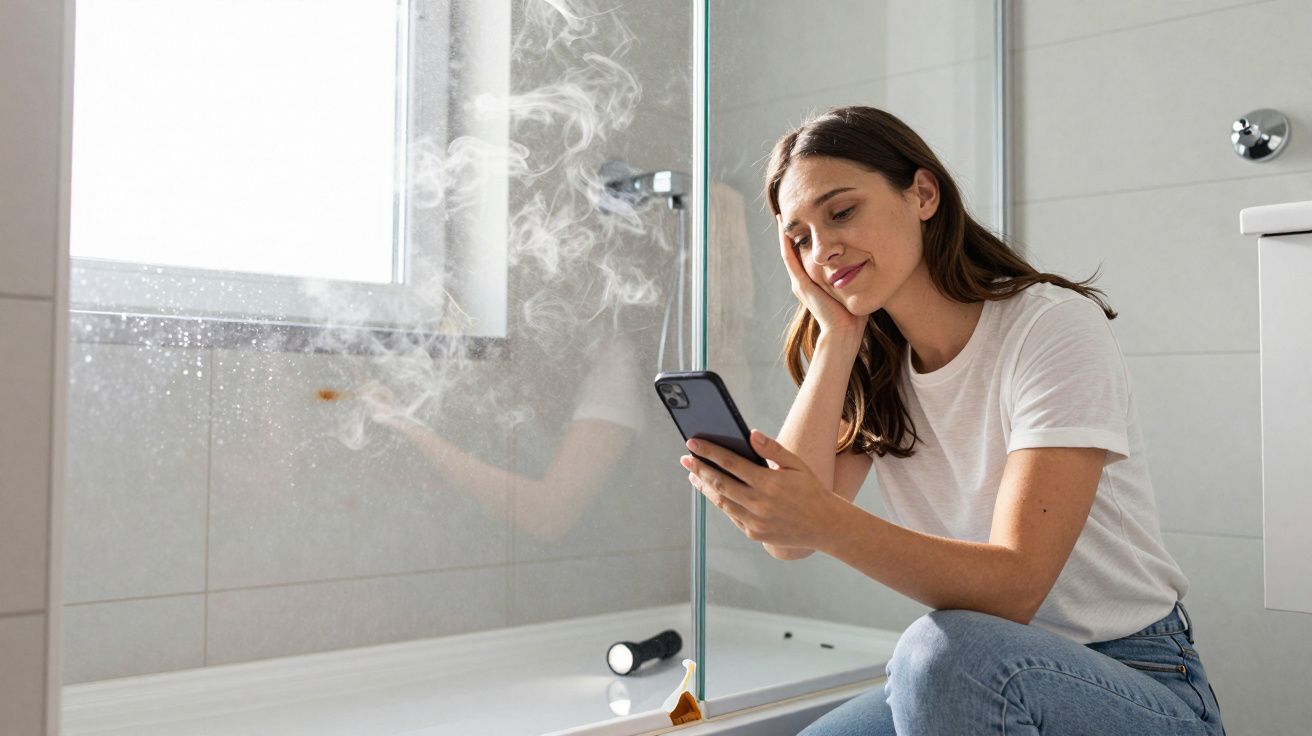
A year after a bathroom refit, the call-outs start: a damp patch that won’t dry, a whiff of mould, the ceiling below turning the colour of weak tea. Most of the time, the root cause is boring rather than dramatic - bathroom plumbing installation done quickly, with small installation errors that don’t show up until the room has lived a few seasons.
It keeps happening because the “upgrade” people choose looks like a surface job: a smarter shower, a sleeker tray, a wall-hung loo. Underneath, you’ve changed the forces in the system - flow rates, temperatures, movement - and the plumbing behaves differently. Water is patient. It waits.
The upgrade that starts it: the “easy” shower swap
If there’s one pattern that repeats in UK bathrooms, it’s this: an old, low-pressure shower gets replaced with a high-pressure mixer or a pumped setup, while the pipework and detailing behind the wall stays more or less the same.
On day one, it feels brilliant. The spray is stronger, the temperature holds, the whole thing looks modern. Then, months later, the grout line darkens, the silicone edge starts to peel, or a downstairs light fitting begins to spot.
The leak often isn’t a spectacular burst. It’s a slow, reliable seep - and the upgrade has simply made it easier for water to find the tiniest gap.
Why it fails later, not immediately
New plumbing work can “pass” a quick test and still be wrong for the way a bathroom is actually used. A five-minute run with the panel off isn’t the same as years of hot-cold cycling, vibration, and daily cleaning.
Three things usually create the delayed failure:
- More pressure and more turbulence. Higher flow rates push harder at joints, valves, and shower outlets. Tiny imperfections that were fine at low pressure become a problem.
- Movement. Trays flex, screens shift, and stud walls breathe. If the plumbing is rigidly fixed to something that moves, the stress migrates to the joint.
- Heat. Hot water expands pipes and fittings. Repeat that expansion thousands of times and weak connections loosen, especially on plastic push-fit that wasn’t installed perfectly.
That’s why the “it was fine for ages” line is so common. The bathroom didn’t suddenly break. It gradually gave up.
The installation errors that show up again and again
1) Relying on silicone as the waterproofing
Silicone is a sealant, not a waterproofing system. It can hide bad falls, poor alignment, and gaps that should never have existed in the first place.
A classic example is a shower tray that isn’t properly bedded. It moves a millimetre when you step in, the silicone stretches, then tears in a place you can’t see. Water doesn’t need a channel; it only needs a repeated opportunity.
What “good” looks like is dull: solid support under the tray, correct falls, and sealing that complements proper construction rather than pretending to be it.
2) Wrong fall on waste pipes (or “it’ll probably drain” thinking)
Shower wastes and bath wastes need consistent fall. Too little, and water sits in the pipe; too much, and the water outruns the solids (less relevant for showers, but the turbulence still matters). Either way, you get slow draining, gurgling, and the temptation to over-tighten things to “fix” it.
Over-tightening a compression fitting on a poorly aligned pipe is one of those quiet mistakes that can hold for months, then start to weep as the pipework settles.
3) Push-fit fittings not fully seated - behind a tiled wall
Push-fit plumbing can be perfectly acceptable in the right places, installed correctly, accessible, and clipped properly. The problem is when it’s used in a wall void with no access panel and no allowance for movement, and the pipe hasn’t been cut square, deburred, and fully inserted.
The fitting may not leak in the first week. Then the hot water cycles start, the pipe creeps slightly, and a micro-gap forms. By the time you notice, the plasterboard has already had a long drink.
4) No proper isolation, so nobody tests properly
Bathrooms get refitted at speed. If isolating valves are missing or jammed in an unreachable corner, thorough testing becomes a pain. People do a quick run, see nothing obvious, and tile over it.
A proper test isn’t mystical. It’s time, access, and watching. If the system can’t be isolated and held under pressure while you check every joint, you’re gambling with a finished wall.
5) Mixing materials without planning for it
Copper into plastic, different brands of fittings, incompatible olives, random adaptors stacked because “it fits”. Individually, each connection might be acceptable. Together, you’ve created a little tower of tolerances.
Add vibration from a pump or the snap of a thermostatic valve opening and closing, and the weakest connection eventually announces itself - usually onto the ceiling below.
The part nobody sees: the wall is a system, not a surface
Modern bathrooms look seamless, which encourages the idea that everything behind them can be treated casually. But once you tank a wall, tile it, and fit expensive brassware, you’ve made access difficult and repairs costly.
That’s why the same failure repeats: the upgrade is chosen for looks and comfort, while the installation is judged by how neat it appears at the end of the day. The leak doesn’t care about neat. It cares about physics.
If you remember one thing, make it this: a beautiful bathroom can still be a badly built wet area. The finish is not the proof.
How to stop it happening in your own refit
If you’re planning a shower upgrade, you don’t need to become a plumber. You just need to insist on a few non-negotiables before anything gets tiled.
- Demand an access plan. Concealed valves and pumps should have a service route. “No access needed” usually means “future you will pay”.
- Specify waterproofing, not just silicone. In wet zones: tanking system, correct detailing at corners, and proper tray/wall junctions.
- Ask what’s changing hydraulically. If you’re increasing pressure/flow, ask what’s being upgraded to match: pipe sizes, clips, valves, waste capacity.
- Insist on clipping and support. Pipes shouldn’t be flapping in voids. Movement is what turns small errors into leaks.
- Get a written test-and-check step. Not a vague promise - a step in the job where everything is run, checked, and left under pressure before closing up.
None of this is glamorous, which is precisely why it matters.
The quiet truth about “later leaks”
Leaks that arrive late are rarely bad luck. They’re usually the bill for a decision made on a Tuesday afternoon: to hide something, to rush something, to treat a wet room like a living room with tiles.
The good news is that bathroom failures are predictable. The same details fail in the same places, for the same reasons. Build and test like water is looking for a way through - because it is.
FAQ:
- Is a stronger shower more likely to leak? Not automatically, but higher flow/pressure can expose weak joints and poor detailing, especially around concealed valves and tray junctions.
- If the silicone looks fine, does that mean there’s no leak? No. Water can track behind tiles or along pipework with no obvious surface signs until damage builds up elsewhere.
- Are push-fit fittings “bad”? They can be fine when installed correctly and kept accessible. They’re risky when hidden, poorly seated, mixed with incompatible parts, or left unsupported in wall voids.
- What’s the earliest warning sign I should take seriously? A persistent damp smell, darkening grout, lifting silicone edges, or a new stain on the ceiling/wall below the bathroom - especially after showers.
- What should I ask my installer before tiling? Where the access is, what waterproofing system is being used, how pipework is supported, and how the system will be tested before the wall is closed.


Comments (0)
No comments yet. Be the first to comment!
Leave a Comment