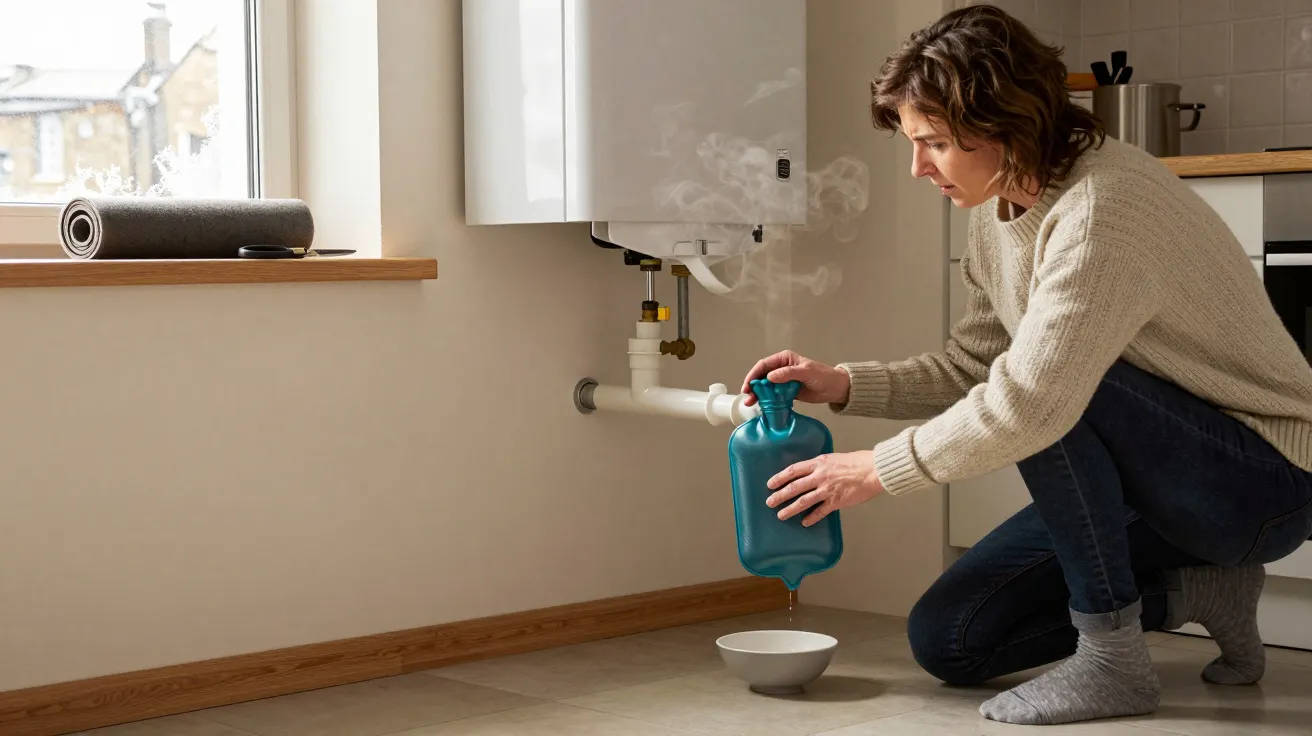
The first sign is usually silence. Your boiler has been running fine, the radiators are warm, and then-somewhere in the background-you hear the fan start, stop, start again, like it can’t quite commit.
In a lot of UK homes, a condensate pipe is the small plastic drain line that carries acidic water away from a modern condensing boiler to an outside waste pipe or gully. When it turns into a frozen condensate pipe during a cold snap, the boiler often locks out in minutes, leaving you without heating and hot water even though nothing “major” has actually broken.
You can have a perfectly serviced system, a new thermostat, decent pressure, and still end up standing in socks on cold tiles, staring at an error code that feels wildly out of proportion to the problem.
The tiny pipe that can take your whole house offline
Condensing boilers don’t just burn gas; they squeeze extra heat out of the flue gases. That efficiency creates condensate-water that has to go somewhere-and the boiler is designed to shut down if it can’t safely drain it.
When the condensate pipe runs outside, it’s exposed. A thin plastic line, a long horizontal run, a cold wind on the wall, and a dip where water sits: that’s often all it takes.
The brutal part is how fast the failure feels. A pump can whine for days. A diverter valve can get sticky over weeks. A frozen condensate pipe can stop everything overnight, and it tends to happen on exactly the mornings you can’t afford it.
Why this fault feels “sudden” (but is usually predictable)
Most people imagine freezing as something that happens to big things: tanks, outdoor taps, gutters. The condensate pipe is smaller, quieter, and easier to forget exists.
But it freezes for very boring reasons:
- The water in it is slow-moving and can pool in low spots.
- The pipe is often 21.5mm plastic and loses heat quickly.
- It’s commonly routed externally because it’s the easiest path during installation.
- The coldest nights coincide with the boiler working hardest, sending more warm condensate into an already chilled pipe.
If your boiler has ever locked out during sub-zero weather and then “magically” worked again after a mild afternoon, that’s not magic. That’s thawing.
The tell-tale clues (before you start blaming the boiler)
Boilers show different fault codes depending on make and model, but the lived experience is strangely similar: no heating, no hot water, a reset that works briefly (or not at all), and a nagging sense that the system is fine… except it isn’t.
A quick, homeowner-level sense check:
- The lockout appeared during freezing temperatures or overnight.
- There’s a visible white or clear plastic pipe from the boiler that goes outside.
- The pipe feels rock-hard cold, or you can see frost on the external section.
- Pressure on the gauge looks normal (so it doesn’t feel like a leak issue).
- You had gurgling from the boiler shortly before it stopped.
None of this replaces a proper diagnosis, but it stops you spiralling into “new boiler” panic when the fix might be much smaller.
What to do when it’s frozen (and what not to do)
The goal is simple: safely thaw the blockage and let the boiler drain again. The danger is turning a small inconvenience into a cracked pipe, a flood, or an electrical hazard.
If you’re dealing with an external frozen section, these are the common “safe-ish” moves people use:
- Warm (not boiling) water poured over the external pipe, starting near the boiler end and moving outward.
- Hot water bottles held against the pipe.
- A hairdryer on a gentle setting, kept moving and away from any dripping water.
What tends to go wrong is impatience. Boiling water can shock and split plastic. Blowtorches and naked flames are a hard no. And if the pipe is boxed in, routed through awkward voids, or frozen internally where you can’t access it, forcing it can create damage you won’t see until it thaws and leaks.
If you’re not confident, call a Gas Safe engineer. It’s not defeat; it’s choosing not to gamble with something that sits next to electrics and combustion.
The real fix: make it harder to freeze next time
Thawing gets you through tonight. Prevention is what stops this becoming your annual winter ritual.
Most of the long-term wins are unglamorous, but they work:
- Insulate the external run with proper weather-rated foam (and tape the joins).
- Shorten the outside section where possible; internal routes freeze far less.
- Increase pipe diameter on external runs (engineers often use larger pipework to reduce freezing risk).
- Remove “dips” and long horizontals so water can’t sit and chill in place.
- Check the termination point (gully or soakaway) isn’t blocked, iced over, or positioned in a wind tunnel spot.
A lot of households only learn where their condensate pipe goes after the first lockout. Once you’ve found it, you can usually see the problem in the routing within two minutes.
A small winter habit that helps more than people admit
There’s a particular kind of British optimism that says, “It’ll probably be fine.” Then the temperature drops, and the boiler does what it was designed to do: shut itself down rather than overflow condensate internally.
Before the first hard freeze, walk the route of the pipe. Look for the exposed section, the uninsulated bend, the bit that runs along an outside wall like it’s trying to prove a point.
You don’t need a full system overhaul. You need to stop a thin, cold pipe from becoming the single point of failure for your entire home.
| Point clé | Détail | Intérêt pour le lecteur |
|---|---|---|
| Pourquoi ça coupe tout | Le boiler se met en sécurité si le condensat ne s’évacue plus | Évite de chercher une “grosse panne” qui n’existe pas |
| Signes typiques | Lockout par gel, reset inefficace, pipe externe glacée | Permet d’identifier vite le bon suspect |
| Prévention simple | Isolation, trajet plus court, bon diamètre, pente correcte | Réduit fortement les pannes lors des nuits froides |
FAQ:
- How do I know if my boiler problem is a frozen condensate pipe? If the lockout happened during freezing weather and you have an external plastic condensate pipe, it’s a prime suspect-especially if the system pressure looks normal.
- Can I pour boiling water on the condensate pipe to thaw it? It’s risky. Boiling water can split plastic pipework; use warm water, hot water bottles, or a hairdryer carefully instead.
- Will resetting the boiler fix a frozen condensate pipe? Sometimes it will work briefly, but it won’t last unless the blockage has thawed and the condensate can drain properly.
- Is insulating the condensate pipe actually worth it? Yes. Insulating the external section is one of the simplest ways to cut down winter lockouts, especially on exposed walls.
- Should I reroute the condensate pipe inside? If practical, internal routes are less likely to freeze. A Gas Safe engineer can advise on compliant options for your property.


Comments (0)
No comments yet. Be the first to comment!
Leave a Comment