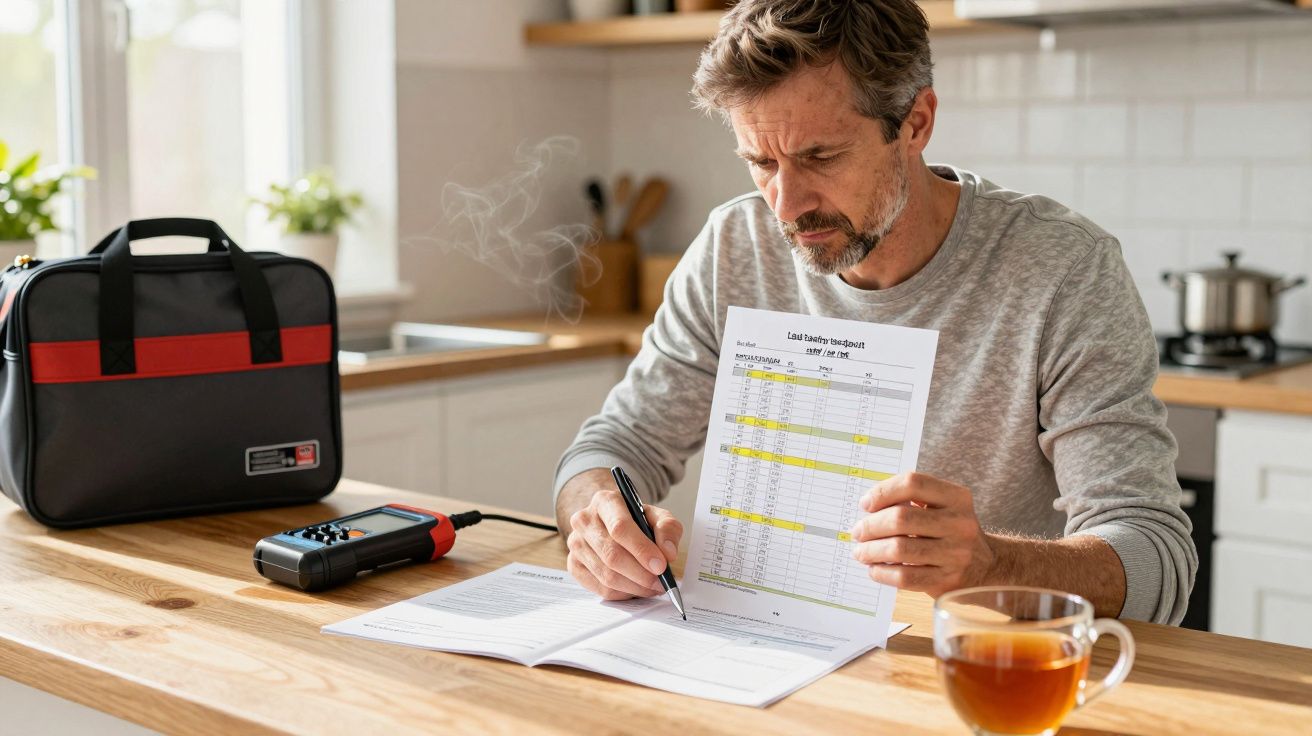
The knock at the door is usually brief, the chat polite, the paperwork easy to ignore. Yet gas safety inspections are one of the few household routines that genuinely support carbon monoxide prevention, because they’re designed to catch problems that don’t smell, don’t announce themselves, and don’t wait for a convenient moment. What most people remember is the engineer’s flue checks and the quick look at the boiler; what protects you after they’ve gone is often one detail on the form.
It’s not glamorous, and it isn’t a new gadget. It’s a line that forces someone to translate a visual check into a clear judgement: is the appliance burning cleanly, venting safely, and drawing air correctly right now-and is that likely to stay true under real use?
The detail that keeps working when the van drives away
In UK gas safety work, the inspection detail with the longest tail is the recorded combustion and flue performance result-often backed by analyser readings and a clear classification (safe, at risk, immediately dangerous). When that’s done properly, it’s more than a snapshot. It becomes a baseline you can compare against next year, and a trigger for action when something starts drifting.
People assume carbon monoxide comes from “a broken boiler”. In practice, CO can rise from small changes: a partially blocked flue, a degraded seal, a new kitchen extractor that alters air pressure, a room that’s been draught-proofed, a bird guard that’s shifted. The combustion test is where those quiet changes show up first.
A boiler can sound normal and still be burning poorly. The analyser doesn’t care about reassurance; it reads what’s in the products of combustion and tells you whether the system is behaving like it should.
What engineers are really trying to prove in that moment
A decent inspection isn’t just “does it turn on”. It’s a chain of proofs: gas rate appropriate, ventilation adequate, flue intact, fumes leaving the property, and no spillage into the room. The combustion analysis and flue assessment pulls those threads together because it checks the outcome of the whole system, not just one component.
Think of it like a health check with a trend line. One reading is useful; two readings a year apart can show a drift that’s easy to miss with the naked eye. That’s where the protection lasts: it gives you evidence, not vibes.
Common situations where this one detail catches trouble early:
- A boiler that’s been “serviced” but has gradually crept out of correct combustion.
- A flue that’s technically connected, but not performing under load.
- A property made more airtight over winter, reducing the air available for safe burning.
- Competing fans (extractors, tumble dryers) pulling air the wrong way and risking spillage.
The paperwork matters because it changes what happens next
Let’s be honest: nobody reads handbooks in a hurry, and most householders don’t know what a “spillage test” is meant to look like. The report is the translation layer between technical checks and real decisions.
A good record doesn’t just say “passed”. It states what was tested, under what conditions, and what the outcome means. If anything is marginal, it should say so plainly-because “almost” is where risk lives.
If you only take one thing from the paperwork, look for:
- Clear confirmation of flue performance/spillage checks where applicable
- Combustion analysis recorded (where the appliance type allows it)
- A classification that matches the findings (and any remedial work listed)
- Notes on ventilation, room-seal integrity, and any limitations of access
If those aren’t there, you don’t necessarily have an unsafe home. You have an unknown, and unknowns don’t help when you’re trying to prevent carbon monoxide.
A quick way to sanity-check your own inspection record
You don’t need to become an engineer to spot whether the key detail was taken seriously. Use this small checklist after any visit, especially if you’re a landlord managing multiple properties or a homeowner who’s just had a new appliance fitted.
Ask yourself:
- Is there a measurable result, not just a tick? Numbers or explicit outcomes beat vague reassurance.
- Is “ventilation/air supply” mentioned? CO risk is often an air problem, not a gas problem.
- Is the flue route and terminal condition described? “Looks fine” is weaker than “tested and confirmed”.
- Are any warnings written in plain language? If something is “At Risk”, it should be impossible to miss.
And if you’re unsure, ask the engineer to walk you through the line item before they leave. Ten calm seconds at the door beats two anxious hours on the internet later.
What to do if the detail flags a problem
When an appliance is labelled “At Risk” or “Immediately Dangerous”, the safest response is usually the simplest: stop using it and follow the engineer’s advice. That sounds obvious, but households often negotiate with inconvenience-especially in winter-and CO does not negotiate back.
If you’re told something is borderline rather than outright unsafe, treat that as information, not comfort. Book the remedial work, keep the record, and consider adding a CO alarm in the relevant room if you don’t already have one. Prevention is layered: good combustion, good ventilation, good flueing, and a detector as the last line.
The small habit that makes next year’s inspection twice as useful
Keep your last record somewhere you can find it. When the next gas safety inspections happen, ask the engineer to compare the new combustion/flue results with the previous ones and to note any drift.
That’s how one inspection detail keeps protecting your home: it turns safety from a one-off event into a trackable pattern. And patterns are what catch trouble early-long after the tools are packed away.
FAQ:
- Do all appliances get combustion analyser readings? Not always. Some appliance types and situations limit what can be measured, but the engineer should still record the relevant safety checks and explain any limitations.
- Is a carbon monoxide alarm a substitute for inspections? No. A CO alarm is a backstop, not a maintenance plan; inspections aim to prevent CO being produced or entering the home in the first place.
- What’s the biggest homeowner mistake after an inspection? Filing the paperwork and forgetting it exists. The value rises when you compare results year to year and act on early warnings.
- If my boiler “passed”, can CO still be a risk later? Yes. Conditions can change-blocked flues, altered ventilation, or new extractors can affect safe operation-so trend and context matter.
- What should I ask the engineer before they leave? Ask what was measured, what the results mean in plain English, and whether anything is marginal or worth monitoring before the next visit.



Comments (0)
No comments yet. Be the first to comment!
Leave a Comment