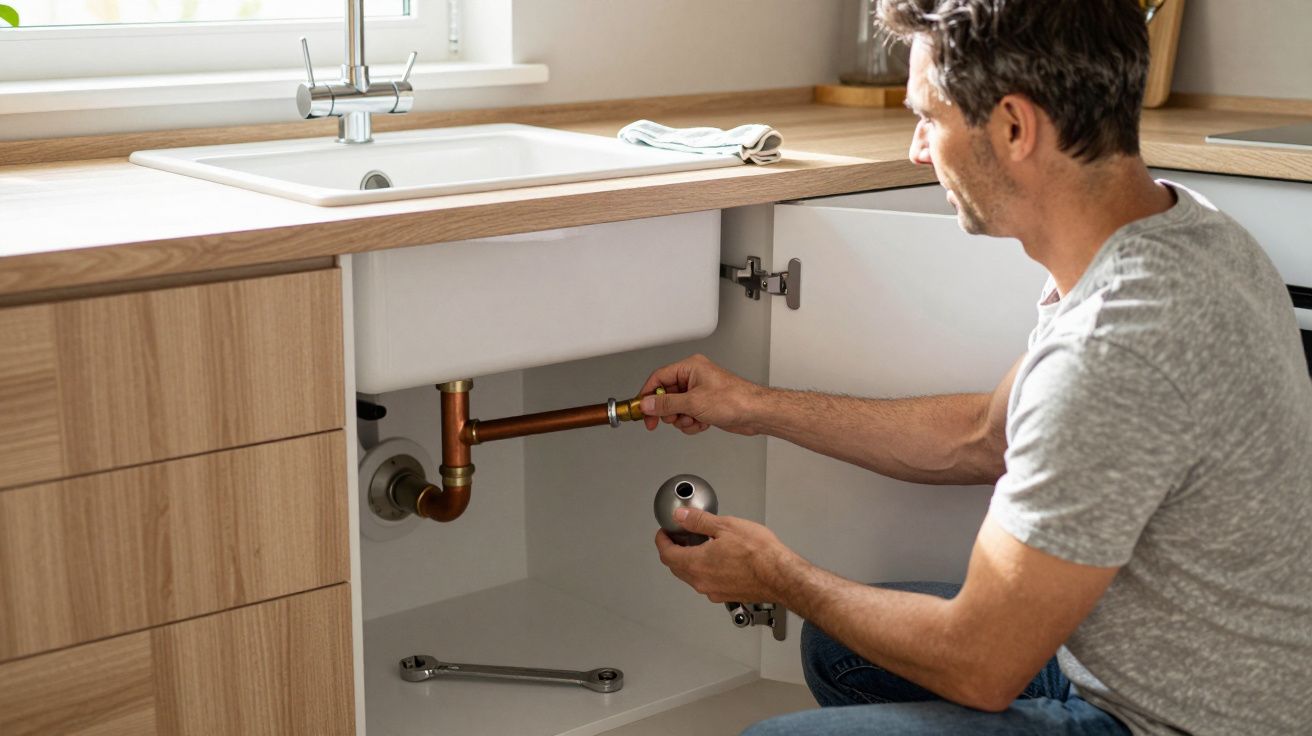
The first time I noticed water hammer noise, it sounded like someone thumped the wall right after I turned the kitchen tap off. It’s easy to laugh it off as “old pipes”, but it’s often a sign of pipework stress building up from pressure changes inside your system. Left to repeat day after day, that stress can loosen joints, fatigue fittings, and turn a nuisance into a leak you only spot when the ceiling stains.
Most of us only pay attention when it’s loud. The trick is to treat that bang as a message: something is stopping water too abruptly, and the energy has to go somewhere.
The noise that isn’t “just a noise”
Water hammer is a pressure surge. When flowing water is forced to stop quickly-because a tap is snapped shut, a washing machine valve closes, or a toilet fills-momentum turns into a shockwave that slams through the pipework.
That’s why it’s so distinctive: a sharp bang, sometimes followed by a rattly chatter. It can happen behind walls, under floors, or up in the loft, and it often seems worse at night when the house is quiet.
What it can sound (and feel) like
- A single bang right as you shut a tap
- Rapid knocking when an appliance fills (washing machine/dishwasher)
- A shudder you can feel through a tap or exposed pipe
- Pipes that rattle for a few seconds after the flow stops
If you can predict it-“it always happens when the washing machine takes in water”-you’re already halfway to diagnosing it.
Why pressure trouble shows up now
In plain terms: the faster the stop, the bigger the jolt. Modern appliances often use quick-closing solenoid valves, and many homes now run higher incoming mains pressure than the pipework was originally designed to handle. Add in aging pipe clips, long straight runs, or a bit of trapped air, and the bang gets louder.
The risk isn’t that your house explodes overnight. It’s the cumulative effect: repeated pipework stress can:
- loosen compression fittings over time
- wear out tap cartridges and valve seals
- cause pipe clips to fail, letting pipes move and rub
- expose weak points in older soldered joints
A small seep under a floorboard rarely announces itself politely.
A quick check you can do in five minutes
You’re not aiming for a perfect diagnosis-just narrowing down what’s triggering the surge.
- Trigger the noise on purpose. Turn a tap on fully, then shut it quickly. Try hot and cold.
- Listen for location. Is it near the tap, or somewhere else (loft, airing cupboard, under the sink)?
- Test appliances. Run a washing machine fill cycle, flush toilets, and listen during refill.
- Look for movement. Check any visible pipework: does it jump or vibrate when you shut off water?
- Note the pattern. Only on cold? Only upstairs? Only first thing in the morning?
If the noise is strongest on cold taps, that can point to mains-pressure behaviour rather than a boiler issue, but patterns matter more than guesses.
The fixes that usually work (and the ones that don’t)
There’s a temptation to “tighten a bit of pipe” and hope for the best. Sometimes that works, but water hammer is often about controlling the pressure surge, not just silencing the rattle.
Start with the simple stuff
- Secure loose pipework. Add or replace pipe clips where pipes are accessible (under sinks, in cupboards). Pipes should be supported, not pinched.
- Check isolation valves. Partially closed valves can create turbulence and worsen noise. Make sure they’re either properly open or intentionally regulated.
- Avoid snap-shutting taps. If it’s a mixer with a worn cartridge, it can shut abruptly and trigger hammer.
These steps reduce movement, but they don’t always reduce the surge itself.
When you need to deal with the surge
If the bang is tied to a washing machine, dishwasher, or fast-closing valve, a water hammer arrestor (shock absorber) is often the neatest solution. It’s designed to cushion the pressure spike rather than letting it slam through the line.
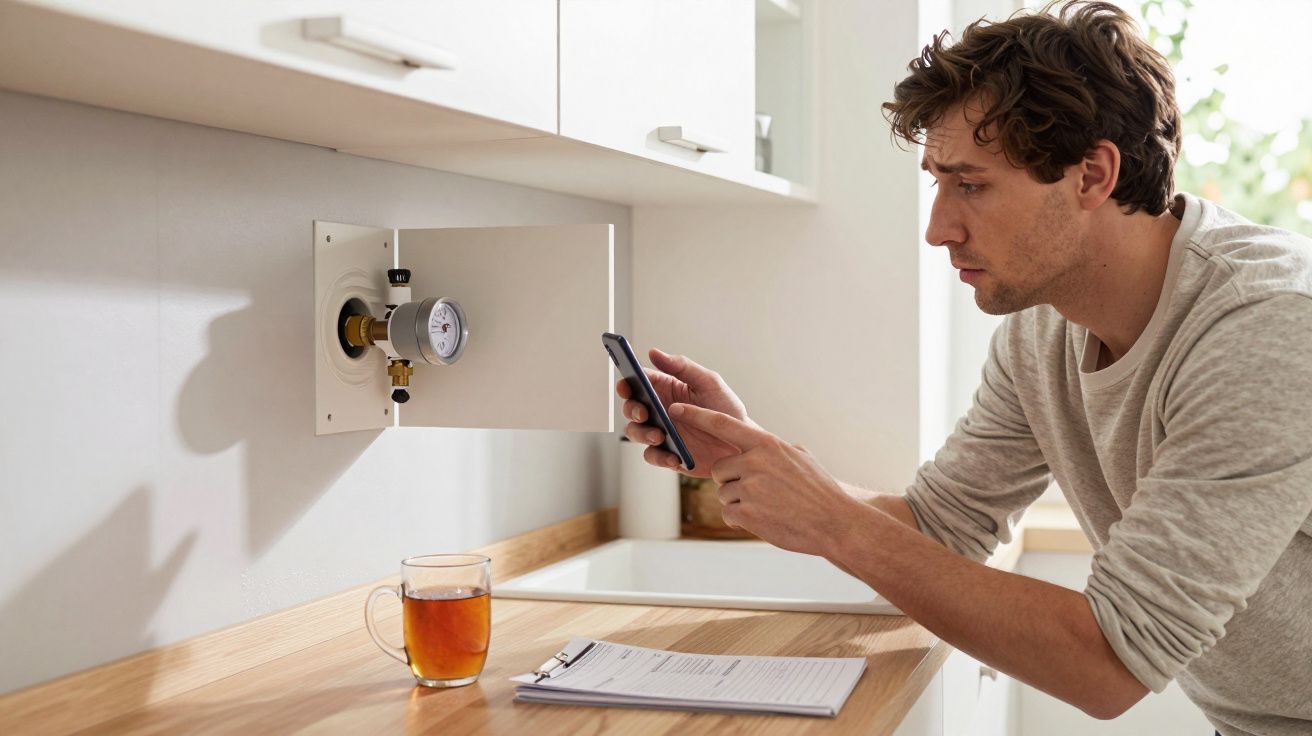
If the issue is house-wide-multiple outlets, multiple floors-look at mains pressure control. A plumber may suggest a pressure-reducing valve (PRV) or checking for an existing PRV that’s failed or incorrectly set.
When to treat it as urgent
A single bang now and then can be annoying but not catastrophic. The line you don’t want to cross is: noise plus evidence.
Watch for:
- damp patches, mouldy smells, or unexplained floor/ceiling marks
- a new whistling, hissing, or constant vibration in pipes
- water pressure that suddenly changes (strong then weak)
- banging that becomes frequent, violent, or spreads to more outlets
If you see staining or smell damp, don’t wait for “a convenient weekend”. Pressure events can turn a marginal joint into an active leak surprisingly quickly.
The “do I need a plumber?” rule of thumb
If you can reach the pipework and it’s clearly loose, clipping and cushioning may solve it. If the noise is inside walls, triggered by appliances, or appears across the whole house, it’s usually faster and cheaper in the long run to get it assessed properly-especially if pipework stress has been happening for months.
A good visit isn’t just “making it quiet”. It’s confirming the pressure is sensible, the pipe runs are supported, and the system has a way to absorb sudden stops.
FAQ:
- Can water hammer noise damage my boiler? It’s more commonly a pipework and valve issue than a boiler failure, but the same pressure behaviour can stress valves and fittings around the system. If it’s happening on hot outlets or near the cylinder/boiler pipework, get it checked.
- Is it dangerous to ignore it? Not immediately, but repeated pipework stress increases the odds of leaks and joint failures. Treat it as an early warning rather than an emergency alarm.
- Will bleeding radiators help? Usually no. Water hammer is about moving water in supply pipes and sudden shut-off, not trapped air in radiators-though some systems can be noisy for multiple reasons.
- Do water hammer arrestors always work? Often, especially for appliance-related banging. If your mains pressure is very high or pipework is poorly supported, you may need a combination of pressure control and securing pipes.




Comments (0)
No comments yet. Be the first to comment!
Leave a Comment