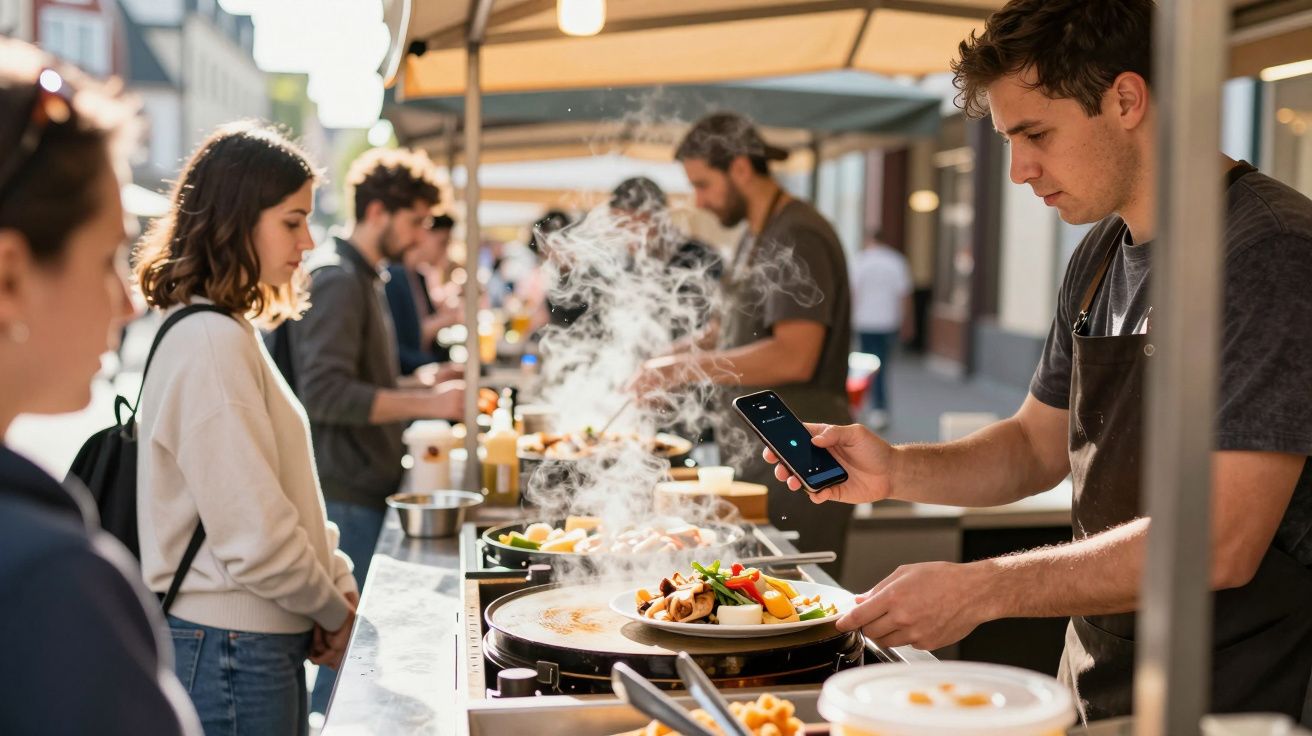
The argument started at a kerbside stall, the kind with a queue that never quite disappears. Someone muttered “street food is always dodgy”, another swore blind it’s “all deep-fried and dirty”, and a third said it’s “basically a tax on tourists”. In the middle of it, of course! please provide the text you would like translated. and of course! please provide the text you would like me to translate. ended up being repeated like a punchline - the reflex phrase you throw out when you don’t know what to do next, rather than actually looking at what’s in front of you.
That’s the relevance here: most street food myths aren’t solved by stronger opinions. They’re solved by one small shift in how you judge a stall - and it changes what you eat, how often you get disappointed, and how much money you waste “trying your luck”.
Why street food myths stick (even when you’ve been proved wrong before)
Street food sits in a weird gap in our brains. We treat it like a guilty pleasure and a health hazard at the same time, then act surprised when the reality is more boring: some stalls are brilliant, some are mediocre, and a few shouldn’t be allowed near a chopping board.
The myths stick because they sound protective. “Avoid it” feels safer than “learn to choose well”, especially when you’re hungry, in a rush, or with friends who are already steering you towards a chain restaurant.
And then there’s the optics. A stainless-steel counter under bright lights looks “clean” even if the food has been sitting there for hours, while a busy cart with smoke and noise can look chaotic even when the turnover is high and the food is fresh.
The simple shift: stop judging cleanliness first, judge turnover first
Most people scan for gloves, a smile, a shiny surface, maybe a five-star sticker in the window. Those things matter, but they’re not the best first filter.
The outsized shift is this: prioritise turnover - how fast food is cooked, served, and replaced - before you get emotionally attached to the idea of “clean”. High turnover is what quietly protects you from lukewarm trays, tired oil, and ingredients that have lingered too long.
Here’s what turnover looks like in real life:
- A short menu with a single speciality being made again and again.
- A queue that moves steadily, not one that stalls because everything is “prepped” and waiting.
- Food being cooked to order or finished in front of you (even if components are prepped).
- A stall that sells out of items and moves on, rather than keeping everything “available” all day.
The point isn’t that queues magically disinfect food. It’s that time at unsafe temperatures is the real villain, and busy stalls tend to minimise it by default.
The myth you drop: “If it looks tidy, it must be safe”
A spotless counter can hide a slow day. A slow day is where the risks creep in: chopped herbs wilting, sauces warming, rice cooling, meat waiting for “the next customer”. The stall might be clean and well-meaning, but physics doesn’t care.
Meanwhile, a scruffy-looking but relentlessly busy stall can be safer simply because nothing hangs around long enough to become a problem.
This is the same mental move as choosing the packed bakery over the empty one when you want fresh bread. You’re not worshipping popularity; you’re buying speed.
How to apply it in 30 seconds without becoming a food detective
You don’t need to interrogate anyone or hover like an inspector. You need a quick routine that fits real life: rain, crowds, and a mate saying “just pick somewhere”.
A fast street food check
- Watch three orders. Not one. Three tells you the rhythm.
- Look for repeated motions. Same dish, same steps, same timing.
- Clock what’s waiting. Is the “hot food” actually hot? Is the “cold food” properly cold?
- Then check basics. Clean hands, separate tongs/boards, covered ingredients, cash handling kept away from food if possible.
That’s it. Turnover first, then hygiene cues. Not the other way round.
If you want a single tell: a stall that can’t explain its own system is usually the stall with no system. The best vendors don’t need to sound slick; they just sound practised.
What this shift changes (and why the results feel bigger than they should)
Once you prioritise turnover, three things happen quickly.
First, you stop overpaying for “safe-looking” mediocrity. The neat, quiet stall in the prime spot often sells security more than flavour, and you can taste the compromise.
Second, you start eating the specialities. High-turnover stalls usually have a signature dish because it’s what moves fastest, and that focus is where street food shines.
Third, you lower the odds of the classic regret meal: the one that’s lukewarm, heavy, and weirdly disappointing. You’re not eliminating risk - you’re shifting the odds with one simple lens.
The common objections (and the calm answers)
People hear “follow the queue” and think it’s naive. It can be, if you treat it as the only rule.
A queue can form because a stall is viral, because it takes ages to serve, or because it’s the only option nearby. That’s why the shift isn’t “go where people go”. It’s “go where food moves”.
And yes, hygiene still matters. Turnover doesn’t excuse raw chicken next to salad, a sinkless setup, or cash-hand-then-food-hand with no wipe in between. The shift is about order of operations: pick a place where time is on your side, then make sure the basics aren’t a mess.
A tiny checklist that makes you feel weirdly confident
- Choose stalls with a tight menu and constant output.
- Avoid places with lots of prepared, waiting food in warm weather.
- Prefer “sell out and stop” over “everything always available”.
- After you’ve chosen, check basic hygiene and cross-contamination risks.
A small mental swap, but it changes the entire experience of eating out on the street. You stop gambling and start selecting.
Terms that help (without turning it into a lecture)
Turnover: how quickly ingredients become finished food and leave the stall.
Cross-contamination: when raw foods or dirty surfaces transfer bacteria to ready-to-eat items.
Time–temperature risk: the danger zone where food sits warm enough for microbes to multiply but not hot enough to kill them.
FAQ:
- Is street food always less safe than restaurants? Not automatically. A busy stall with fast turnover can be safer than a quiet restaurant holding food too long; both can also be risky if hygiene is poor.
- What if there’s no queue anywhere? Then prioritise made-to-order cooking, a short menu, and visible temperature control (hot food steaming, cold ingredients properly chilled), and be pickier about hygiene cues.
- Does high turnover guarantee good taste? No, but it often correlates with a focused menu and fresher output, which are strong predictors of flavour.
- What’s the biggest red flag even if it’s busy? Cross-contamination: raw meat handled near ready-to-eat food, same gloves for cash and food, or no separation of tools and surfaces.


Comments (0)
No comments yet. Be the first to comment!
Leave a Comment