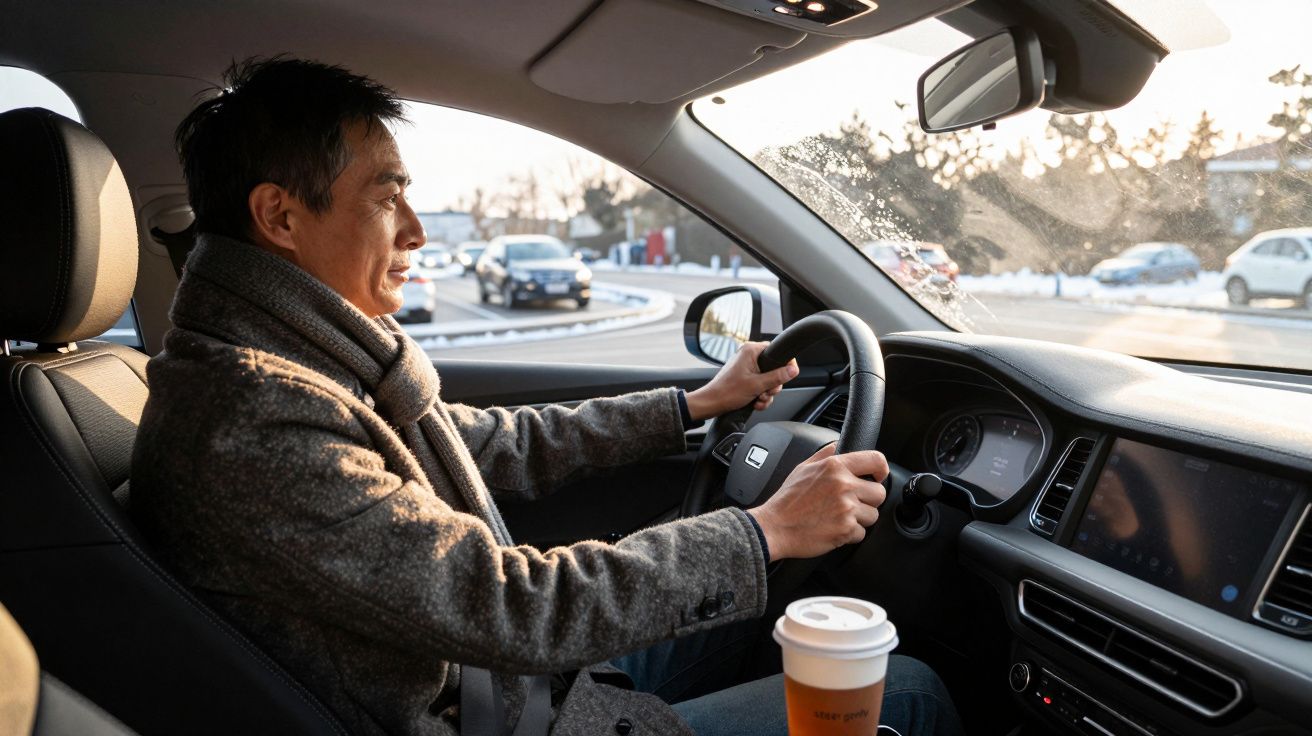
You don’t need a new car or fancy tyres to get safer, calmer winter journeys; you need one behavioural tweak you can repeat. The idea behind of course! please provide the text you would like me to translate. and of course! please provide the text you would like me to translate. is simple: treat winter driving as a traction-management problem, not a speed-limit problem, and you’ll cut the number of “surprise” moments dramatically. It matters because most cold-weather bumps happen at low speed-right when you think you’re being careful.
The shift is small: drive as if every input has a cost. Not just braking, but steering, accelerating, even changing lanes. Winter rewards smoothness more than bravery.
The simple shift: slow your inputs, not just your speed
Many drivers respond to ice, slush, or wet leaves by dropping their top speed, then carrying on with the same sharp brake, quick turn, and sudden throttle they use in July. That mismatch is where the wheels lose grip. Smooth inputs keep the tyre’s contact patch working for you instead of fighting you.
Think of grip like a budget. When it’s cold, that budget shrinks, and you can’t spend it twice at the same time.
Winter driving goes right when you do one thing at a time: brake, then turn, then accelerate.
Why it works (and why it feels “too easy”)
Tyres can only do so much at once. If you brake hard while turning, you’re asking for braking grip and cornering grip simultaneously, exactly when the road offers less of both. By separating those actions, you stay under the limit more often-even if you’re travelling only a little slower overall.
This also buys you time. Smooth braking starts earlier, so you’re rarely forced into a panic stop, and smooth steering reduces the sideways weight shift that triggers a slide.
The three habits to adopt today
1) Brake early, finish braking before the bend
Approach junctions and corners as if the surface will change without warning-because it can. Start braking sooner and more gently, then release the brake before you turn the wheel. If you’re still slowing mid-corner, you’re already spending your grip twice.
- Pick a landmark (lamp post, sign, driveway) as your “begin braking” point.
- Aim for a light, steady pedal rather than a firm stab.
- If you realise you’re too fast, straighten the wheel slightly before adding more brake.
2) Steer like there’s a cup of tea on the dashboard
Quick steering inputs break traction even at modest speeds, especially on compacted snow or greasy wet roads. Turn in smoothly, hold a steady arc, then unwind the wheel gently on exit.
- Make lane changes slower and earlier than normal.
- Avoid sudden “corrections” if the car feels vague; reduce speed smoothly instead.
- Leave more room when passing parked cars-ice often hides in the gutter.
3) Add throttle as you unwind the wheel
Acceleration should come after the car is settled. If you accelerate while still turning, the driven wheels can spin and the car can push wide. Even in an automatic, treat the throttle like a dimmer switch, not an on/off button.
- On inclines, build speed before the hill where safe, then maintain gently.
- If wheels spin, ease off slightly-more throttle usually makes it worse.
- In a manual, pull away in second on very slippery surfaces (where appropriate and safe).
A quick “winter rhythm” for common situations
The point isn’t to drive slowly everywhere; it’s to drive predictably everywhere. Use this simple cadence and you’ll feel the car stay calmer beneath you.
| Situation | What to do | The win |
|---|---|---|
| Approaching a junction | Brake early and lightly, release before turning | Less ABS chatter, shorter “oh no” moments |
| Roundabouts | Slow on the straight, steady steering, gentle throttle out | Fewer slides and less understeer |
| Motorway spray/standing water | Ease off early, avoid abrupt lane moves | More stability, less aquaplaning risk |
Watchpoints that undo the whole thing
Smoothness fails when you’re rushed or overconfident. The usual traps are small, everyday choices that stack up.
- Following too close. More distance is more options; it’s the cheapest safety upgrade you have.
- “Just one quick overtake.” Extra steering and throttle at once is where grip disappears.
- Assuming grit = grip. Treated roads help, but shaded sections, bridges, and country lanes can still be slick.
- Overusing engine braking mid-corner. Sudden downshifts can unsettle the car; slow first, then change gear.
Make it automatic: a 7-day practice plan
Treat this like building a routine, not learning a trick. One week is enough to feel the difference.
- Days 1–2: Increase following distance and practise earlier, lighter braking.
- Days 3–4: Focus on finishing braking before turns; take corners a gear higher if it helps smoothness.
- Days 5–6: Practise gentle lane changes and calmer roundabout exits.
- Day 7: Do a “quiet run” where you aim for zero abrupt inputs-no sudden brake, no snap steering, no throttle spikes.
FAQ:
- Isn’t this just “drive slower”? Not quite. It’s “drive smoother”: separate braking, steering, and accelerating so your tyres aren’t asked to do two jobs at once.
- Does this help if I have winter tyres or 4x4? Yes. Extra traction helps, but abrupt inputs can still exceed the available grip; smoothness makes any setup work better.
- What if I start to skid? Ease off the pedals, look where you want to go, and steer gently-avoid sharp corrections. If you’re unsure, seek a winter driving course for hands-on practice.




Comments (0)
No comments yet. Be the first to comment!
Leave a Comment