Dripping taps don’t look like an emergency, which is exactly why they’re so good at draining your bank balance. In kitchens, bathrooms, and utility rooms, that steady plink is a form of water waste that adds up quietly while you get on with your day. It matters because it’s one of the few household costs that can run 24/7 without you noticing-until the bill lands.
I first paid attention on a late night when the house was finally still. The boiler clicked off, the fridge hummed, and from the downstairs loo came that soft, repetitive drop into porcelain. It wasn’t dramatic. It was just constant, like a tiny metronome for money leaving the building.
The drip that feels harmless-until you do the maths
A tap that drips once a second doesn’t feel like much. But “not much” is exactly how slow leaks win: they don’t trigger panic, they trigger procrastination. You tell yourself you’ll sort it at the weekend, then the weekend goes, then it becomes background noise.
Even if your water is metered, the cost doesn’t show up as a line item called “I couldn’t be bothered”. It’s folded into “usage”, mixed with showers and laundry, easy to rationalise. If you’re not metered, you might think it doesn’t matter-yet you still pay to heat water, and you still pay as a society for treating and pumping what didn’t need to be used.
Here’s the practical truth: a slow leak is still a leak, and the system doesn’t care whether it came out in a rush or a drip.
What’s usually causing it (and why it keeps getting worse)
Most dripping taps come down to small parts wearing out in very predictable ways. Rubber seals harden, washers deform, ceramic cartridges clog with limescale, and tiny bits of grit score the surfaces that are supposed to seal cleanly. The tap is doing its job-opening, closing, opening, closing-until one day it can’t quite close all the way.
Hard water makes the whole story faster. Limescale builds where it shouldn’t, so you tighten the handle a bit more to “stop it properly”, and that extra force accelerates wear. You can almost feel the cycle: drip → tighten → wear → drip more.
Common culprits to look for:
- A worn washer or O-ring (more common in older pillar taps)
- A failing ceramic cartridge (common in modern mixer taps)
- Limescale or grit on the sealing surfaces (especially in hard-water areas)
- A loose gland nut or worn valve seat (the “it only stops if I turn it really hard” type)
If the drip is coming from the spout, it’s usually a sealing issue. If it’s appearing around the handle or base, it may be a packing or O-ring problem-different fix, same slow drain on your time and money.
A two-minute check that tells you whether it’s costing you
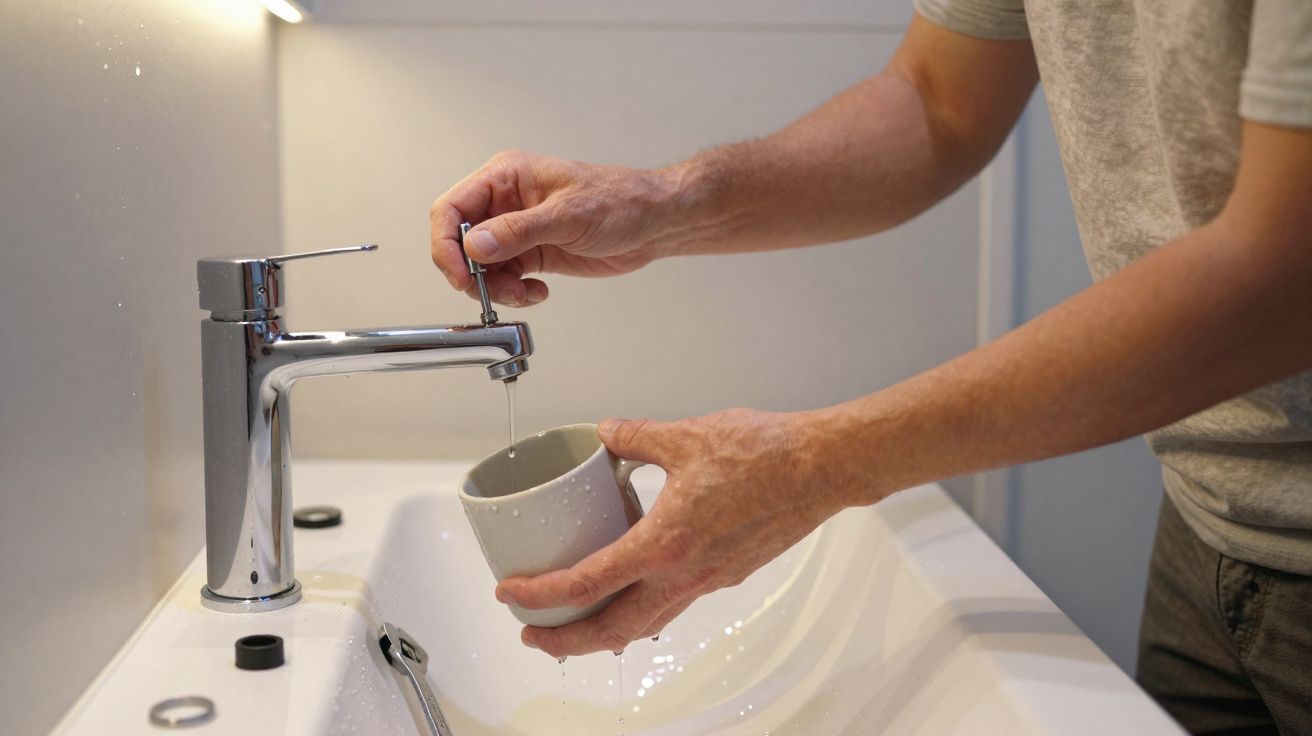
You don’t need specialist kit to get a sense of scale; you need a mug and a bit of honesty. Put a cup under the tap for ten minutes and count roughly how much collects. Then multiply: ten minutes into an hour, hours into a day, days into a month. The point isn’t precision-it’s to break the spell of “it’s basically nothing”.
If you’re metered, the water company’s meter can help too. Turn off everything you can, make sure the washing machine and dishwasher aren’t drawing water, then watch the meter. If the little dial still creeps, something is using water somewhere, and taps are a usual suspect.
A small note that changes behaviour: if the drip speeds up when you turn the tap “off” more firmly, that’s a sign the components are worn, not that you need more force.
“A leak you can hear is already big enough to matter,” a plumber once told me. “People wait for a flood. The bill arrives first.”
Fix it without turning your Saturday into a saga
Some tap repairs are straightforward; others are a fast track to frustration if you don’t know what you’re looking at. The difference is usually the tap type and whether you can identify the replacement part.
If you’re comfortable doing basic DIY, the clean, calm approach is:
- Turn off the water (isolation valves under the sink, or the stopcock).
- Plug the basin (small screws love disappearing).
- Take a photo as you go (your future self will thank you).
- Remove and inspect the washer/O-ring or cartridge, and take the old part to a shop to match it.
- Clean limescale from accessible surfaces before reassembling.
If your tap is a modern mixer and you don’t know the cartridge model, it can become guesswork. If the isolation valves are seized, or you live in a flat where shutting off water affects neighbours, that’s your cue to call a plumber. The cheapest repair is the one that doesn’t become a larger job.
Small habits that help the fix last:
- Don’t overtighten the handle “just to be sure”.
- In hard-water areas, descale aerators and visible parts regularly.
- If the drip returns quickly after a washer change, suspect the valve seat or cartridge, not your technique.
Why this matters beyond your bill
Water waste isn’t only about money; it’s about pressure on infrastructure and the energy used to treat, pump, and (often) heat water that never needed to leave your pipes. A dripping hot tap is especially sneaky: you pay for the water, and you pay to heat it, and you get nothing in return but noise.
It’s easy to feel small next to big environmental problems. But this one is almost insultingly fixable. A tiny fault, a small part, a simple repair-and the drip stops, the background stress drops, and your home feels more in control.
| Small issue | What it tends to cause | Why it matters |
|---|---|---|
| Drip from spout | Worn washer/cartridge, limescale | Ongoing water waste and higher bills |
| Drip from handle/base | O-ring/packing failure | Damage to fittings and surfaces over time |
| Needing to “force” it shut | Accelerated wear | Drip returns sooner, repairs get harder |
FAQ:
- How much can a dripping tap really waste? It varies wildly with drip rate, but the key is time: even a small drip running all day, every day, adds up over weeks and months. Measuring what collects in 10 minutes gives you a quick reality check.
- Is it worth fixing if I’m not on a water meter? Yes. You may still be paying to heat water, and reducing water waste helps reduce demand on local supply and treatment systems.
- Why does the drip get worse after I tighten the tap? Over-tightening can damage washers and sealing surfaces. If it needs force to stop, the internal parts are usually worn or scaled up.
- Can I just replace the whole tap instead? Sometimes that’s the simplest route, especially if parts are hard to identify or the tap is very old. If you’re unsure about isolation valves or pipework, get a plumber in.
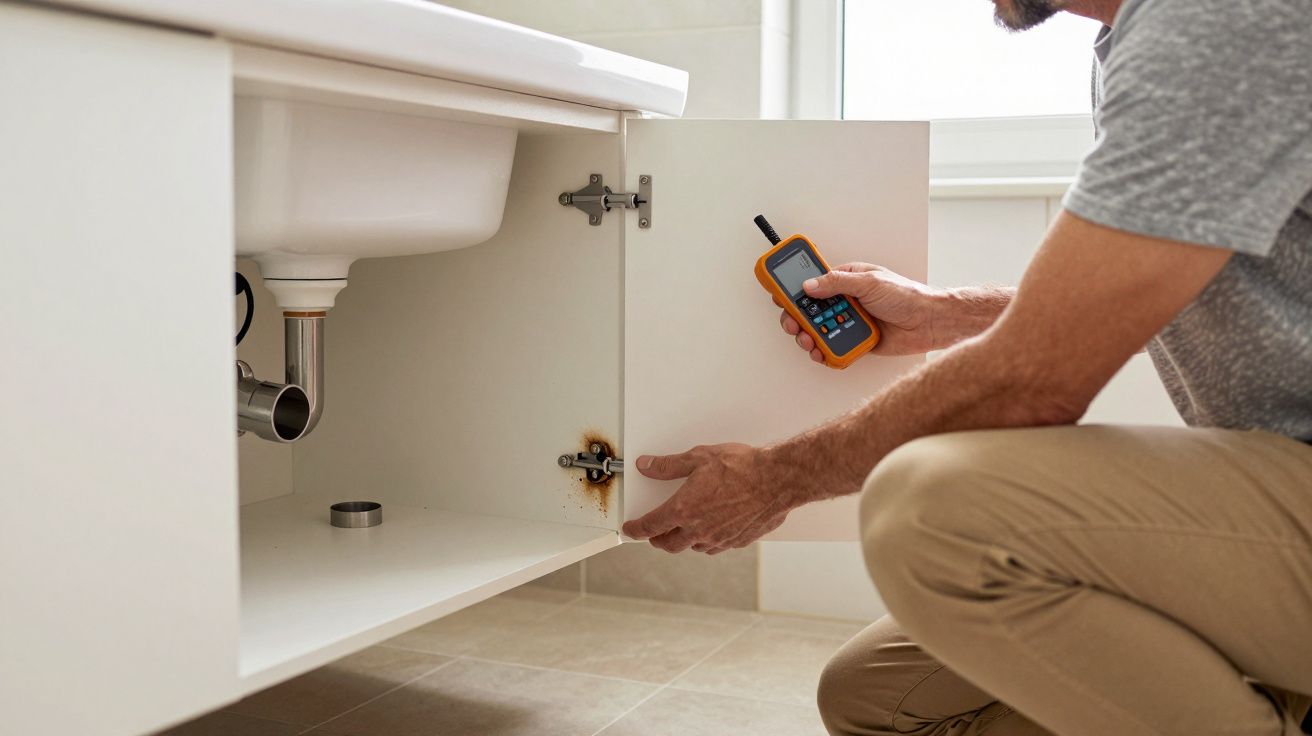
- When should I call a professional immediately? If you can’t isolate the water safely, if there’s water leaking into cabinets or floors, or if the drip is from a hot tap and you suspect a pressure/valve issue.

Comments (0)
No comments yet. Be the first to comment!
Leave a Comment