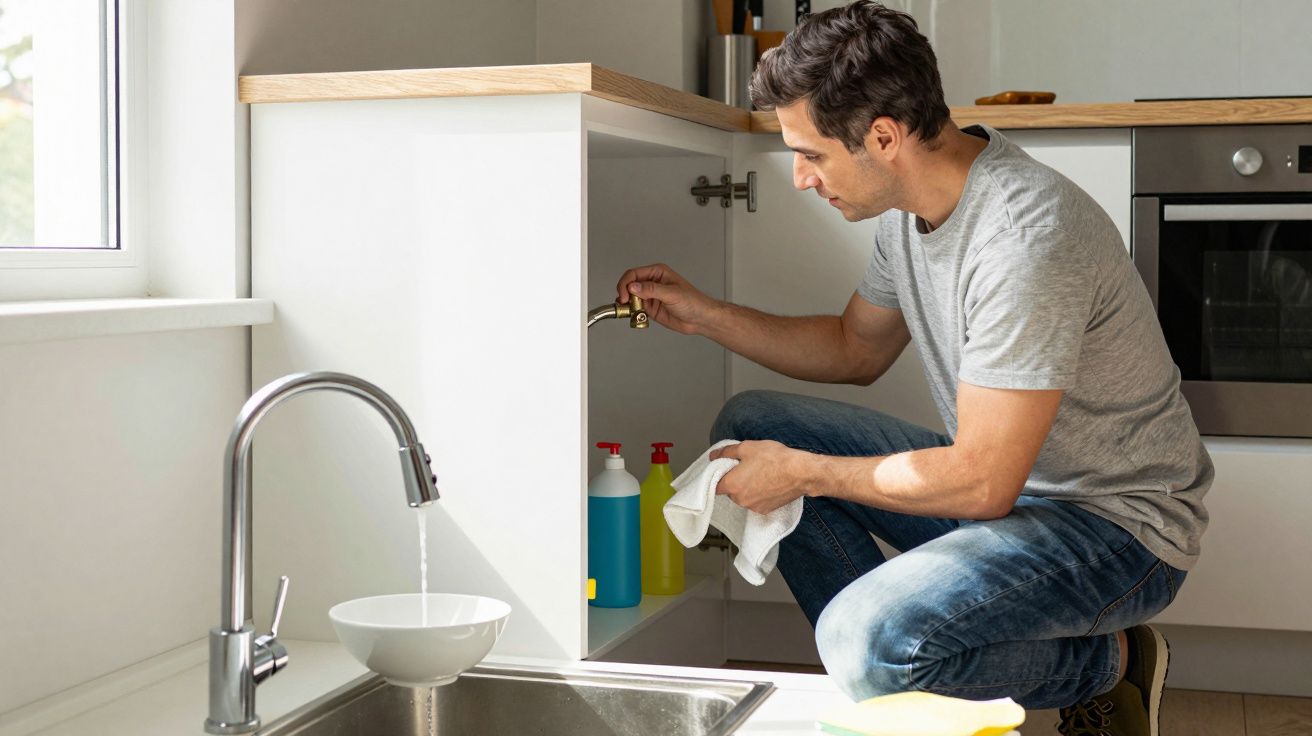
You don’t think about stop valves until something goes wrong. Then, suddenly, water control becomes the most important “feature” in your home: the difference between a quick fix and a panicked scramble while water spreads across the floor. This tiny valve is what lets you isolate a leak, change a tap, or stop a burst pipe from turning into a full‑house problem.
I’ve watched people stand over a dripping washing machine hose, towel in hand, asking the same question with the same urgency: “Where do I turn it off?” The awkward truth is that plenty of homes have a stop valve that’s hard to reach, half‑seized, or simply unknown to the people living there.
The small turn that decides whether it’s a nuisance or a disaster
Most UK homes have a main stop valve (often called the stopcock) on the incoming mains water supply. Turn it one way, and your entire property goes dry. Turn it back, and everything-from the kitchen tap to the toilet cistern-comes back to life.
That’s why it matters. Not because it’s clever, but because it’s decisive. When a pipe starts spraying, seconds matter, and the stop valve is the fastest way to take control without waiting for an emergency plumber or trying to improvise with buckets.
Let’s be honest: nobody practises this on a calm Tuesday. The first time many people touch it is during a crisis, which is exactly when you discover it’s stiff, buried, or snapped.
Where stop valves usually hide (and why they’re often a pain)
The stop valve is typically where the supply pipe enters the house. In older terraces and semis, that often means under the kitchen sink, in a cupboard, or by the front door in a utility space. In flats, it might be in a communal cupboard, under a sink, or near the hot water cylinder depending on how the building is plumbed.
A few common hiding spots:
- Under the kitchen sink, at the back, behind cleaning products
- In a downstairs loo cupboard, low to the floor
- Under the stairs, sometimes behind stored boxes
- In a garage or utility room, near where the pipe comes through the wall
- In a service cupboard (especially in newer builds and flats)
If you find it, don’t just nod and move on. Make it reachable. Clear the clutter, label it, and tell everyone in the home what it is.
The two main types you’ll see - and how they behave in the real world
Stop valves aren’t complicated, but they do differ in how they feel and fail. In UK homes you’ll typically see either an older wheel‑head stopcock or a lever (quarter‑turn) valve.
Wheel‑head stop valves are the classic: a round handle you wind clockwise to close. They can take several turns, and over time they often stiffen or seize. Lever valves are simpler: the handle turns 90 degrees, usually aligned with the pipe when open and across it when closed.
Here’s the practical difference: the lever type tends to be easier in a hurry, while the wheel‑head type is more likely to be the one you can’t budge when you need it most.
If yours is stiff, don’t force it until it snaps. Try gentle back‑and‑forth movement, and consider getting it serviced or replaced before you’re doing that dance with water already running.
How to test yours safely (in five calm minutes)
Pick a moment when you won’t mind the water being off for a few minutes. Then do a simple check that tells you two things: whether it works, and whether it actually controls the whole supply you think it does.
- Find the stop valve and note which way is “off” (usually clockwise for wheel‑head).
- Turn it slowly towards off. Don’t crank it; aim for controlled pressure.
- Open the cold tap at the kitchen sink and see if flow reduces and stops.
- Flush a toilet to confirm the cistern doesn’t refill.
- Turn the valve back on, then let the taps run briefly to clear air.
If the tap keeps running normally even with the valve “off”, you may be turning the wrong valve (many properties have more than one), or the stop valve’s internal washer may have failed. Either way, that’s a fix worth booking-because a valve that doesn’t shut off isn’t a safety device, it’s decor.
Water control beyond the main stop valve: the local shut-offs that save your sanity
The main stop valve is blunt-force water control: everything off. But most day‑to‑day jobs are easier with local isolation valves, the small fittings on the pipes feeding individual appliances and taps. These are what let you change a kitchen tap without killing the whole house.
You’ll commonly see isolation valves on:
- The cold feed to the kitchen tap
- The pipes to a toilet cistern
- Washing machine and dishwasher supplies
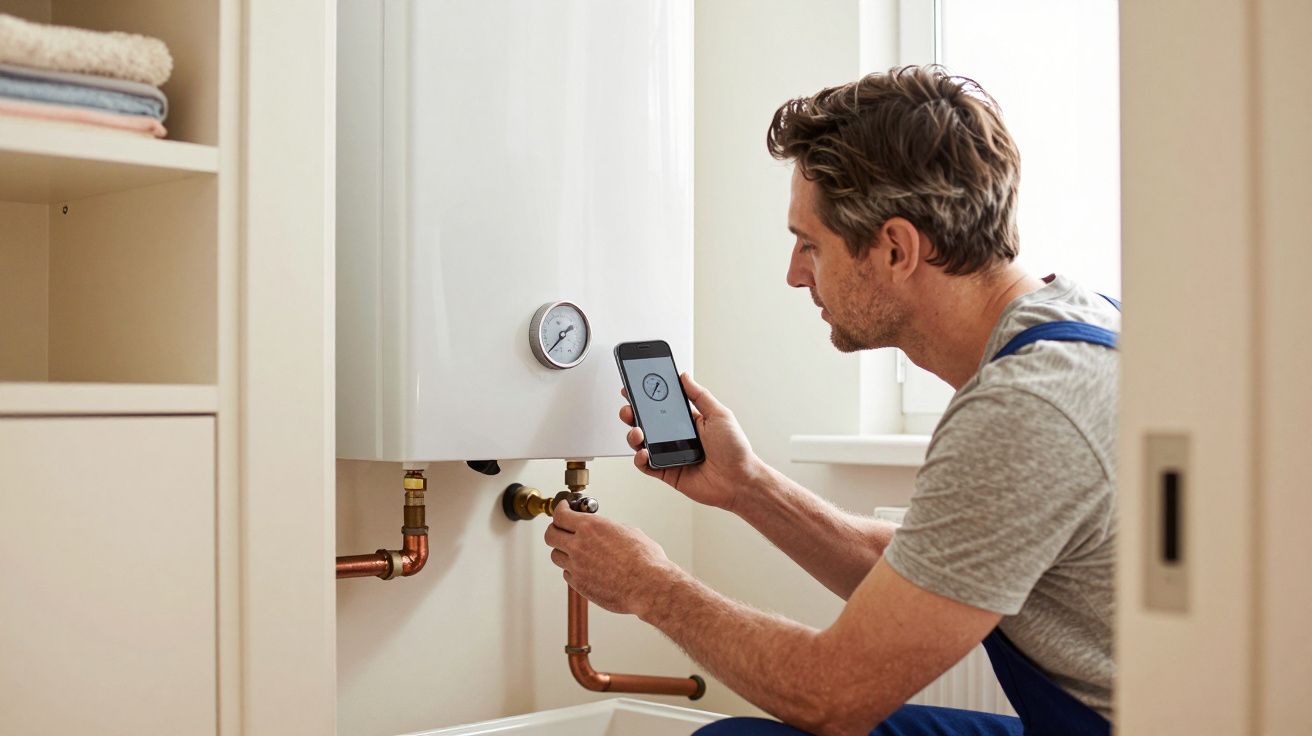
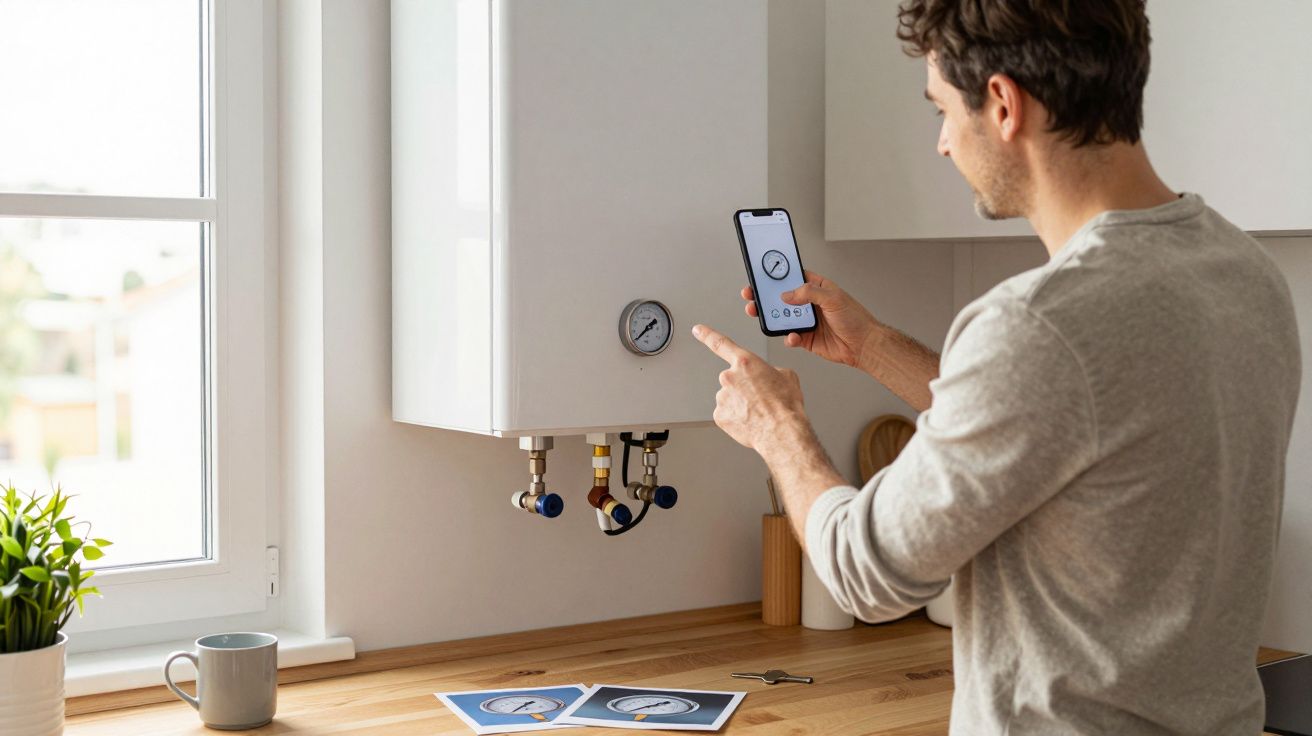
- Sometimes the cold feed to a combi boiler (careful: boilers have their own rules)
If you’re planning any DIY plumbing, learn where these are and test them too. A local valve that doesn’t fully close can turn a “quick swap” into a wet, awkward hour.
The mistakes people make when the water is already pouring
In an emergency, everyone’s brain does the same thing: fixate on the leak itself. The better move is to win the bigger fight first-stop the water supply-then deal with the mess.
Common missteps to avoid:
- Trying to tighten random fittings while the system is still pressurised
- Forcing a seized wheel‑head valve until it shears or leaks from the spindle
- Turning off the wrong thing (like a radiator valve) because it “looks like a tap”
- Forgetting stored water: toilets and pipe runs will still drain after shut-off
If you’ve shut off the stop valve and water is still flowing strongly, you may be seeing water from a tanked system or residual water in pipework. Give it a minute, open a cold tap to relieve pressure, and reassess.
A tiny routine that makes you feel weirdly in charge
It’s not glamorous, but it’s the kind of home knowledge that pays you back.
- Locate the stop valve and make it accessible.
- Turn it off and on once or twice a year to keep it from seizing.
- Label it (and any local isolation valves you rely on).
- If it’s ancient, stiff, or weeping, budget to replace it proactively.
You don’t need to become a plumber. You just need to know where your water control lives, and that it works when you ask it to.
| What to check | What “good” looks like | What to do if it’s not |
|---|---|---|
| Main stop valve operation | Turns smoothly; shuts off cold taps | Don’t force; get it serviced/replaced |
| Local isolation valves | Appliance/tap stops without affecting the house | Replace faulty valves before DIY jobs |
| Access and visibility | Clear, reachable, labelled | Declutter and mark it for everyone |
FAQ:
- How do I know if I’ve found the main stop valve? Turn it slowly towards off, then open the kitchen cold tap. If flow stops and the toilet cistern won’t refill, you’ve likely got the main one.
- Should I turn the stop valve all the way off hard? No. Close it firmly but gently-over-tightening can damage old valves and make them leak at the spindle.
- What if my stop valve is stuck? Don’t force it until it breaks. Try gentle back-and-forth movement; if it won’t shift, book a plumber to replace it before you need it in an emergency.
- Does turning off the stop valve affect hot water too? It stops the cold mains supply, which often means no new hot water can be produced (especially with combi boilers), but some stored hot water may still be available briefly depending on your system.
- Why does water still run for a short time after I shut it off? Residual water in pipework and cisterns can drain after shut-off. Open a cold tap to relieve pressure and wait a moment for flow to die down.



Comments (0)
No comments yet. Be the first to comment!
Leave a Comment