Most people only notice their heating when the house won’t warm up, but central heating systems are doing quiet, precise work every time the thermostat clicks on. Skip one routine service and component wear doesn’t wait politely for “next year”; it begins to stack up across water, metal, and flame in ways that are easy to miss from the outside. The inconvenient truth is that a single missed visit can change what’s happening inside the boiler and pipework long before you see a fault code.
You still get heat, at first. Radiators might even feel the same under your hand. Under that normality, though, the system starts running with poorer information, rougher surfaces, and less reliable circulation, and it compensates by working harder.
The missed appointment that changes the whole rhythm
A service is not just a box-tick. It’s when someone checks combustion, cleans key parts, confirms safe venting, and measures whether the boiler is burning cleanly and efficiently rather than merely “staying on”.
Without that baseline, a boiler can drift. Gas valves, fan speeds, ignition components and sensors can all be slightly out, and the system will often keep operating-just not optimally. That’s where the slow costs begin: higher gas use, more cycling, more strain on moving parts.
What starts to build up when nobody looks
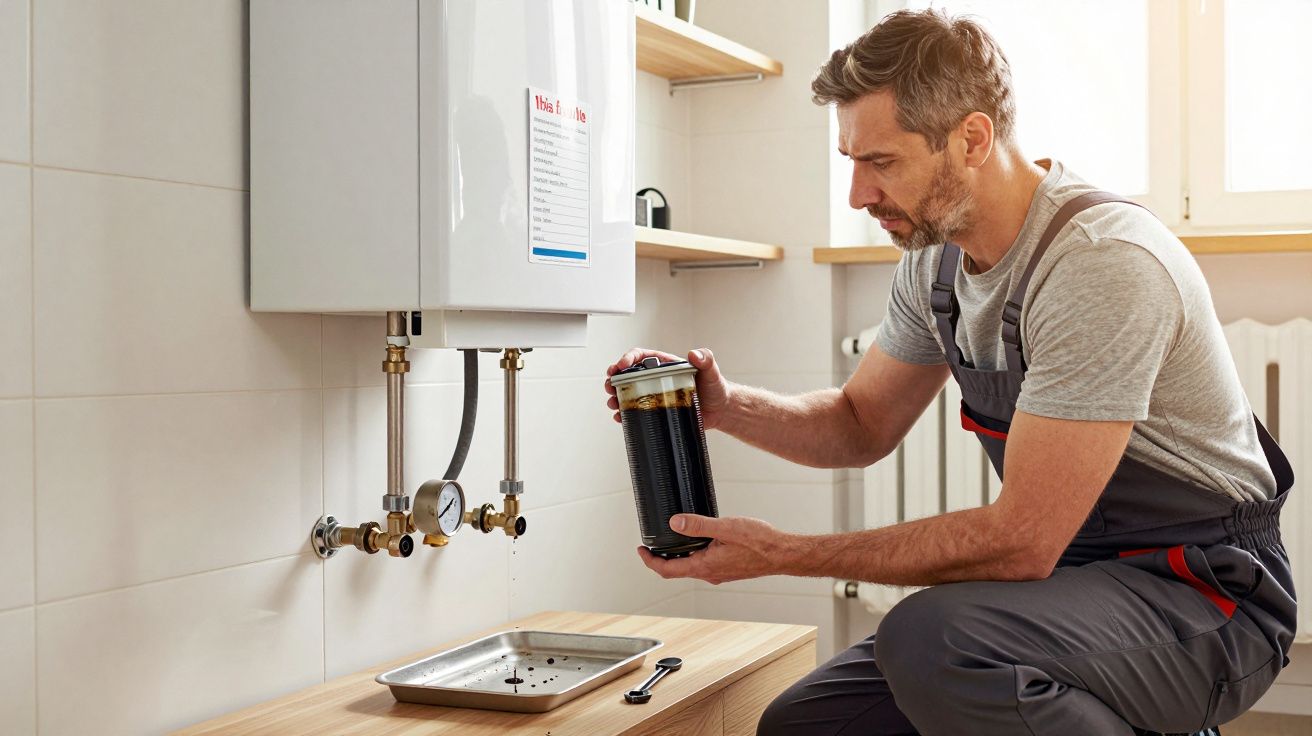
Inside a working system, water quality is the quiet kingmaker. When maintenance is skipped, two common problems are left to develop unchecked: sludge and scale.
Sludge: the dark, soft blockage
Sludge is usually magnetite-black iron oxide-formed when oxygen and metals interact in the system water. It doesn’t arrive dramatically; it accumulates in low points and radiators, then starts to circulate as fine grit.
That grit acts like a polishing paste in places that were designed for clean water. Pump bearings, diverter valves and narrow heat exchanger waterways are especially vulnerable.
Scale: the hard, insulating crust
In hard-water areas, limescale can form on the domestic hot water side of a combi boiler and in plate heat exchangers. Even a thin layer reduces heat transfer, meaning the boiler has to run hotter to achieve the same result.
Hotter metal, longer burn times and more frequent cycling are a neat recipe for accelerated component wear.
The boiler’s “lungs” get sooty, and the flame changes character
Clean combustion is a balance: correct air supply, correct gas flow, unobstructed burner, and a heat exchanger that can accept heat efficiently. If the burner and heat exchanger aren’t inspected and cleaned, light deposits can become stubborn layers.
As heat transfer worsens, temperatures inside the combustion chamber can rise. That can shift flame stability, increase the chance of sooting, and in some cases push the boiler into locking out to protect itself. What you experience is “it keeps cutting out”; what’s happening inside is the system failing to breathe and burn in the clean, steady way it was set up to.
A boiler doesn’t suddenly become unsafe because a diary date passed. It becomes harder to prove it’s safe, because nobody measured what it’s doing as it drifted.
The small parts that take the hit first
Some failures look random, but they often follow predictable stress points. When a system runs dirtier, hotter, or more erratically, the first casualties tend to be the parts that move, switch, or seal.
Common early victims after a period of neglect include:
- Circulation pump strain from debris and restricted flow
- Diverter valve sticking in combi boilers, especially with sludge in the water
- Plate heat exchanger fouling from scale and particulate, reducing hot water performance
- Ignition electrodes and flame sensors misreading because of deposits or poor combustion conditions
- Seals and O-rings ageing faster under higher temperatures and repeated cycling
None of these are exotic. They’re ordinary components asked to do a harder job than they were designed for.
How “one missed service” turns into everyday symptoms
The system usually gives hints, but they read like minor annoyances until they don’t.
The house feels uneven
One radiator runs cool at the bottom, another takes ages to heat. That’s often circulation compromised by sludge, air, or partially blocked valves. The boiler may still reach set temperature, but the heat isn’t distributing cleanly.
The boiler becomes louder
Kettling-rattling, rumbling, or a boiling-kettle sound-can be linked to scale restricting heat transfer. Water flashes to steam in tiny pockets, then collapses, and the noise is the system telling you it’s running too hot in the wrong place.
Bills creep up without any comfort gain
If heat exchangers are insulated by deposits, the boiler burns more gas to deliver the same room temperature. You can feel as if you’re “using it normally” while paying for inefficiency you can’t see.
How to miss once without making it worse
If you’ve already skipped, the goal is to stop the compounding.
- Book a Gas Safe registered engineer and ask for combustion analysis results, not just a visual check.
- If radiators heat unevenly, discuss a system clean/powerflush only after an assessment; sometimes a proper clean and inhibitor top-up is enough, sometimes it isn’t.
- Ask whether your system has (and needs) a magnetic filter, and ensure it’s cleaned if fitted.
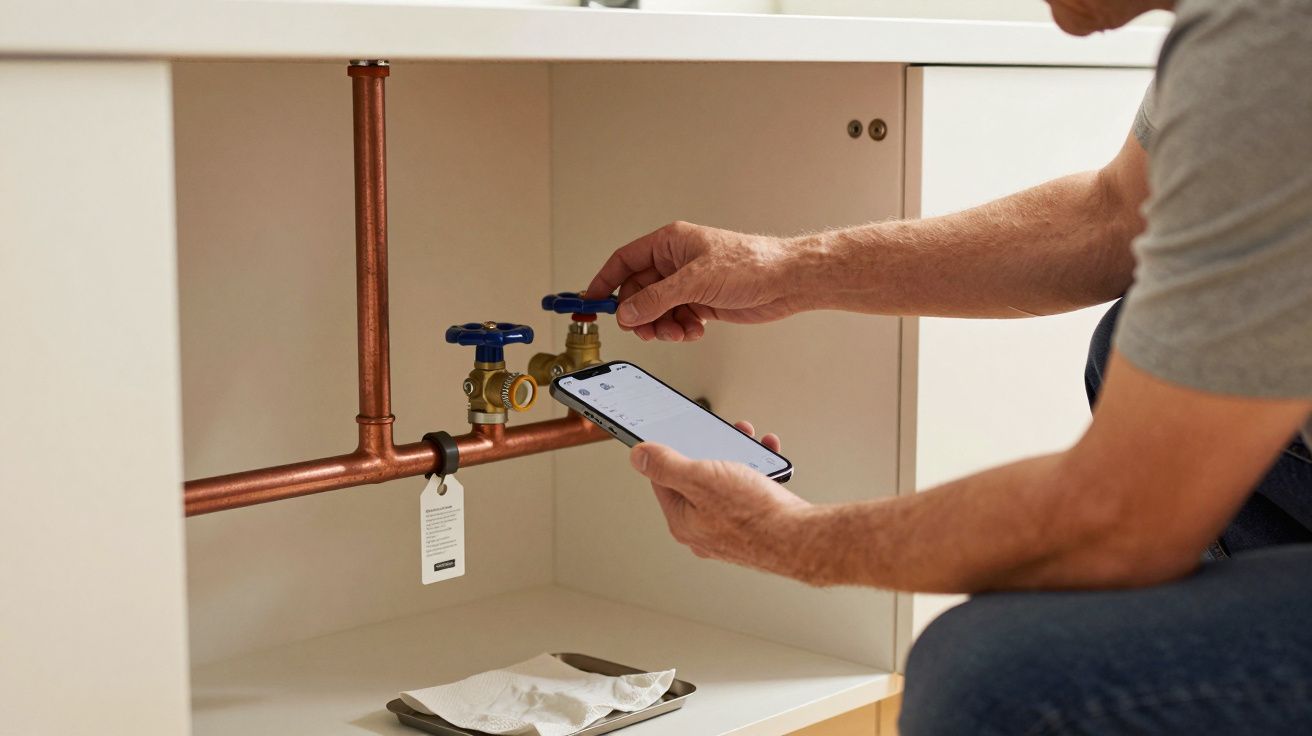
- Check the system pressure (for sealed systems) and look for frequent top-ups-fresh water brings fresh oxygen, which feeds corrosion.
- Consider a water quality test and inhibitor dosing; it’s often the simplest way to slow internal wear.
The simple logic: dirtier water, hotter metal, harder work
Central heating is not just heat; it’s flow, sensors, and surfaces exchanging energy with minimal friction. Miss maintenance once and you don’t “lose a year”-you allow drift, deposits and stress to gain a foothold, and they rarely stay put.
The most useful way to think about it is this: the system will keep you warm for a while, but it will do it less gently. And machines that do the same job less gently always pay for it in parts.
FAQ:
- Is skipping one service really a big deal if everything seems fine? It can be, because many problems begin as efficiency and wear issues rather than sudden breakdowns; by the time you notice, deposits and stress may already be established.
- What’s the first sign of sludge inside a system? Often it’s uneven radiator heating (cool bottoms), noisy flow, or frequent issues with pumps and valves, especially in older systems.
- Does a boiler service include cleaning sludge out of radiators? Not usually; a service focuses on the boiler’s safety and combustion. Sludge removal is a separate job (clean, flush, filtration, inhibitor).
- If I live in a hard-water area, what should I ask about? Ask about scale risk on the hot water side, whether a scale reducer is appropriate, and whether the plate heat exchanger shows signs of restriction.





Comments (0)
No comments yet. Be the first to comment!
Leave a Comment