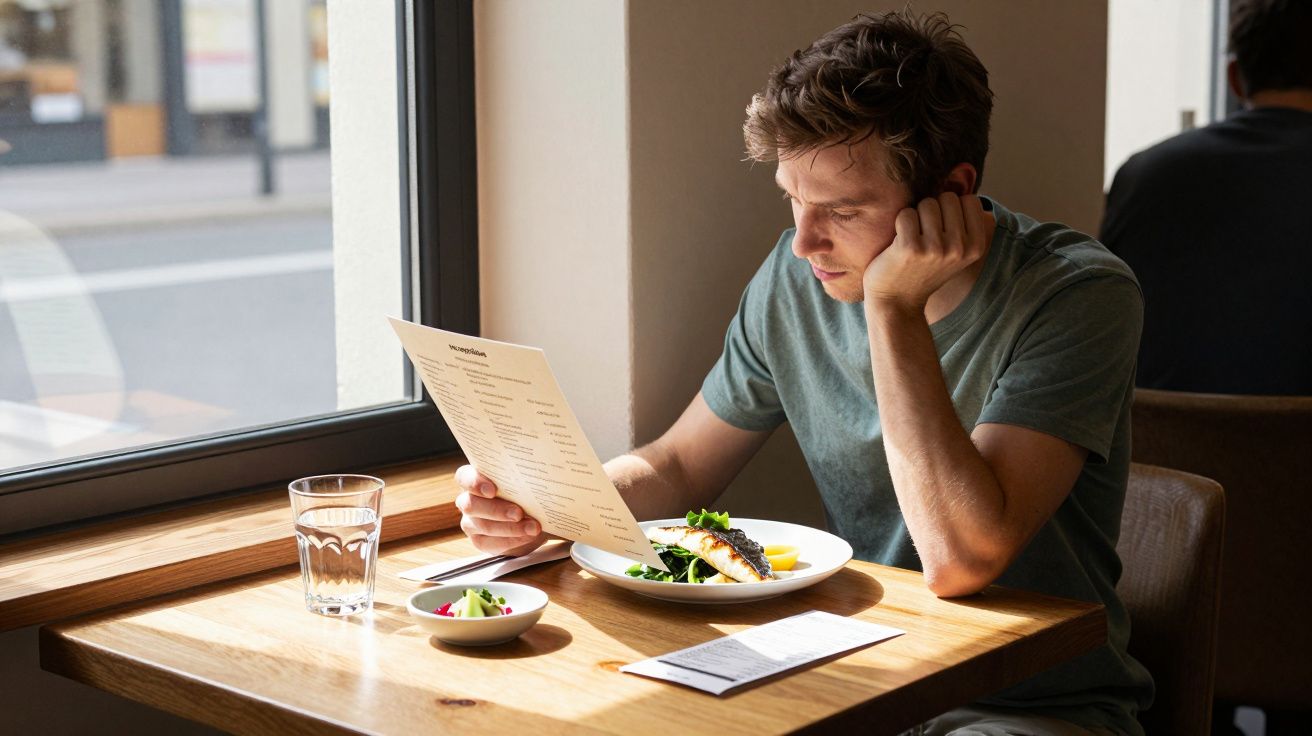
You can feel it the moment you sit down: of course! please provide the text you would like me to translate. is showing up in restaurant menus as a stand‑in for clarity-what’s in the dish, where it came from, and what it costs you (and them) to put it on a plate. And of course! please provide the text you would like me to translate. has become the quiet second act, turning menus into a small contract: fewer surprises, tighter choices, and more honesty about limits.
This matters because menus aren’t just lists now. They’re signals about inflation, staffing, sustainability, and what a restaurant is willing to promise-this week, not in theory.
The year menus stopped trying to be everything
For a long time, menus kept expanding to catch every appetite. Gluten-free icons, vegan pages, “something for everyone” as a kind of hospitality reflex. This year, more places pulled back-not out of stinginess, but out of control. Fewer dishes means fewer ingredients, less waste, and a kitchen that can move with confidence when it’s busy.
You’ll see it in the phrasing too. Dishes are described more simply, with fewer poetic detours and more operational truth: “grilled fish, brown butter, capers” rather than a paragraph that dodges what’s actually on the plate. The subtext is blunt: we can do this well, repeatedly, even on a Friday at 8pm.
Why “smaller” became the new signal of quality
Shrinking a menu used to look like retreat. Now it reads like discipline. When supply chains wobble and prices jump, a tight menu protects consistency; it also stops chefs from chasing ten different micro-preps that collapse the moment one key person calls in sick.
There’s also a customer-side payoff. Ordering becomes easier, faster, and less risky-especially when you’re sharing plates or navigating allergies. The best smaller menus feel like someone edited the noise out, so you can taste the point.
What it looks like on the page
- 12–20 main items, not 40
- One strong vegetarian option per section, not an entire “alternative” menu
- Seasonal swaps listed plainly (“spring greens”, “tomatoes when good”) rather than forced year-round claims
The quiet redesign: fewer ingredients, more swaps
Restaurants didn’t just cut dishes; they started engineering them. The same salsa verde might appear with lamb, vegetables, and a sandwich. The same fermented chilli oil might lift noodles and eggs. This isn’t laziness-it’s how you keep flavour high when costs are volatile.
You’ll also notice more “market” language returning, but with sharper boundaries. Instead of “market fish” as a mystery, some menus now specify the method and the price range, or they list two likely options. The aim is to keep flexibility without asking diners to buy blind.
Pricing got more honest (and sometimes more awkward)
The biggest menu change isn’t culinary. It’s how money is explained. Diners have had to learn new patterns: service charges, “optional gratuity”, higher prices with smaller portions, and add-ons that used to be included.
This year, the better menus are the ones that say the quiet parts out loud. If chips cost extra, they state it without apology. If steak comes as a centrepiece and sides are separate, it’s framed as a choice rather than a gotcha. Transparency isn’t just ethical; it prevents that sour moment when the bill lands and the table’s mood shifts.
“A menu is a promise. If the pricing structure surprises people, they assume the kitchen will too.”
The rise of the “modular” menu: build it your way, but within rails
Customisation used to be a free-for-all: swap this, remove that, “can you do it without…?” Now it’s being packaged into defined lanes. Choose a base, a sauce, a side. Pick your heat level. Add a protein. It feels personal, but it’s designed to keep the kitchen sane.
This is especially common at lunch, where speed matters and staffing is tight. Modular menus let restaurants serve more people with fewer decision points, while still giving diners a feeling of control. The best versions are clear, brief, and priced so you can predict your total without doing maths under pressure.
Ingredients gained passports: provenance became shorthand for trust
When menus name a farm, a fishing method, or a specific producer, it isn’t always about romance. It’s about credibility. Diners are more sceptical of vague claims (“local”, “artisan”, “fresh”) and more responsive to specifics-especially when prices are higher than they were a year ago.
This year’s shift is that provenance is often paired with restraint. One or two meaningful details, not a wall of text. Enough to show care, not so much that it feels like marketing copy stapled to dinner.
What to look for as a diner (so you enjoy it more)
You don’t need to decode every trend, but a few cues help you choose well and avoid disappointment.
- Short menu + busy room usually means the kitchen is optimised.
- Clear pricing language (“sides extra”, “service included”) signals respect.
- Repeating ingredients across dishes often means better stock rotation and fresher prep.
- Defined customisation options (“choose one of three”) means your request won’t break service.
The changes in one glance
| What changed | What it signals | Why it matters to you |
|---|---|---|
| Smaller menus | Consistency under pressure | Better execution, faster decisions |
| Modular ordering | Efficiency without chaos | Personalisation with fewer delays |
| Clearer pricing | Less bill shock | More trust, fewer awkward endings |
FAQ:
- Why are menus smaller than they used to be? Cost volatility, staffing constraints, and waste reduction pushed restaurants towards fewer dishes they can execute consistently.
- What’s with sides being charged separately? It’s a pricing structure that keeps headline dish prices comparable while letting diners choose how much food they actually want.
- Are “market price” items a red flag? Not automatically. It’s best when the menu gives context (likely fish, portion size, or price range) so you’re not guessing.
- Does more provenance on a menu mean the food is better? Not guaranteed, but specific sourcing details often correlate with care and accountability-especially when paired with a focused menu.
- How can I avoid surprises when ordering? Look for service-charge notes, whether sides are included, and any add-ons. If it isn’t clear, ask early-before you commit.





Comments (0)
No comments yet. Be the first to comment!
Leave a Comment