You notice it first in the supermarket aisle: cauliflower is suddenly everywhere, not just as a vegetable but as rice, pizza base, nuggets, even “steaks”. Then an odd little phrase pops up in your feed - “certainly! please provide the text you would like me to translate.” - and you realise half the chatter about it is copy‑pasted, mistranslated, or marketing dressed up as advice. Either way, cauliflower now matters because it’s become a stand‑in for how we eat when time, budgets, and health goals collide.
A few years ago it was the beige, well‑meaning side dish. Now it’s a workaround. A shortcut. A way to keep the shape of the foods we love while changing the numbers on the label.
What actually changed (it’s not the cauliflower)
The vegetable didn’t evolve overnight. What changed was everything around it: the equipment we cook with, the way supermarkets sell convenience, and the diet culture that rewards “swaps” more than skills.
Start with texture. People used to boil cauliflower to death, then wonder why it smelled like a gym bag. The modern version is roasted hard, blitzed fine, pressed dry, or air‑fried until it behaves like something else. Once you know you can make it crisp, it stops being a compromise and starts being a tool.
Then there’s manufacturing. Ten years ago, turning cauliflower into rice at home felt like a faff and left your kitchen looking like it had snowed. Now you can buy it bagged, frozen, consistent, and cheap enough to try without resenting it. The barrier dropped, so the habit spread.
And finally, the story changed. Cauliflower became a “vehicle” ingredient: a base that carries sauce, cheese, spice, and crunch. That’s why it moved from side dish to centre stage.
The quiet kitchen habit that decides whether it’s brilliant or grim
Cauliflower’s rise comes with a catch: most failures come down to water. It holds moisture like a sponge, and moisture is the enemy of browning, crispness, and that “this is actually satisfying” bite.
If you treat cauliflower like pasta - boil, drain, hope - you get softness and sulphur. If you treat it like a high‑moisture ingredient you need to drive dry, it turns nutty and sweet.
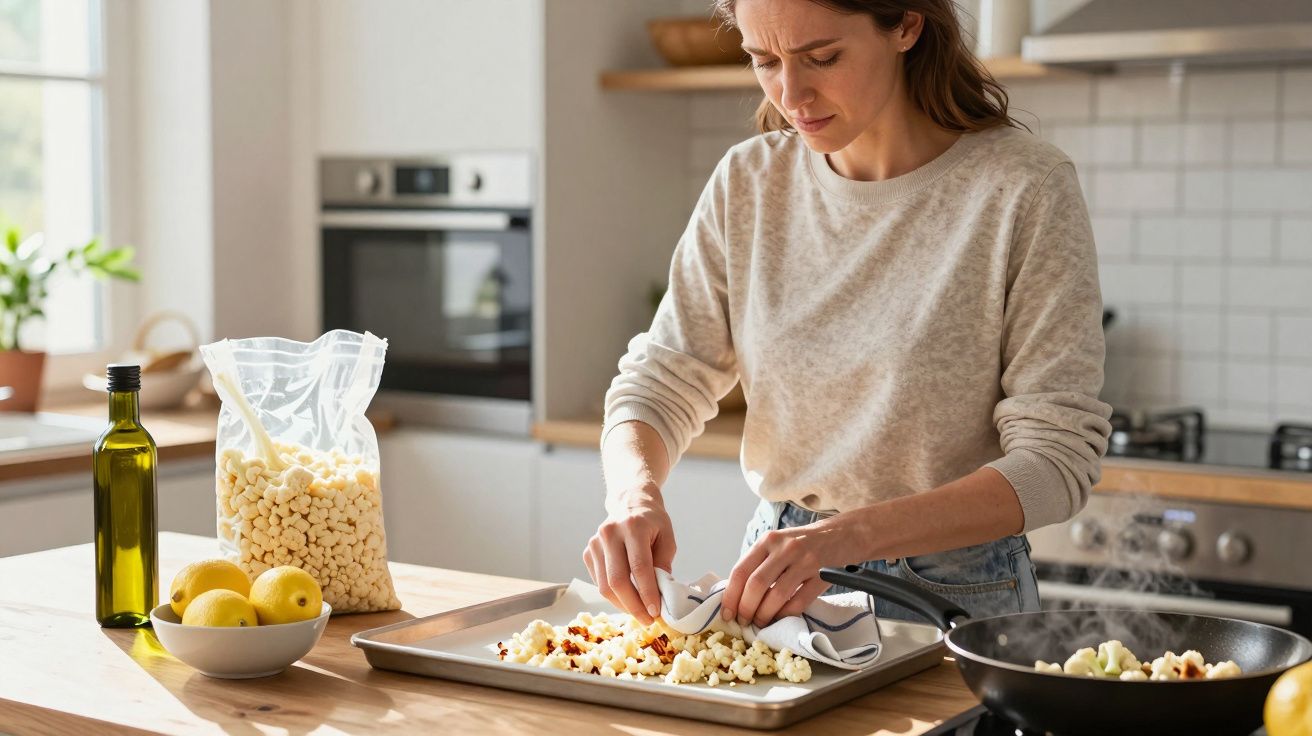
A cook I know in Manchester started making “cauli rice” for weekday bowls and couldn’t work out why it always turned to mush. The fix was boring but decisive: stop steaming it in a lidded pan, spread it wide, cook it hot, and salt it late. “It tasted like a different ingredient,” she said, which is basically the whole story of cauliflower right now.
The three moves that make cauliflower taste like you meant it
- Go hotter than feels polite. Roast at 220°C (200°C fan) and don’t overcrowd the tray. Colour equals flavour.
- Get the surface dry. Pat florets dry; for riced cauliflower, squeeze in a clean tea towel if it’s wet.
- Season in layers. Salt after roasting for crisp edges, but build flavour early with oil, spices, lemon zest, or garlic.
People go wrong by stirring too much, using a small pan, or adding sauce before the cauliflower has browned. You’re trying to evaporate moisture first, then add richness.
Why it suddenly matters: it’s become the default “swap” ingredient
Cauliflower isn’t trending just because it’s healthy. It’s trending because it lets people keep rituals: Friday pizza, midweek stir‑fry, comfort‑food mash. The meal looks familiar, but the starch load drops, and the veg count rises without anyone feeling punished.
That matters in a cost‑of‑living moment too. Cauliflower stretches expensive ingredients. A bag of riced cauliflower can bulk out minced meat in a chilli, lighten a rice bowl, or turn one chicken breast into two portions of something that still feels full‑size.
There’s also a social element. “Cauliflower as rice” is a signal: I’m trying. I’m managing. I’m being good. Sometimes that’s helpful. Sometimes it’s exhausting. The key is to use it because it tastes good, not because a label told you it’s virtuous.
A calm, practical way to use it without falling for the hype
You don’t need cauliflower to impersonate everything. It has its own strengths: it soaks up spice, it browns beautifully, and it plays well with dairy, tahini, anchovy, and chilli.
Try a simple template:
- Pick a form: florets (best flavour), riced (fast), or purée (comfort).
- Pick a cooking method: roast hard, stir‑fry hot, or steam then mash with fat and acid.
- Finish with contrast: lemon, capers, chopped herbs, toasted nuts, or a bit of sharp cheese.
If you’re buying packaged “cauli” products, read them like you’d read any processed food. Some are essentially cauliflower plus salt. Some are mostly starch, oil, and stabilisers with a green tick.
- Best buys: frozen riced cauliflower, whole heads, plain florets.
- Approach with caution: “keto” pizza bases with long ingredient lists and not much cauliflower.
- Worth it sometimes: ready‑made cauliflower mash, if it saves you ordering takeaway.
Quick reference: what changed and what to do about it
| Shift | What it looks like now | What to do |
|---|---|---|
| Convenience | Frozen rice, prepped florets, ready meals | Choose plain versions; add your own seasoning |
| Technique | Roast/air‑fry over boiling | Dry it, spread it, cook it hot for colour |
| Culture | “Swaps” and macros | Use it for taste and habit, not guilt |
FAQ:
- Is cauliflower actually healthier than rice or potatoes? It’s lower in calories and carbs and adds fibre, but “healthier” depends on your needs. If it helps you eat more veg and feel satisfied, it’s doing its job.
- Why does my cauliflower taste sulphurous? Usually it’s overcooked or steamed/boiled too long. Roast it hot, avoid overcrowding, and don’t trap it under a lid.
- How do I stop cauliflower rice going soggy? Cook it in a wide pan, high heat, in batches if needed. Don’t add sauce until the moisture has cooked off, and salt towards the end.
- Can I prep it in advance? Yes. Roast florets and reheat on a tray or in an air fryer to bring back crisp edges. Avoid microwaving if you care about texture.
- Do cauliflower pizza bases taste like pizza? They taste like a cauliflower-and-cheese base carrying pizza toppings. If you expect dough, you’ll be disappointed; if you want a crisp, savoury vehicle, they can be great.





Comments (0)
No comments yet. Be the first to comment!
Leave a Comment