You notice it when you’re halfway through cooking: leeks are on the board, the pan is hot, and your usual “quick rinse and chop” routine suddenly doesn’t feel good enough. Then a message flashes up - it looks like you haven’t provided any text for translation. please enter the text you’d like me to translate. - and it’s oddly fitting, because the whole leek situation right now is the same kind of prompt. We’ve been treating them like a background ingredient, and now they’re asking for a bit more attention.
Not because leeks have become fancy overnight, but because the way people are buying, prepping, and using them has quietly shifted. And once you clock the change, they stop being “that onion-y thing for soup” and start becoming one of the easiest ways to make meals feel warmer, cheaper, and more put-together with almost no effort.
The quiet shift: leeks stopped being a “winter-only” veg
For years, leeks sat in a narrow lane. They belonged to a certain kind of cooking: slow, pale-green, winter food. Broth, pie, stew, maybe a potato-leek soup if someone was feeling wholesome. They were useful, but rarely urgent.
What’s changed is less about the leek itself and more about how we’re living. People want fewer ingredients that do more jobs, and leeks have become one of those “one purchase, three dinners” vegetables. They’re mild enough to replace onions when you want something gentler, but fragrant enough to carry a meal when the fridge is bare.
You can see it in how recipes are written now too. More one-pan pasta. More traybakes. More “use what you have” cooking that needs a base note without demanding a full spice rack. Leeks slide into that role perfectly, and they do it without spiking the shopping bill.
Why it suddenly matters (even if you think you don’t like them)
A lot of people think they don’t like leeks when what they actually don’t like is bad leek handling. Undercooked leeks can be stringy and a bit sharp. Overcooked leeks can turn into a wet tangle that tastes like nothing. And gritty leeks-well, one mouthful of sand will put you off for life.
But when you get two tiny things right, leeks become a cheat code for flavour and comfort:
- They brown beautifully in butter or oil, turning sweet and savoury like onions do, but softer.
- They melt into sauces and soups in a way that makes food taste “slow-cooked” even when it wasn’t.
That matters right now because so many meals are being built from shortcuts: rotisserie chicken, tinned beans, frozen fish, pasta, stock cubes. Leeks make shortcuts taste intentional.
The leek mistake most kitchens keep making
Most people treat leeks like spring onions: trim, rinse the outside, chop, done. The problem is the dirt doesn’t live on the outside. It sits between the layers, especially up near the pale-green part where soil gets trapped as they grow.
Cooking writers will tell you to “wash thoroughly” and leave it at that, as if you have all day. In real life, you either skip it or you over-wash and end up with soggy leeks that steam instead of fry.
There’s a simple routine that fixes both issues without turning dinner into a project.
The “slice, swish, lift” routine that makes leeks worth buying again
This is the version that works on a Tuesday, when you’re hungry and you don’t want grit.
Slice: Trim the root end and the darkest green tops (keep those tops for stock if you want, but don’t force yourself). Slice the leek lengthways, then into half-moons.
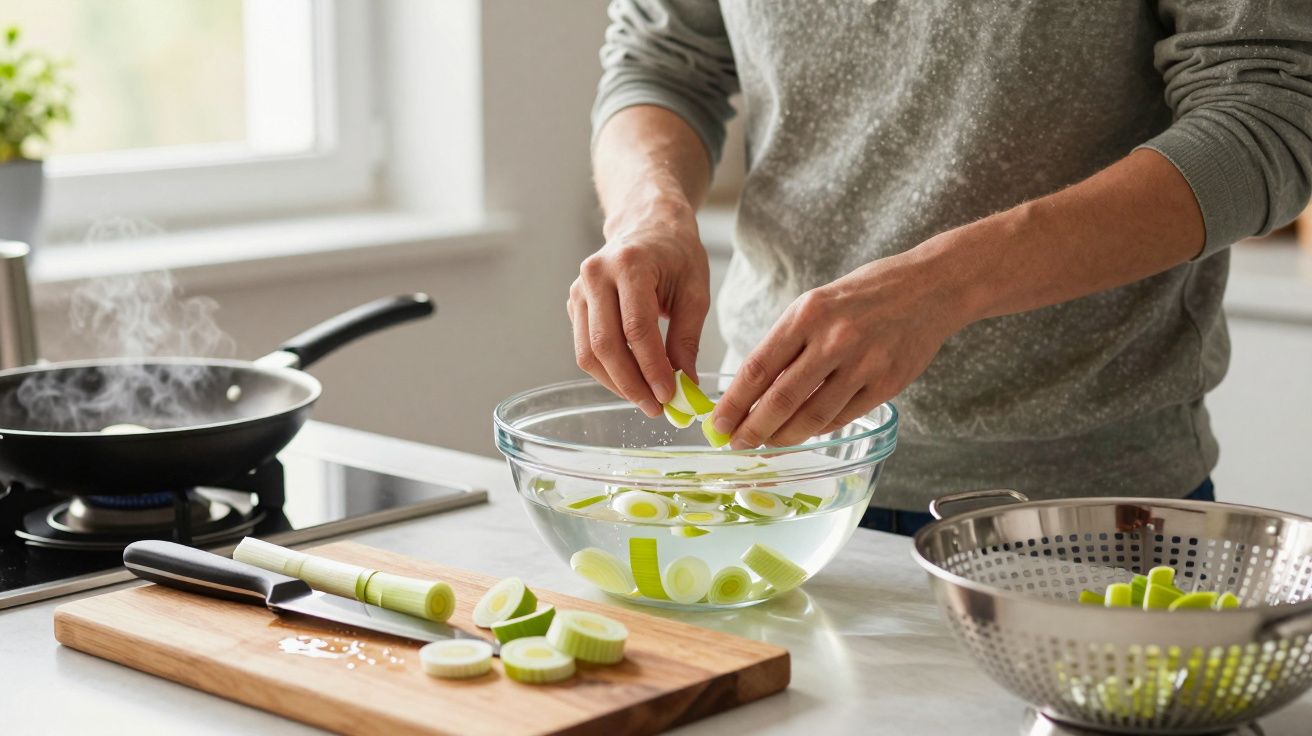
Swish: Put the sliced leeks into a bowl of cold water and swish them around with your hand. Don’t rinse under a tap and hope for the best; the bowl is what lets the dirt fall away.
Lift: Lift the leeks out with your hands or a slotted spoon and move them to a colander. Don’t pour the bowl out through the colander, because you’ll dump the grit straight back on top.
That’s it. Three steps, about two minutes, and suddenly leeks go from “risky purchase” to “reliable base”.
Soyons honnêtes : personne ne fait ça parfaitement every time. You’re not aiming for surgical cleanliness; you’re aiming to not crunch on soil.
Where leeks are doing the most work in UK kitchens right now
The biggest change is that leeks aren’t being treated as the main event. They’re being used like a supporting actor that upgrades everything around it.
A few high-payoff places they shine:
- With pasta: Fry leeks until soft and lightly golden, add crème fraîche or a splash of stock, toss with pasta and peas.
- With eggs: Leeks softened in butter make an instant frittata base (especially with leftover potatoes).
- With chicken: Leeks + mustard + stock makes a quick pan sauce that tastes like a pub dish.
- With beans: Leeks cooked down with garlic make tinned butter beans feel like something you’d pay for.
What’s nice is how forgiving they are. If onions feel too strong, leeks are gentler. If you’re cooking for someone who hates “bits of onion”, leeks can melt enough to disappear.
A small detail that changes the final taste
If you’ve only ever boiled leeks into submission, you’ve missed the point. The flavour comes from letting their moisture cook off and then giving them a little colour.
A simple rule that keeps them from turning watery: salt them after they start to soften, not before. Early salt pulls water out fast and can push you into steaming. A few minutes in, once they’re already collapsing, salt helps them taste rounded instead of bland.
And if you want that restaurant softness, add a tablespoon of water or stock at the end and put a lid on for two minutes. It’s a tiny “braise” that makes them silky without making them soggy.
The bigger picture: leeks as a “systems” ingredient
Leeks matter now because they fit the way we’re trying to cook: less waste, fewer trips to the shop, more meals that stretch. They store well in the fridge, they’re flexible across cuisines, and they can turn basic staples into something that feels properly cooked.
It’s not glamorous. It’s just one of those quiet changes that makes a weeknight kitchen run better. The kind of ingredient that reduces the number of times you stand in front of the fridge thinking, I have food, but I don’t have a plan.
| Point clé | Détail | Intérêt pour le lecteur |
|---|---|---|
| Leeks as a new “base” | Milder than onions, sweeter when cooked | Makes quick meals taste richer with little effort |
| “Slice, swish, lift” | Bowl-wash method to remove grit properly | Stops sandy bites and makes leeks feel worth buying |
| Cook for colour, not water | Let moisture cook off, then lightly brown | Better flavour and texture without extra ingredients |
FAQ:
- Are leeks basically just big spring onions? Not really. They’re related, but leeks are milder and sweeter when cooked, and they have more layered structure that traps grit, so they need a different wash.
- Which part of the leek should I use? Mostly the white and pale-green parts. The dark green tops are tougher but great for stock if you want to freeze them for later.
- Why do my leeks go watery in the pan? Usually because they weren’t drained well after washing, or they were salted too early. Cook them uncovered first to drive off moisture, then season.
- Can I prep leeks in advance? Yes. Wash and slice them, then store in a sealed container with a bit of kitchen paper for 2–3 days. They’re brilliant for quick midweek cooking.
- What’s the fastest “good” leek dish? Leeks softened in butter, a spoon of mustard, a splash of stock, and crème fraîche (or cream). Toss with pasta or spoon over chicken and potatoes.





Comments (0)
No comments yet. Be the first to comment!
Leave a Comment