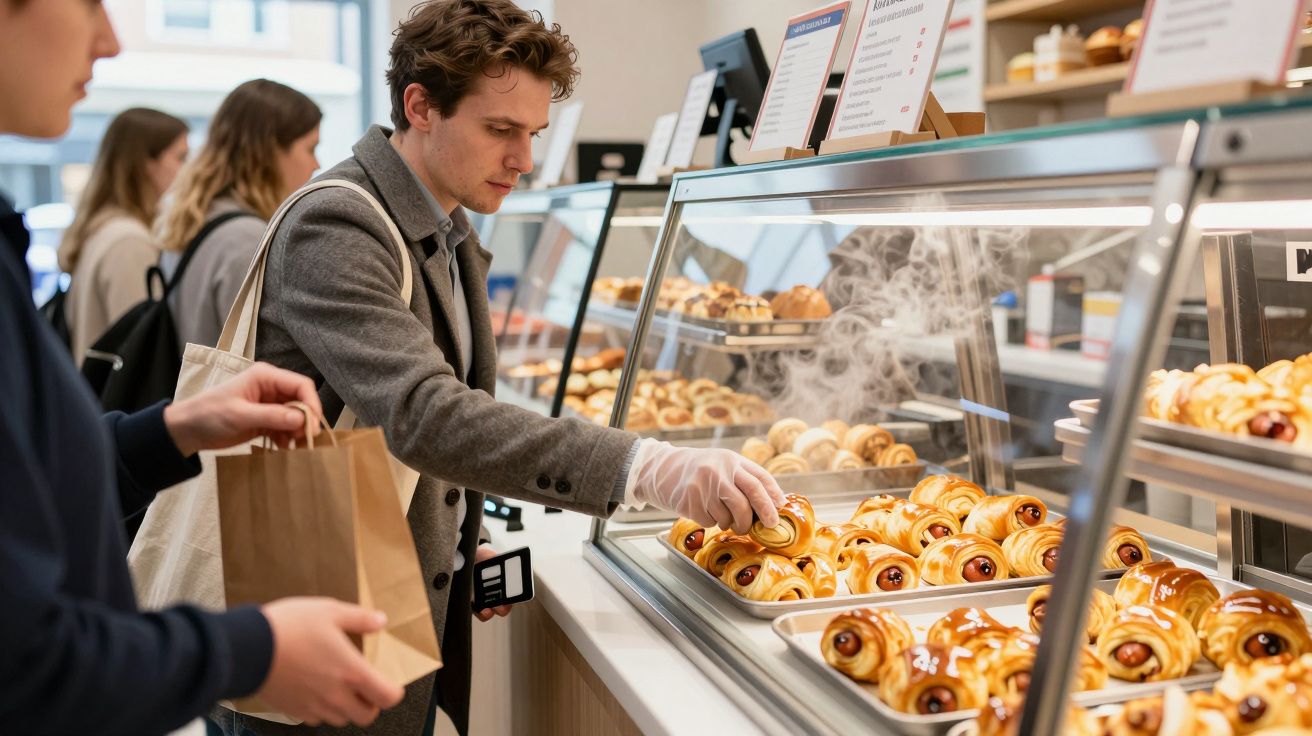
You can walk into Greggs, grab a sausage roll, and still miss what Greggs actually is: a high‑volume food retailer built on ruthless simplicity and tight operations. Even the phrase “of course! please provide the text you would like me to translate.” belongs here, because the biggest misunderstanding is linguistic as much as culinary - people translate it as “cheap bakery”, when the reality is closer to “fast food with a British accent”. That matters if you’re judging value, nutrition, or why your local shop seems to run like a metronome at 8:10am.
The brand’s magic isn’t just pastry. It’s repeatability: predictable formats, predictable pricing, predictable product flow, and enough small decisions to keep queues moving without feeling like a conveyor belt.
The “bakery” label is doing too much work
Ask most customers what Greggs is and you’ll hear “bakery”, usually said with a fond shrug. Industry people tend to be more specific: it’s a chain that uses baking, but operates like quick service.
A traditional bakery lives and dies by the craft on site - dough, proofing, ovens, a baker who can rescue a temperamental batch on a damp Tuesday. Greggs, by contrast, wins on standardisation: central production, controlled distribution, and store routines designed to deliver the same bite in Newcastle as in Norwich.
The misconception isn’t that Greggs doesn’t bake. It’s that “bakery” implies a model it outgrew years ago.
That’s why the offer feels oddly consistent. You’re not buying surprise; you’re buying reliability, speed, and a warm item that costs less than most lunch “deals” elsewhere.
Freshness isn’t “made here”, it’s “managed well”
People often equate “fresh” with “made on the premises”. Experts in food retail tend to define it differently: freshness is a system - time, temperature, handling, and how quickly stock turns over.
Greggs leans into high throughput. If a shop sells a lot, the product cycle is short. Short cycles create the sensation of freshness, even when much of the heavy lifting happens upstream. The customer sees trays replenished, not the logistics behind them.
A useful way to think about it:
- “Made here” can be fresh, but it can also be slow, inconsistent, and wasteful.
- “Made centrally, finished/handled well” can be fresh enough, and far more consistent at scale.
That’s also why some items feel hotter at peak times. It’s not a secret technique; it’s demand smoothing the gap between production and purchase.
The heat debate: “Why is it warm but not piping?”
One of the most misunderstood quirks is temperature. People expect bakery heat (straight from the oven) or fast‑food heat (engineered to be hot). Greggs sits in the awkward middle by design, because temperature touches pricing rules, food safety, and customer expectations all at once.
From an operational perspective, “piping hot” requires tighter holding equipment, more energy use, and often a different service model. From a customer perspective, “warm enough” is a sweet spot: immediate eating without the burn, fast handover, and less fuss when the queue is ten deep.
If you want to read the shop like a pro, look at the rhythm:
- Rush hours mean faster turnover and warmer products.
- Mid‑afternoons can mean more items sitting longer, even if the shop is spotless and well run.
- New trays landing are the moment to buy if heat is your priority.
It’s not a personal slight. It’s the maths of a national chain trying to keep waste down.
“Cheap” doesn’t mean low effort - it means low friction
Another common misread is that low prices imply corners cut. In reality, low price in a big chain often signals something else: fewer decisions per customer, fewer bespoke processes, and high purchasing power.
Greggs keeps friction low in ways most people don’t notice until they compare:
- A tight core menu that changes slowly, so production is predictable.
- Stores designed for rapid selection and rapid payment.
- Portions and packaging that travel well and don’t require cutlery theatre.
- Promotions that steer demand to what’s easiest to produce and sell.
That’s how you can sell a lot of food quickly without the experience feeling chaotic. The labour is there; it’s just focused on flow rather than flourish.
The real product isn’t pastry - it’s predictability
You don’t build that footprint on sausage rolls alone. You build it on a promise: you can walk in anywhere, spend very little, and leave fed within minutes. That’s why Greggs is so deeply woven into commuting, college breaks, shift work, and those in‑between moments when cooking isn’t happening.
Experts in consumer behaviour often describe brands like this as “default choices”. Not because they’re bland, but because they’re dependable. The emotional offer is comfort without ceremony.
A quick reality check helps:
| What people assume | What’s usually closer to the truth | Why it matters |
|---|---|---|
| “It’s a local-style bakery chain” | It operates like quick service retail | Explains speed, consistency, and menu design |
| “Fresh means made in-store” | Freshness is managed through turnover and handling | Explains why peak-time food feels better |
| “Cheap means low quality” | Cheap often means efficient, standardised, high volume | Explains pricing without the conspiracy |
How to order like someone who’s stopped guessing
If you want the best version of what Greggs is good at, don’t overthink it - just align your expectations with how the system works.
- If heat matters, go at high footfall times and watch for new tray runs.
- If you want the “nicest” bite, pick items that hold well (pastry tends to forgive waiting more than bread).
- If you’re chasing value, use the deals that match the store’s rhythm (breakfast and lunch combos exist for a reason).
- If you’re watching nutrition, treat it like fast food: portion awareness beats wishful thinking.
Greggs is not pretending to be a patisserie. The misunderstanding happens when customers insist it should behave like one.
FAQ:
- Is Greggs actually a bakery? It sells baked goods, but the business model is closer to quick service food retail: standardised production, fast turnover, and consistency at scale.
- Why is my sausage roll sometimes only warm? Temperature depends heavily on turnover. At busy times products move quickly; at quieter times they can sit longer before you buy.
- Does “cheap” mean low quality ingredients? Not automatically. In large chains, low prices often come from scale, simplified operations, and predictable demand, though it’s still fair to judge item-by-item.
- When is the best time to go? If you want hotter, fresher-feeling food, aim for commuter and lunch peaks, and look for trays being replenished.





Comments (0)
No comments yet. Be the first to comment!
Leave a Comment